







Building A1 DDP - Dubai Silicon Oasis
Industrial Area - 342001 -
Dubai - United Arab Emirates
+971 50 756 2346
SERVICES
COMPANY LINKS
SIGN-UP
For Newsletter



If you’ve ever opened an app and thought, “This could be so much better,” you’re already thinking like a UX designer.
User Experience (UX) Design is all about shaping how products work, feel, and fit into people’s lives. In 2025, it’s one of the fastest-growing creative careers out there.
In fact, the UX design industry is projected to grow 16% from 2022 to 2032 (much faster than many other fields) according to the U.S. Bureau of Labor Statistics. (1)
But here’s the good news: figuring out how to get into UX design isn’t as mysterious as it seems.
Whether you’re a career changer coming from graphic design, someone wondering how to get into UX design with no experience, or just curious about the skills and design process involved, this guide has your back.
We’ll cover everything from UX principles and user research to building the right UX design skills for landing your first role in a field full of creative opportunities.

Imagine using an app that’s so easy, you barely have to think. That’s the magic of user experience design, or UX design for short.
So, what is UX design? It’s about making websites, apps, and digital products simple, helpful, and enjoyable for people to use.
A good design makes life easier. A bad one? It makes people want to leave fast.
In fact, 88% of users are less likely to return to a website after a bad user experience (2). That’s why companies care so much about hiring skilled UX designers for their teams.
Many people mix up UX design with UI design. But they’re not the same.
UX design focuses on how something works and feels. UI design focuses on how it looks.
Think of it like this: UX designers decide how doors should open. UI designers choose the color and style of the door handle.
A UX designer does many things in their day-to-day work. They talk to users, sketch out ideas, and test if those ideas actually solve problems.
Some common things a UX designer creates include:
UX work is part of the bigger UX design process, which often looks like this:
There are other roles linked to UX design, too. For example, you have interaction designers. They focus on how people navigate and click through a digital product.
You also have UX researchers and product designers. The former studies users to discover what they need, whereas the latter combines UX design, UI design, and sometimes even branding and strategy work.
People in UX design jobs use many tools, like Figma or Adobe Creative Suite, to bring ideas to life. These are called UX design software or design tools.
No matter your background, learning the UX design principles and building a UX design portfolio filled with personal projects can help you land your first role and start your own UX design career.
Let’s look at why so many people, whether they’re just starting out or changing careers, are exploring a future as UX designers.
Companies everywhere want to create apps and websites that people love to use. That’s why there’s a growing need for skilled UX design professionals.
Businesses know that good user experience keeps customers coming back, so they’re always hiring for UX design jobs. This strong job market makes UX a smart career choice for the future.
Working as a UX designer can be rewarding, not just creatively, but financially too.
Many UX designers earn competitive salaries, and there’s room to grow into senior roles, leadership, or even starting your own UX consulting services. The more UX skills and experience you build, the more doors open in your UX design career.
Few careers let you combine so many interests. In UX design, you can use your artistic side for visual design and prototyping while also studying user behavior and human psychology, often supported by a user behaviour tracking tool.
Plus, there’s plenty of tech involved, from learning UX tools to mastering the UX design process. It’s perfect if you enjoy variety in your day.
You don’t have to start with a degree in computer science or design. Many successful UX designers come from graphic design, web development, psychology, writing, or even teaching.
Your transferable skills, like communication, research, or problem-solving, can help you switch into UX. Even personal projects or volunteer work can help you gain UX experience and build a strong UX design portfolio.
If you’re wondering how to get into UX design without a degree, there are many paths to getting there. You’ll just need to prove your skills and show your work.
The truth is, you don’t HAVE to go to college to become a UX designer. Not always, at least.
While it’s true that over 71% of UX professionals hold a bachelor’s degree or higher (3), many of them started out in different fields like psychology, graphic design, or web development.
Plenty of UX designers got into this career without a formal degree in design or tech.
Some people choose the traditional path, like studying:
But many others go a different route. They build UX skills through online courses, hands-on practice, and personal projects.
There are great UX design courses and certifications out there that can help you learn the UX design process as well (discussed later in the how to learn UX design section).
You can also find plenty of free resources to help you start your beginner-to-expert UX journey.
What matters most is having a strong portfolio that shows you understand UX principles and the design process.
So, while a degree can help, it’s not the only way into a UX design career. Many aspiring UX designers succeed by showing their skills, building real projects, and learning from the community.
If you’re thinking about becoming a UX designer, it helps to know what skills are really needed.
Some skills are technical and hands-on. That’s what we call hard skills. These are the things you actually do or make as part of the UX design process. Let’s look at the key ones every aspiring ux designer should learn.
To succeed in UX design jobs, you’ll need certain hard skills that help you understand users and build great digital experiences.
Here are some of the most important ones:
This means finding out what people want and how they act. You might interview users or watch how they use a website.
For example, a UX designer could learn that shoppers get stuck on a checkout page, leading to changes that make it easier to buy.
This is how you check if your designs actually work for real people. You might give users tasks to see where they struggle.
For instance, testing might show that a “Buy Now” button is too hard to find, so you’d move it to a better spot.
This is about organizing content so people can find things easily. It’s like making a clear map for a website.
A UX designer might create a sitemap for a big store’s website so customers can quickly find shoes, clothes, or accessories.
These are ways to show ideas before building the final product. Wireframes are simple sketches, while prototypes are clickable models.
For example, a designer might build a prototype of a new app screen in Figma so people can test it before coding starts.
This means knowing how designs should adjust to different screens, like phones, tablets, or big monitors.
A designer makes sure buttons stay easy to tap on small screens, or text isn’t too tiny to read.
Tools like Figma, Adobe XD, or Sketch help you create designs, prototypes, and share ideas with teams.
For example, you might use Figma to design an app and share it with your team for feedback.
The best ux professionals also rely on important soft skills that help them work well with others and truly understand people.
Here are some key soft skills every aspiring ux designer should build:
Good UX designers care about how people feel when using a product. Empathy helps you understand users’ struggles and create designs that solve real problems.
For example, noticing that older users have trouble reading small text might inspire a larger, clearer font in your app.
In UX projects, things rarely go perfectly the first time. Problem-solving means thinking creatively to fix issues and improve designs.
A designer might discover during user testing that a checkout process is confusing, and quickly come up with a clearer step-by-step flow.
Designers rarely work alone. You’ll share ideas, explain choices, and get feedback from others like developers or graphic designers.
For example, explaining why you chose certain colors or layouts during a meeting helps the whole team stay on the same page.
Telling a good story helps people connect with your ideas. As a UX designer, you’ll share user journeys or present findings from UX research in a way that makes others care.
For instance, sharing a real user’s story about struggling to find info on a website can motivate your team to improve it.
Design work changes fast. Tools, trends, and user needs shift all the time, so you need to stay flexible.
A designer might start a project in one UX tool but switch to another if the team’s needs change or new features become available.
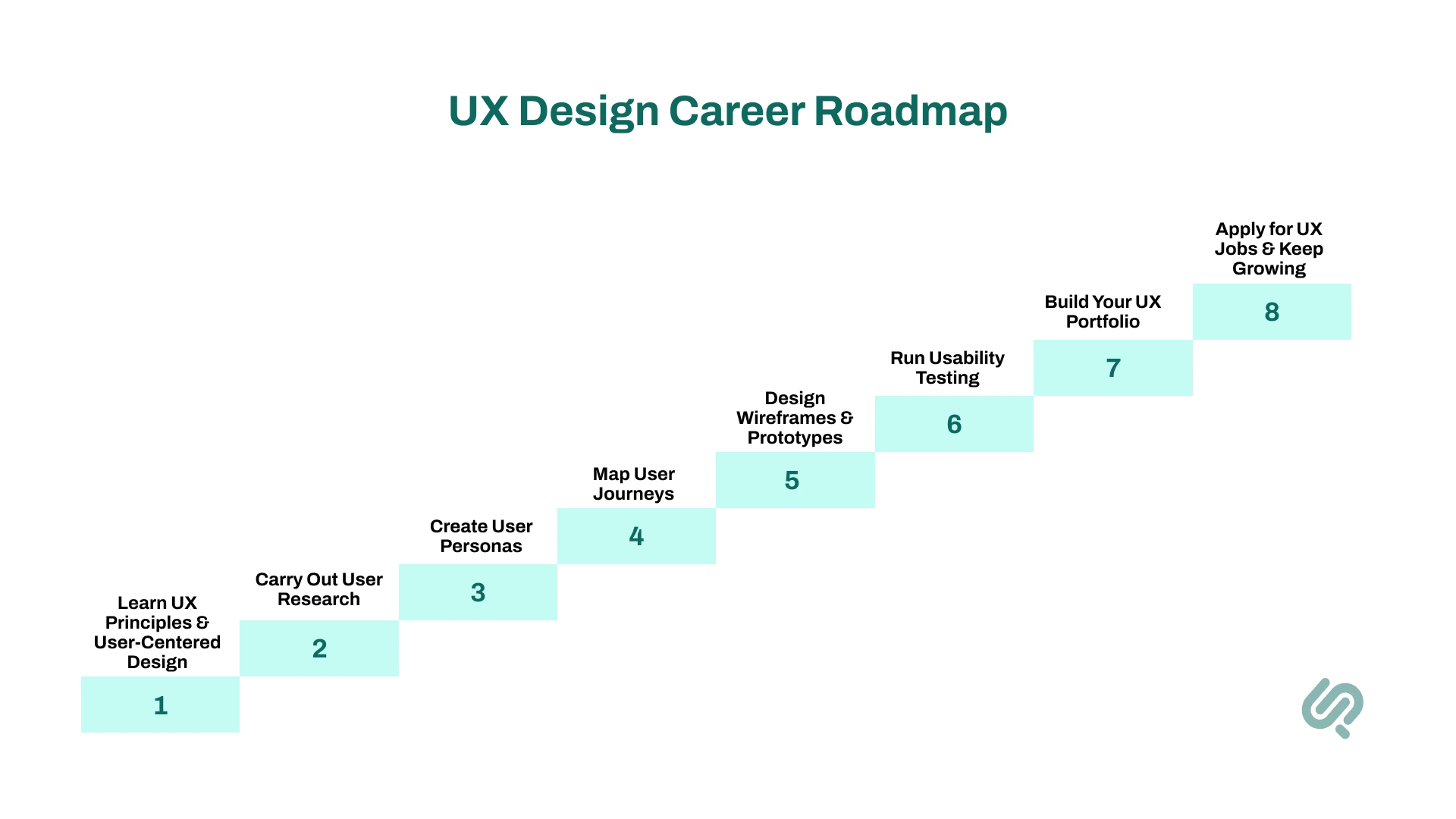
Whether you’re brand new, changing careers, or brushing up on UX skills, there’s a clear path you can follow to grow from a beginner to an expert.
The best way to learn is to first understand how the UX design process actually works. Here’s how many UX designers tackle their projects:
Learn about real people’s needs, habits, and frustrations. For example, interviewing shoppers to see why they leave an online store without buying.
Make fictional characters that represent your users. A persona might be “Sam, a busy father who uses apps on his phone.”
Draw out the steps a user takes to complete a goal, like buying a product online.
Sketch simple layouts for screens without worrying about colors or final details.
Create clickable models of your designs so you can test ideas quickly.
Ask real people to try your designs. See where they get stuck and fix it.
Following these steps helps you build strong UX projects and a solid UX portfolio to show potential employers.
Many aspiring UX designers start by taking UX design courses online.
These courses teach important design skills, like interaction design and user interface design, and give you practice with industry tools like Figma or Sketch.
Good places to find online learning include:
Some people prefer learning quickly in a more structured way. That’s where UX bootcamps come in.
Bootcamps often help you build portfolio projects, practice user testing, and connect with a professional network of other designers and teachers.
They’re intense and sometimes pricey, but they can help you land a job faster, especially if you’re switching from fields like graphic design or web development.
If you’re on a budget, you can definitely learn UX on your own. Many experienced designers started with free resources and own projects.
Check out:
If you want to land a UI UX job, a strong UX design portfolio is one of the most important things you can have. This portfolio is your chance to show how you think, solve problems, and create smart solutions.
Even if you haven’t worked in a professional environment yet, there are many ways to build projects and gain experience.
Your portfolio should include different kinds of projects that help potential employers see your skills and your process.
Here are great types of projects to include in your design portfolio:
Solve a problem you care about, like designing an app for tracking habits. This shows passion and initiative.
Pick an existing website or app and redesign it to improve the user experience. For example, redesigning a library’s website to make it easier to find books.
Take on small jobs for friends, local businesses, or nonprofits. It’s a great way to practice your skills and build real-world examples.
Invent something new that doesn’t exist yet. This is perfect for showing creativity and design thinking.
When you show your work, tell the story behind each project. Describe the problem, the research you did, how you used your technical skills, and how you made decisions.
For example, explain how you applied design thinking to redesign a cluttered website or how you used user feedback to improve a mobile app.
Don’t forget to host your portfolio online so it’s easy for people to find. Many job boards even ask for a link right in the job posting.
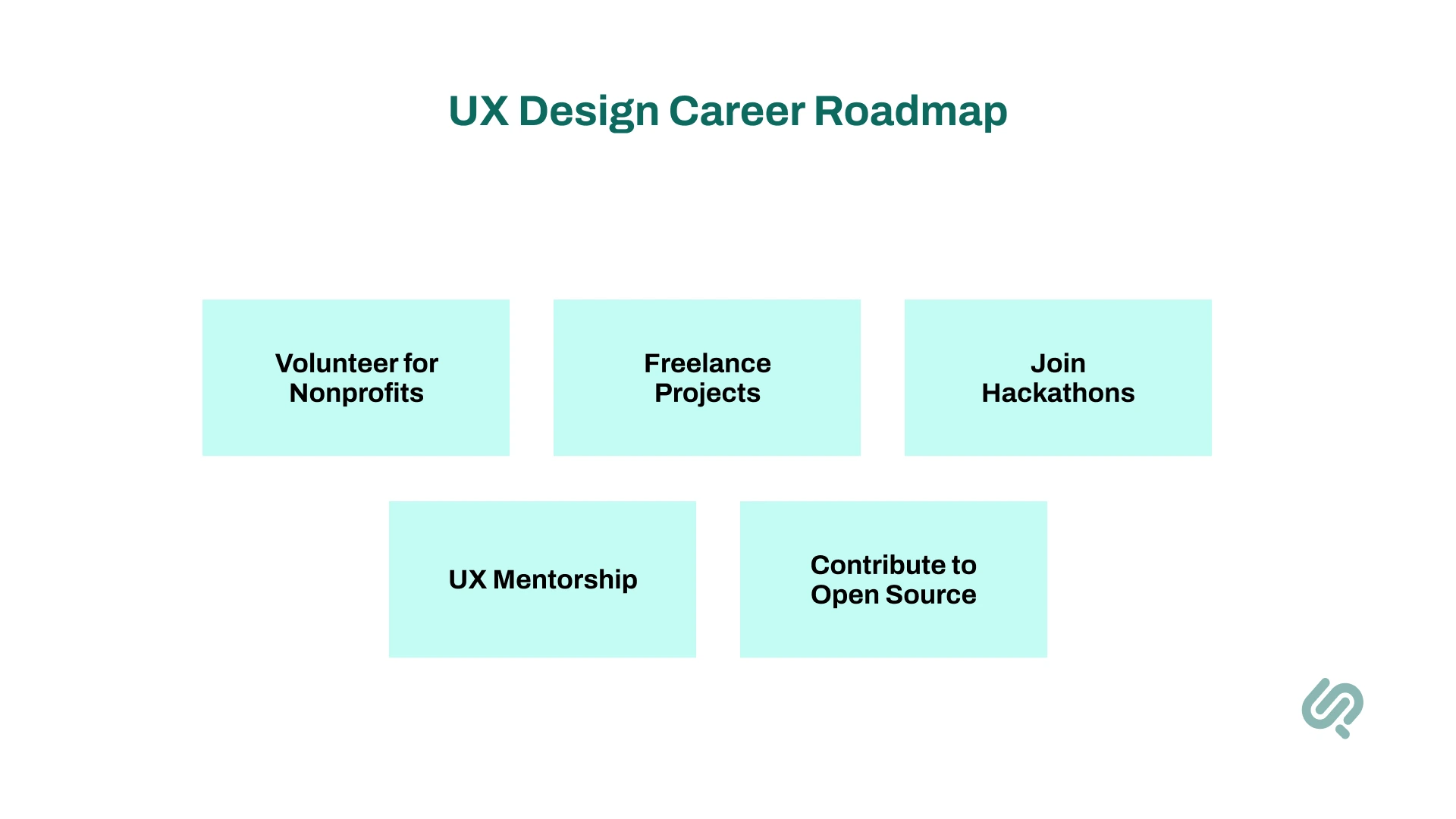
It’s estimated that 43% of junior UX designers got their first job through freelance, internships, or personal projects. (4)
That’s good news if you’re starting out and wondering how to get real-world practice before landing a full-time role.

Landing your first role in UX design might feel big and scary, but you can break it into clear steps.
Let’s look at how to search, prepare, and shine when you finally get that interview.
The best place to start is online. There are many job boards that focus on design roles, like UX Jobs Board, Dribbble Jobs, LinkedIn, and AngelList.
You’ll also spot UX listings on broader tech sites alongside jobs for developers, web developers, and product managers.
When searching, use keywords like “UX designer,” “UI/UX designer,” “Interaction designer,” or “Product designer.” Reading job descriptions carefully is important so you know if they want someone with project management skills or specific tools you’re familiar with.
For example, a listing might ask for Figma skills and experience working with developers. That’s a good fit if you’ve done UX projects that bridge design and tech.
Once you land interviews, your next goal is to show that you have a solid foundation in UX principles and that you’re excited to learn and grow.
Expect common questions like, “Tell me about a time you solved a user problem,” or “How do you handle feedback on your designs?”
You might also face whiteboard challenges where you sketch out a solution on the spot.
When it’s time to present your portfolio, tell the story behind your designs. Explain the problem, your thinking, and how you tested your ideas.
For instance, share how you noticed users struggled on a signup page and redesigned it for clarity. That’s the kind of practical story employers love to hear.
Attending industry events can also help. You might meet hiring managers or other designers who know of job openings and can share tips for interviews or connect you to the right people.

Here’s how you can start growing your network and career as a UX design professional:
Starting your UX design career is easier when you know the right tools and where to learn more. Here’s a quick list to help you dive in:
Sometimes the best advice comes from people who’ve been in your shoes. Here’s what designers on Reddit and other forums often say about breaking into UX design:
Getting into UX design might seem like a huge leap, but it’s entirely doable. No matter where you’re starting from.
The field is full of opportunities for creative thinkers, problem solvers, and anyone curious about how people use technology.
From learning the basics of design thinking to building a strong UX portfolio, every step you take helps you grow your skills and confidence. Even if you’re starting with freelance projects or personal experiments, each project is a chance to show your abilities and learn something new.
Don’t forget that connecting with other designers, joining communities, and attending industry events can open doors you might never expect.
The journey from beginner to pro isn’t always fast, but it’s exciting and full of new challenges.



Areesha is a content writer with over 2 years of experience in writing about tech and digital trends. She focuses on topics like AI, remote work, and productivity.
Her blogs have helped startups grow their content reach and improve lead generation. She writes with a focus on clarity, simplicity, and reader value.