

.webp)
.webp)

.webp)

Building A1 DDP - Dubai Silicon Oasis
Industrial Area - 342001 -
Dubai - United Arab Emirates
+971 50 756 2346


SERVICES

COMPANY LINKS
SIGN-UP
For Newsletter



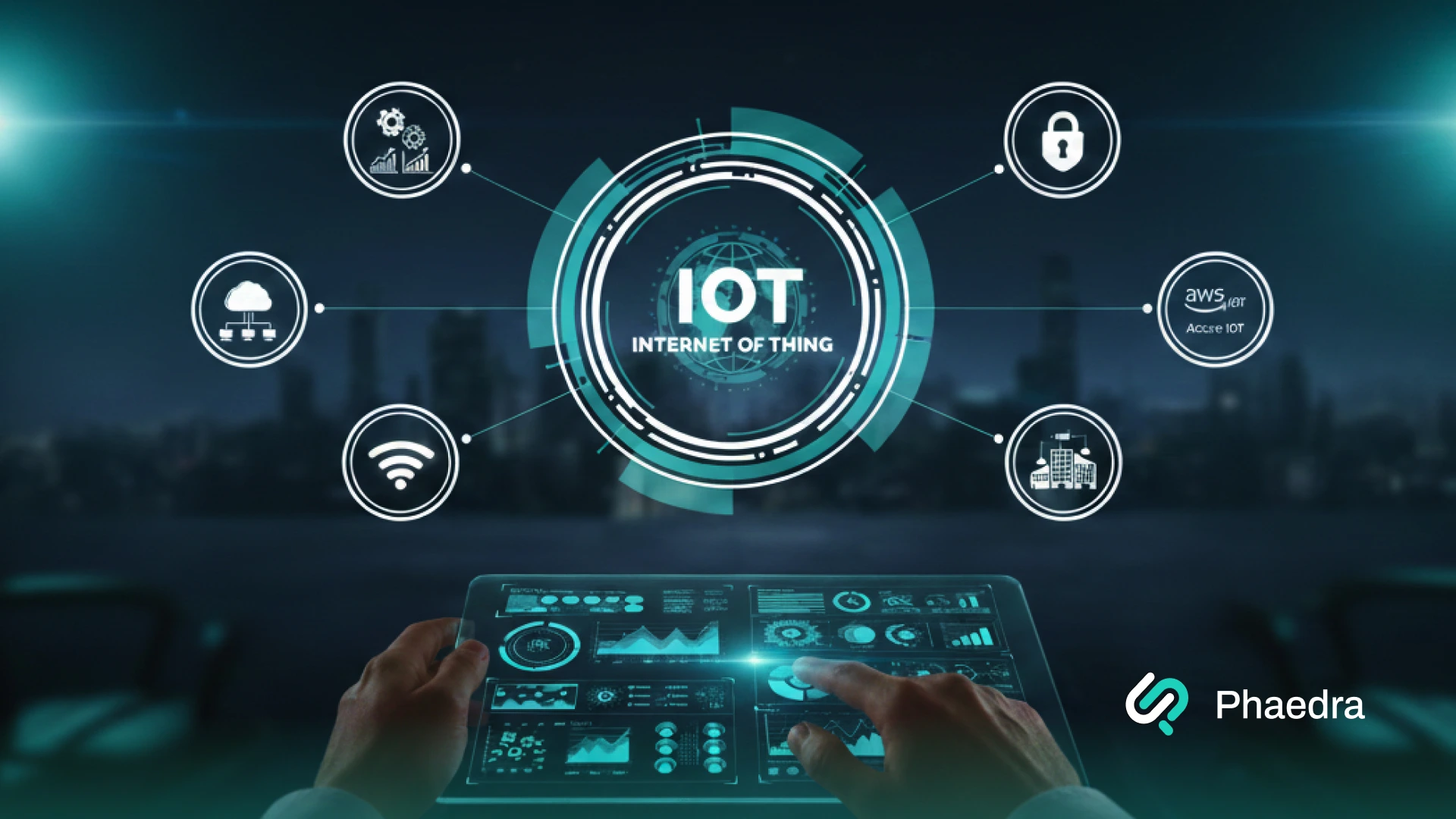
The Internet of Things (IoT) connects everyday devices, from sensors and machines to vehicles and smart homes, into intelligent networks that collect and share data.
These IoT systems help businesses improve efficiency, automate operations, and make smarter decisions with real-time data.
As industries embrace IoT technologies, new opportunities emerge in industrial automation, healthcare, energy management, and smart cities.
This article explores the top IoT companies in 2026, global innovators creating scalable, secure, and data-driven IoT solutions that are shaping the connected future.
Our research to identify the top Internet of Things (IoT) companies has been conducted based on specific categories and evaluation factors, ensuring a structured and objective approach.
We analyzed companies across multiple dimensions including technology offerings, market impact, innovation, scalability, security, and industry specialization.
Based on these categories and factors, we have compiled the following list of leading IoT companies that are driving innovation and growth across the global IoT landscape:
These Internet of Things technology companies deliver scalable IoT platforms for device management, data analytics, and cloud integration.
Examples: AWS IoT, Microsoft Azure IoT, Google Cloud IoT, IBM Watson IoT.
Global industrial Internet of Things companies are developing smart manufacturing and predictive maintenance solutions using IoT sensors, robotics, and digital twins.
Examples: Siemens, Bosch, GE Digital, Schneider Electric, Rockwell Automation.
IoT connectivity companies offering LTE-M, NB-IoT, and 5G solutions for connected devices and IoT networks.
Examples: AT&T, Verizon, Ericsson, Nokia, Huawei.
Internet of Things consulting companies and integrators helping businesses design, develop, and scale customized IoT solutions for industrial automation, energy, and healthcare.
The global IoT Devices market is forecasted to be USD 245 billion in 2025, growing to USD 613.25 billion by 2030, at a CAGR of ~20.1% (1)
Examples: Accenture, Capgemini, Deloitte, Tata Consultancy Services (TCS), Wipro.
IoT hardware development firms are producing processors, sensors, and chipsets that power smart devices and embedded systems.
Examples: Intel, Qualcomm, NXP, Texas Instruments, STMicroelectronics.
Internet of Things software companies provide platforms for data analytics, digital twins, and IoT system integration.
The number of cellular IoT connections is expected to surpass 7 billion by 2030, up from ~4 billion in 2024. (2)
Examples: PTC ThingWorx, SAP Leonardo, Oracle IoT Cloud, Splunk IoT.
Companies focusing on IoT security, device management, and secure connectivity to protect data across complex IoT networks.
Examples: Armis, Xage Security, Telit, Sierra Wireless.
Agile Internet of Things development companies are building tailored IoT solutions, sensor platforms, and cloud-connected products for specific industries.
Examples: SoluLab, SumatoSoft, Memfault, Samsara, Augury, Chamberlain Group.
These Top 35 Internet of Things companies represent every corner of the IoT ecosystem, from cloud platforms and industrial automation to software, connectivity, and smart devices.
Each category plays a distinct role in advancing IoT innovation, driving smarter operations, and creating seamless connections between the physical and digital worlds.
The following sections break them down by their core areas of expertise.
AWS IoT offers a comprehensive cloud platform designed to connect, manage, and analyse IoT devices at scale. It allows enterprises to onboard billions of endpoints, stream sensor data into the AWS cloud, and apply AI/ML insights.
Its ecosystem (including Lambda, SageMaker) supports custom IoT development and deployment across industries.
Key features:

Microsoft Azure IoT provides a leading software platform for IoT, featuring IoT Hub, IoT Central, and Azure Digital Twins.
It enables enterprises to connect, monitor, and manage vast numbers of connected devices, offering edge-computing capability and deep integration in the enterprise cloud ecosystem.
Key features:

SAP is one of the most established Internet of Things software companies, integrating IoT data directly into enterprise operations.
Its SAP Leonardo IoT suite connects physical assets and sensors with core business systems such as ERP and CRM, helping organizations gain real-time visibility into assets, logistics, and production.
Key Feature:

Oracle delivers powerful IoT cloud solutions as part of its enterprise software suite. The Oracle IoT Cloud Service enables device virtualization, data processing, and integration with Oracle’s ERP and SCM platforms.
It is widely used in manufacturing, utilities, and logistics for asset tracking, fleet monitoring, and predictive maintenance.
Key Features:
IBM’s Watson IoT Platform is designed for enterprises that need secure connectivity, AI-driven analytics, and automation.
It combines Watson AI with IoT data to deliver insights for automotive, energy, and healthcare companies. IBM also integrates blockchain technology for IoT-based supply chain management.
Key Features:

Phaedra Solutions is a global software company specializing in AI and IoT development for startups and enterprises.
Phaedra Solutions provides IoT and AI development services for startups and enterprises, delivering scalable and secure IoT systems that combine edge computing, AI analytics, and custom IoT software.
The company supports IoT implementations across industries such as healthcare, logistics, and manufacturing.
Key Features:

Accenture is a global leader in IoT consulting and digital transformation, helping enterprises design, develop, and scale IoT solutions. Its partnerships with AWS and Microsoft enable end-to-end IoT systems powered by AI and cloud analytics.
Accenture’s consulting expertise turns complex IoT deployments into scalable, ROI-driven strategies for manufacturing, utilities, and retail.
Key Features:
TCS ranks among the top industrial Internet of Things companies, offering end-to-end IoT and digital engineering services.
It integrates physical devices with cloud platforms and analytics systems to deliver smart manufacturing, connected vehicles, and healthcare IoT solutions. TCS’s global R&D centers focus on IoT innovation and Industry 4.0 automation.
Key Features:
Wipro is among the top Internet of Things solution companies, delivering end-to-end IoT services across smart manufacturing, transportation, and infrastructure.
Its IoT practice combines strategy, engineering, and operations to help enterprises digitize assets and achieve operational efficiency through real-time data and automation.
Key Features:

Capgemini is a global leader in IoT consulting and digital engineering. It helps organizations design connected products, automate operations, and adopt smart manufacturing through AI, data analytics, and digital twin technology.
Capgemini partners with cloud providers to deliver comprehensive IoT solutions from concept to deployment.
Key Features:
SoluLab is a specialized IoT development company that builds customized IoT solutions for startups and enterprises.
It focuses on smart device integration, real-time data analytics, and cloud IoT architectures, helping businesses launch scalable, secure, and intelligent products across healthcare, automotive, and wearables.
Key Features:

SumatoSoft develops secure, data-driven IoT applications for industrial, healthcare, and logistics use cases.
As a trusted IoT development company, it specializes in device software, connectivity protocols, and cloud back-ends, enabling clients to retain full control over their IoT data and systems.
Key Features:
Siemens is a global engineering and industrial automation leader driving Industrial IoT (IIoT) innovation.
Its MindSphere platform collects real-time machine and asset data from factories, enabling process optimisation, digital twin simulation, and industrial automation. It also provides IoT solutions for smart buildings and energy management.
Key features:
Bosch’s IoT division provides an open IoT ecosystem (Bosch IoT Suite) for device management, data analytics, and end-to-end IoT solutions across mobility, agriculture, energy, and smart home sectors. Its cloud service allows businesses to ingest, store, and analyze sensor data autonomously.
Key features:

Samsara is one of the top industrial IoT companies; its IoT protocols offer a complete platform for fleet management, factory monitoring, and asset tracking.
Its connected devices collect real-time data from vehicles and industrial equipment to improve safety, efficiency, and sustainability.
Samsara’s cloud-based platform integrates analytics, automation, and AI-driven insights for smarter operations.
Key Features:

Augury is a leader in IoT predictive maintenance and machine health technology. Its IoT sensors and AI models detect vibration and acoustic anomalies in industrial equipment, allowing companies to predict failures before they happen.
Augury’s cloud analytics platform helps reduce downtime, optimize maintenance schedules, and extend asset lifespan.
Key Features:

Johnson Controls is one of the leading IoT solution companies in smart building automation. Its systems connect HVAC, lighting, and security through IoT sensors and analytics to optimize energy efficiency, occupant comfort, and building performance.
The company’s platforms support predictive maintenance and sustainability goals for modern infrastructure.
Key Features:
Cisco offers an end-to-end IoT architecture combining network hardware, gateways, and software.
Its IoT portfolio is designed for industrial, infrastructure, and transport sectors, delivering connected systems, rugged gateways, and management tools for large-scale deployments.
Key features:

Qualcomm is one of the top Internet of Things technology companies, powering IoT devices with its advanced semiconductor solutions.
Its Snapdragon and QCS-series processors combine 5G, Wi-Fi, and AI accelerators, making them ideal for edge computing and connected IoT applications. The Vision Intelligence Platform supports computer vision, smart cameras, and autonomous drones.
Key Features:
Intel is a leader among industrial Internet of Things companies, providing processors, connectivity modules, and analytics platforms for IoT systems.
Its Core and Atom CPUs, combined with Movidius VPUs, deliver high-performance computing for applications ranging from smart manufacturing to healthcare IoT. Intel’s OpenVINO toolkit helps developers optimize AI workloads for edge devices.
Key Features:
ARM Holdings designs the processor architectures that power most IoT devices worldwide. Around 70% of ARM-based chips target the IoT and embedded systems market, supporting low-power sensors and edge devices.
Its Pelion IoT platform and Mbed OS simplify secure device management and development for global manufacturers.
Key Features:
Sierra Wireless, now part of Semtech, is a global leader in IoT connectivity and device management.
The company provides cellular IoT modules, gateways, and the AirVantage Cloud for secure and scalable device control. Its technologies power solutions in vehicle tracking, smart metering, and industrial monitoring.
Key Features:

TP-Link is a leading IoT networking hardware company, powering global smart home and small business connectivity.
They develop Wi-Fi routers, IoT hubs, and smart cameras that integrate seamlessly with voice assistants and mobile apps, enabling easy control of connected ecosystems.
Key Features:
PTC is a global leader in IoT software development through its flagship ThingWorx platform, designed for industrial automation and smart manufacturing.
The platform enables real-time equipment monitoring, predictive maintenance, and integration with enterprise systems like PLM and ERP. PTC also enhances industrial training and maintenance using its Vuforia AR tools.
Key Features:

GE Digital is a top-tier industrial Internet of Things (IIoT) company offering advanced analytics and automation through its Predix platform.
It enables real-time asset performance management across energy, aerospace, and manufacturing industries. GE Digital helps businesses optimize production, reduce maintenance costs, and increase reliability using AI and predictive analytics.
Key Features:

The Chamberlain Group, known for its myQ platform, is a pioneer in smart home IoT. It offers connected garage-door and gate openers that can be controlled remotely through mobile or cloud apps.
The company integrates its systems with major smart home platforms, improving convenience, security, and automation for millions of users.
Key Features:

Alarm.com is a leader in IoT-powered smart home and business security. Its cloud-based platform connects sensors, cameras, thermostats, and locks through cellular networks, offering remote monitoring, automation, and safety management.
The company’s IoT ecosystem enables users to control and secure their spaces anytime, anywhere.
Key Features:
Vivint Smart Home is one of the most recognized consumer IoT companies, delivering all-in-one smart home systems for security and automation.
Its connected devices, including cameras, locks, and thermostats, integrate seamlessly with mobile apps and voice assistants for real-time control and convenience.
Key Features:
Cooler Screens is an innovator in retail IoT technology, transforming store refrigerator doors into digital, data-driven displays.
These IoT-enabled screens provide real-time inventory updates, customer engagement analytics, and targeted advertising, bringing a new level of interactivity to physical retail environments.
Key Features:
AT&T ranks among the top IoT connectivity providers, offering global cellular networks and cloud-based platforms for large-scale IoT deployments.
Its services cover LTE-M, NB-IoT, and 5G IoT, helping enterprises in sectors like agriculture, retail, and logistics manage devices efficiently and securely.
Key Features:
Verizon is among the leading IoT connectivity companies, offering the ThingSpace platform for secure device management and IoT application development.
It focuses on transportation, public safety, and energy industries, enabling enterprises to track assets, optimize operations, and access near real-time analytics through LTE-M and 5G networks.
Key Features:
Ericsson powers global IoT connectivity through its IoT Accelerator and managed connectivity services. Working with telecom carriers worldwide, it enables massive IoT (mMTC) and NB-IoT deployments for smart metering, fleet management, and asset tracking.
Ericsson’s platform simplifies onboarding millions of devices with a secure, scalable infrastructure.
Key Features:
Nokia combines telecom expertise and innovation in 5G IoT solutions. Through its Nokia Bell Labs IoT initiative, the company develops IoT gateways, edge devices, and connectivity platforms for industrial automation and smart cities.
Its focus on ultra-reliable low-latency communication makes it ideal for autonomous vehicles and mission-critical IoT networks.
Key Features:
Huawei is one of the most recognized IoT solution companies globally, offering cloud, connectivity, and hardware infrastructure through its OceanConnect IoT platform.
The company invests heavily in 5G, NB-IoT, and AI-powered data platforms to enable massive IoT deployments for telecom, energy, and manufacturing sectors.
Key Features:

Memfault is an emerging IoT software company that empowers OEMs and hardware teams to monitor, debug, and maintain connected devices at scale.
Its cloud platform collects vital metrics like battery, memory, and connectivity to improve reliability and reduce downtime across large IoT fleets.
Key Features:
Choosing the top Internet of Things (IoT) companies required a balance between innovation, scalability, and results.
We analyzed companies that are not only developing new IoT technologies but also applying them effectively across industries like manufacturing, healthcare, and smart cities.
We prioritized companies working on Internet of Things (IoT) solutions with a strong track record of successful deployments and measurable impact.
First of all, we looked for leading IoT firms' case studies.
Vendors that have delivered industrial automation, connected healthcare, or logistics IoT projects ranked higher.
Example: A leading IoT manufacturing company’s case study showed a 30% reduction in downtime after implementing predictive maintenance sensors.
The best IoT firms provide full-cycle services, from consulting and hardware integration to analytics and cloud deployment. We favored vendors offering vendor selection consulting and end-to-end IoT development under one roof.
Example: One top IoT provider stood out for helping enterprises choose the right IoT protocols, devices, and cloud partners through dedicated consulting support.
Given the risks of connected systems, IoT security and data governance were non-negotiable. We selected firms that emphasize encryption, authentication, and secure network architecture, especially in Internet of Medical Things (IoMT) and healthcare IoT
Example: A healthcare IoT vendor we reviewed integrates HIPAA-compliant data pipelines for remote patient monitoring systems.
Our evaluation favored companies with scalable platforms capable of supporting thousands of devices and adopting emerging technologies like edge AI, digital twins, and 5G. These leading IoT firms are driving the future of smart infrastructure and intelligent automation.
Example: One industrial IoT company demonstrated how digital twins reduced maintenance costs by 25% in a manufacturing plant.
We assessed whether each company applied IoT effectively in specific domains, like manufacturing, logistics, and smart energy. Those with specialized solutions for companies that use the Internet of Things to enhance efficiency and sustainability scored higher.
Example: A case study from a logistics IoT company revealed how connected fleet sensors improved route efficiency and cut fuel usage by 18%.
The Internet of Things (IoT) market continues to expand rapidly in 2026, driven by rising demand for industrial IoT, smart cities, and connected devices across every sector.
The global IoT market size is expected to surpass $700 billion in 2024 and could reach over $4 trillion by 2032. (3)
Growth is fueled by increased enterprise investments in IoT solutions, smart manufacturing, and IoT-enabled automation systems, especially across North America, Europe, and Asia.
IoT adoption is accelerating worldwide. According to IoT Analytics, the number of connected IoT devices rose from 16.6 billion (2023) to 18.8 billion (2024).
projects this figure could approach 75 billion IoT “things” by 2026, spanning IoT sensors, smart appliances, industrial machinery, and autonomous vehicles.
Industries are using the Internet of Things (IoT) for predictive maintenance, remote patient monitoring, and smart grid optimization.
In healthcare, the Internet of Medical Things (IoMT) enables real-time health tracking and diagnostics, while IoT manufacturing companies use connected machines to reduce downtime.
Breakthroughs in 5G, edge computing, AI/ML, and digital twins are transforming IoT.
Modern IoT protocols like MQTT and LoRaWAN improve speed and interoperability for industries such as IoT healthcare and logistics.
These advances help companies working on the Internet of Things build faster, more secure, and intelligent systems.
As billions of devices connect, IoT security and standards are critical. Blockchain-based IoT and strong encryption protect networks and data integrity.
With expert vendor selection consulting, leading IoT firms ensure safe, scalable systems using trusted Internet of Things protocols and compliance frameworks.
More than half of global enterprises plan to increase IoT spending in 2026.
Industries such as manufacturing, energy, healthcare, and transportation are leading adoption, focusing on comprehensive IoT solutions that combine hardware, software, and cloud integration for measurable business growth.
These trends highlight how IoT innovation, connected devices, and advanced technologies are converging to create smarter, more autonomous systems that span from smart homes to industrial automation and smart cities.
The Internet of Things (IoT) is no longer just a tech trend. It’s the foundation of a fully connected world.
The top IoT companies of 2026 are driving this evolution by merging AI, edge computing, and cloud intelligence to create smarter, safer, and more sustainable systems.
From industrial automation and smart cities to connected healthcare and intelligent homes, these innovators are shaping a future where data fuels decision-making, devices act autonomously, and businesses operate at unprecedented efficiency.
In short, IoT has matured, and the companies leading it are turning connection into a competitive advantage.



Ameena is a content writer with a background in International Relations, blending academic insight with SEO-driven writing experience. She has written extensively in the academic space and contributed blog content for various platforms.
Her interests lie in human rights, conflict resolution, and emerging technologies in global policy. Outside of work, she enjoys reading fiction, exploring AI as a hobby, and learning how digital systems shape society.