






![Top 45+ Free AI Apps in 2026 [Categorized by Industry]](https://cdn.prod.website-files.com/61bb26fe53aeb2a18bbd17e4/693297ba9503dab0115df53f_Hero%20Image.webp)

Building A1 DDP - Dubai Silicon Oasis
Industrial Area - 342001 -
Dubai - United Arab Emirates
+971 50 756 2346


SERVICES

COMPANY LINKS
SIGN-UP
For Newsletter



Choosing an offshore software development company is not a cost decision. It’s a delivery decision.
The right partner helps you ship faster, scale safely, and build software that actually holds up in production. The wrong one leads to delays, technical debt, and constant rework.
This guide answers a question many teams get wrong early on: what is an offshore software development company, and how do you choose the right one without risk?
It breaks down how to evaluate offshore teams, what signals real capability versus marketing, and how to compare vendors beyond price.
You’ll learn how to assess technical depth, communication, delivery process, security, and long-term fit. Everything here is practical, clear, and based on how successful companies outsource today.
If you want confidence before signing anything, start here.
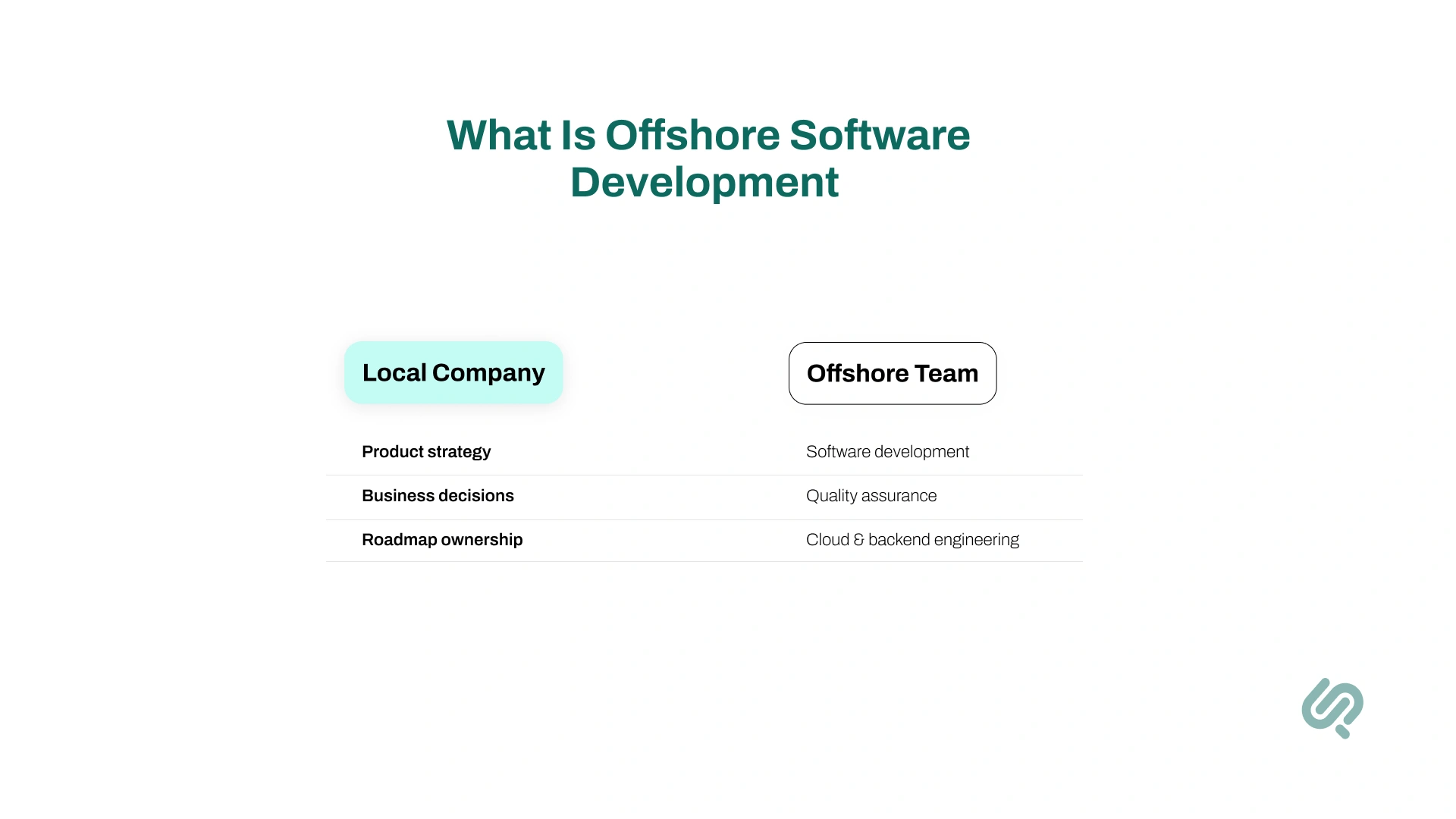
Offshore software development is the practice of hiring a development team in another country to build or maintain software.
Businesses work with an offshore software development company to reduce costs, scale teams faster, and access global engineering talent.
These teams often follow Agile processes and proven Software Engineering Frameworks to deliver reliable results across the Application Development Lifecycle.
The key benefits of offshore software development:
Here’s an example of offshore software development:
A startup partners with an offshore outsourcing custom software development company to build its MVP. While the local team focuses on strategy and users, the offshore team handles development and testing, cutting time to market significantly.
Before choosing a development partner, it’s important to understand how offshore, nearshore, and onshore models differ.
Each option offers distinct trade-offs in cost, collaboration, scalability, and talent access. The table below breaks down these differences to help you quickly identify which model best fits your business needs.
Offshore development in 2026 is a strategic choice for companies that want speed, scale, and access to top talent without unnecessary risk.
With 92% of Global 2000 companies using IT outsourcing, partnering with the right offshore outsourcing software development company has become a standard approach for building and scaling modern software. (1)
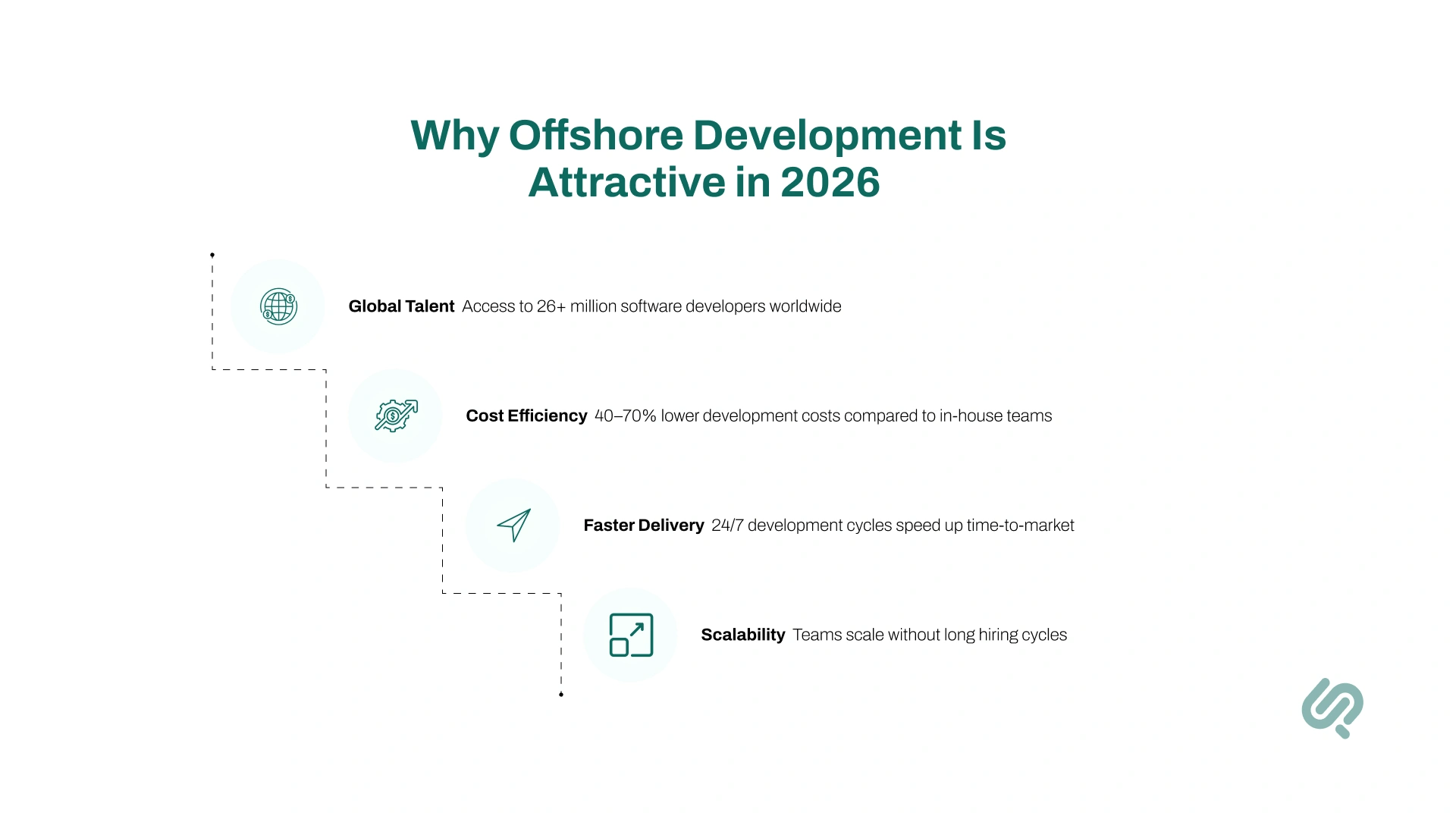
An offshore software development services company opens the door to a worldwide talent pool of experienced engineers and specialists.
A custom offshore software development company helps reduce costs while maintaining high delivery standards.
Working with an agile offshore software development company allows businesses to stay focused on growth, not recruitment.
A strong offshore software product development company supports the full build cycle, not just coding.
An experienced offshore partner offers stability and reach beyond a single location.
Choosing an offshore partner is a business-critical decision.
The right offshore software development company helps you ship faster, scale with confidence, and avoid long-term technical debt. The wrong one leads to delays, quality issues, and hidden costs.
To choose the right partner, evaluate offshore teams using the factors below (the same criteria trusted by high-growth companies that succeed with software development outsourcing).
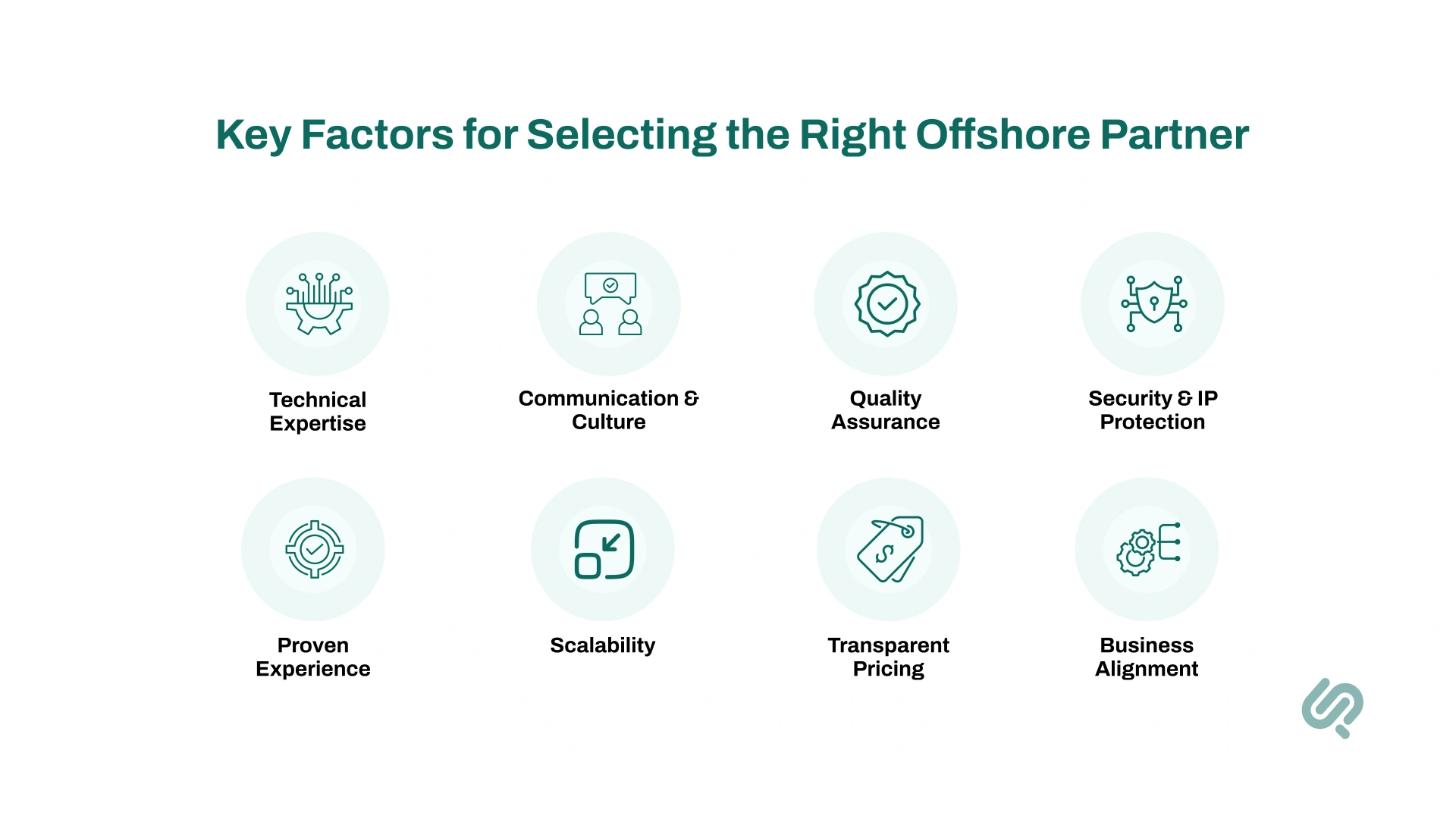
Technical capability is the foundation of any successful offshore engagement. A strong partner must go beyond writing code and demonstrate the ability to design, build, and scale real-world systems.
A reliable offshore software development services company should show experience across multiple technologies, architectures, and product types, especially those aligned with your business goals.
What to look for:
Offshore development succeeds or fails on communication. Even technically strong teams struggle without clear expectations, consistent updates, and cultural alignment.
A dependable offshore outsourcing software development company should feel like a natural extension of your internal team, not a disconnected third party.
What to look for:
Quality should be built into the process from day one. Strong offshore partners adhere to disciplined development practices that minimize defects and enhance long-term maintainability.
An agile offshore software development company prioritizes iteration, testing, and feedback throughout the application development lifecycle, not just at delivery.
What to look for:
Outsourcing requires trust. You are sharing sensitive data, source code, and intellectual property; security must be non-negotiable.
A professional offshore partner treats data protection and IP security as core responsibilities, not contractual formalities.
What to look for:
A partner’s past work is one of the strongest indicators of future success. Experienced companies have already solved the problems you’re about to face.
A credible Offshore Software Development Company should be able to demonstrate consistency, reliability, and client trust.
What to look for:
Your product and business will evolve. The right offshore partner must scale with you, without slowing momentum.
Strong providers offer flexible engagement models and can quickly assemble or adjust a dedicated software development team as needs change.
What to look for:
Cost is important, but value is what matters. The cheapest quote often leads to rework, delays, and higher long-term costs.
A mature offshore partner focuses on outcomes, efficiency, and ROI, not just billable hours.
What to look for:
The best offshore engagements turn into long-term partnerships. These partners think beyond delivery and help shape product decisions.
A high-quality partner acts as a global technology consulting partner, not just a delivery team.
What to look for:
An offshore software development company is a service provider that builds, maintains, or supports software for businesses in another country, usually from a region where development costs are lower.
In simple terms, you’re hiring a remote engineering team overseas to build or scale your product, without expanding your local headcount.
Step 1: Don’t rely on their sales pitch. Ask for real proof.
Request 2–3 relevant case studies, live products, or portfolios. Ask what exactly they built, what the outcome was, and what constraints they worked under.
Step 2: Validate their experience in your exact problem space.
“Web app” isn’t a niche. Ask if they’ve built something like: payments, multi-tenant SaaS, healthcare compliance, real-time systems, AI features, etc.
Step 3: Interview the people who will work on your project.
Not just the sales rep. Meet the tech lead, the PM, and at least 1–2 developers who will be assigned to you.
Step 4: Ask how they handle requirements and scope changes.
Good teams have a clear process for discovery, documentation, estimation, and change requests—so “small changes” don’t turn into delays and surprise invoices.
Step 5: Make them walk you through their delivery process.
Ask: How do you plan sprints? How do you report progress? How do you handle blockers? What does “done” mean? Weak process = missed timelines.
Step 6: Check communication quality before you sign.
Do they explain clearly? Do they ask smart questions? Do they summarize the next steps? The way they communicate now is how they’ll communicate under pressure later.
Step 7: Review their QA and testing approach.
Ask what testing they do by default (manual, automated, regression, performance). If QA is an “add-on,” expect more bugs and rework.
Step 8: Confirm security and IP protection basics.
Ask about NDAs, access control, code ownership, secure environments, and data handling. If they’re casual about security, that’s a risk.
Step 9: Demand transparency on team structure and availability.
Who is full-time? Who is shared across projects? What happens if a key person leaves? You want stability, not rotating resources.
Step 10: Start with a small paid pilot.
Before a long engagement, do a 2–4 week trial (a feature, module, or discovery sprint). It’s the fastest way to test quality, speed, and collaboration—without big risk.
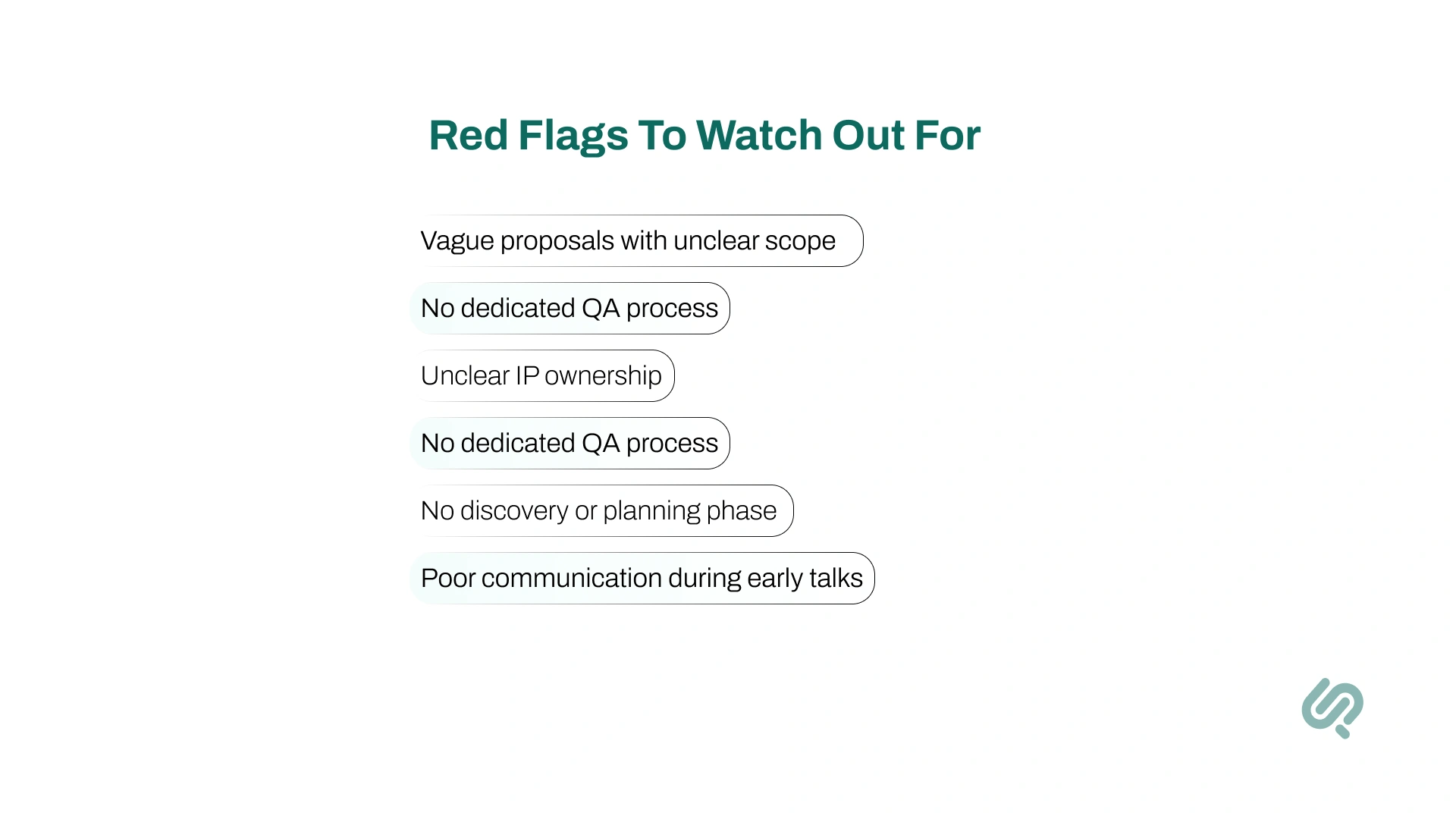
Not all offshore vendors are worth the risk.
Spotting warning signs early can save months of delays, rework, and unexpected costs. Below are common red flags CTOs and founders should never ignore.
Major warning signs to watch for:
If a vendor avoids transparency or rushes you into a contract, treat that as a serious signal. A professional offshore outsourcing software development company will welcome due diligence and detailed discussions.
Choosing an offshore development company isn’t just about lowering costs. It directly affects how fast you ship, how stable your product is, and how smoothly your team operates. The right partner accelerates growth. The wrong one creates risk.
Choosing an offshore software development company shapes how your product is built, delivered, and scaled.
The right partner brings clarity, speed, and accountability, not just lower costs. The wrong one creates friction, rework, and long-term damage that’s hard to undo.
That’s why this decision deserves the same care as hiring senior leadership, not a quick vendor comparison. Look for teams that communicate clearly, own quality, protect your IP, and understand your business goals.
When those pieces align, offshore development stops feeling “offshore” at all. It becomes a reliable extension of your team that helps you move faster, build better software, and grow with confidence.



Ameena is a content writer with a background in International Relations, blending academic insight with SEO-driven writing experience. She has written extensively in the academic space and contributed blog content for various platforms.
Her interests lie in human rights, conflict resolution, and emerging technologies in global policy. Outside of work, she enjoys reading fiction, exploring AI as a hobby, and learning how digital systems shape society.