






Building A1 DDP - Dubai Silicon Oasis
Industrial Area - 342001 -
Dubai - United Arab Emirates
+971 50 756 2346

SERVICES

COMPANY LINKS
SIGN-UP
For Newsletter


CES 2026 is the world’s biggest technology event, and people come here for one reason: to understand what’s being launched, what it means, and what to do about it.
This guide gives you the exact dates, location, tickets, exhibitor insights, and trends shaping this year’s show in Las Vegas.
You’ll see what companies are announcing, which technologies are real, and which ones are just demos. You’ll learn what startups should watch, what business leaders should evaluate, and what investors should take seriously.
We’ll break down the key themes, from AI and robotics to digital health and climate tech, in plain language.
We’ll also explain how these trends move from the show floor into real products and real business impact.
CES (Consumer Electronics Show) is the world’s largest technology trade show, held every January in Las Vegas. It’s where companies launch new products, announce innovations, and form partnerships across the tech industry.
CES 2026 runs from January 6 to January 9, 2026. Media Days take place earlier, on January 4 and 5, before the show officially opens.
CES 2026 takes place in Las Vegas across multiple venues, including the Las Vegas Convention Center and the Venetian Expo.
No, CES is not open to the general public. It’s a trade-only event for industry professionals, startups, media, investors, and business leaders.
Early Exhibits Plus passes start around $149 and increase to about $350 closer to the event. Deluxe Conference passes range from roughly $1,400 early to about $1,700 later.
You must register through the official CTA registration portal on the CES website. You’ll need to create an account and verify your industry affiliation before your badge is approved.
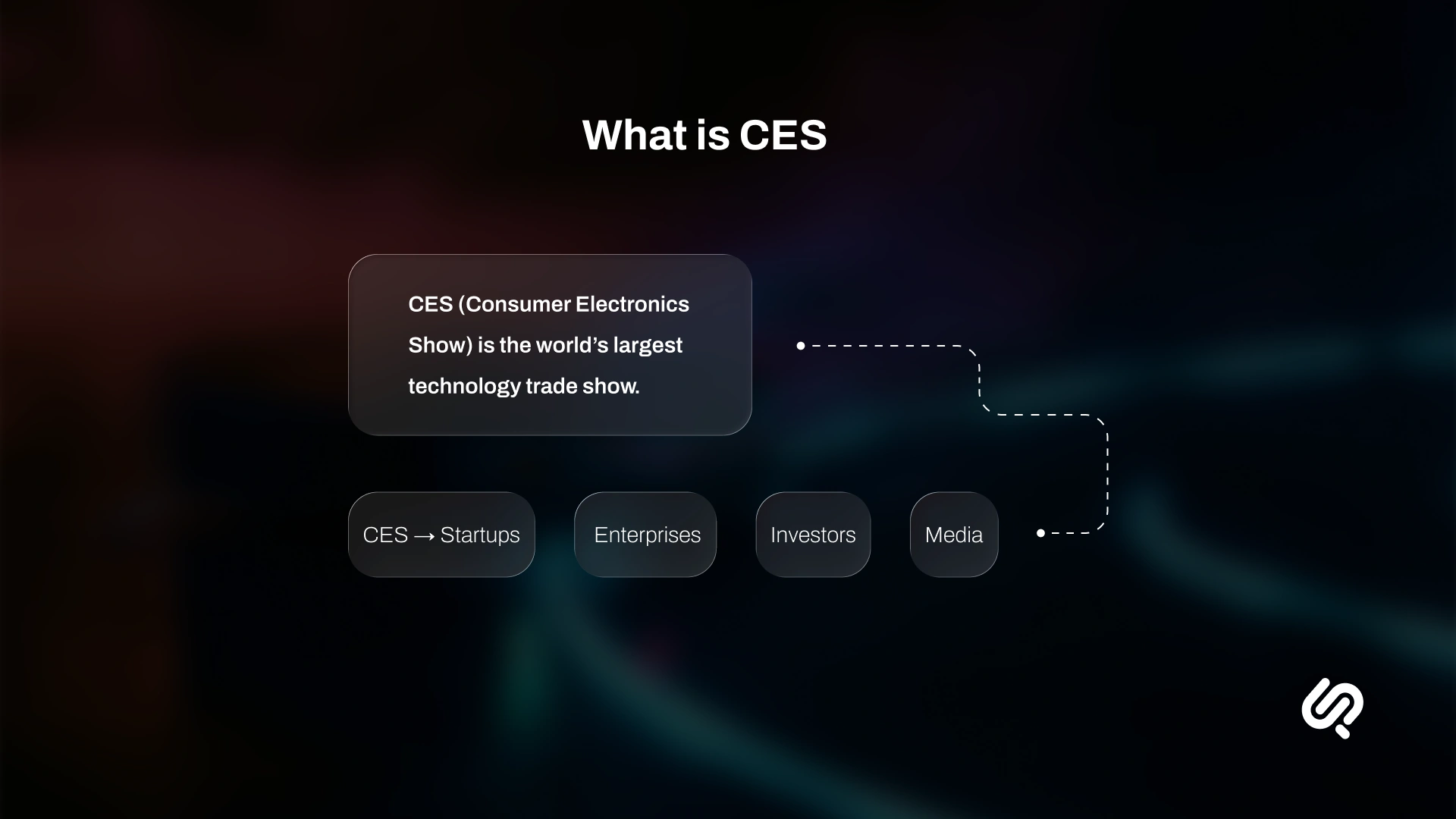
CES (Consumer Electronics Show) is the world’s largest technology trade show, held every January in Las Vegas.
It’s where global companies launch new technology, announce products, and showcase innovations across AI, robotics, digital health, mobility, and enterprise systems.
It’s exclusively for industry professionals, including:
It is not open to the general public and requires proof of professional affiliation to attend.
CES is where the tech industry sets direction for the year ahead. This is where new platforms are introduced, partnerships are formed, and early signals about what will scale and what won’t become visible.
For startups, it’s a chance to gain exposure and secure funding or pilots. For businesses, it’s a way to evaluate emerging technologies before competitors do. In short, CES is not about seeing new gadgets; it’s about deciding which technologies deserve real investment and action.
CES 2026 takes place in early January and sets the tone for the technology industry at the start of the year. Most major CES announcements happen around the opening days, including during Media Days. (1)
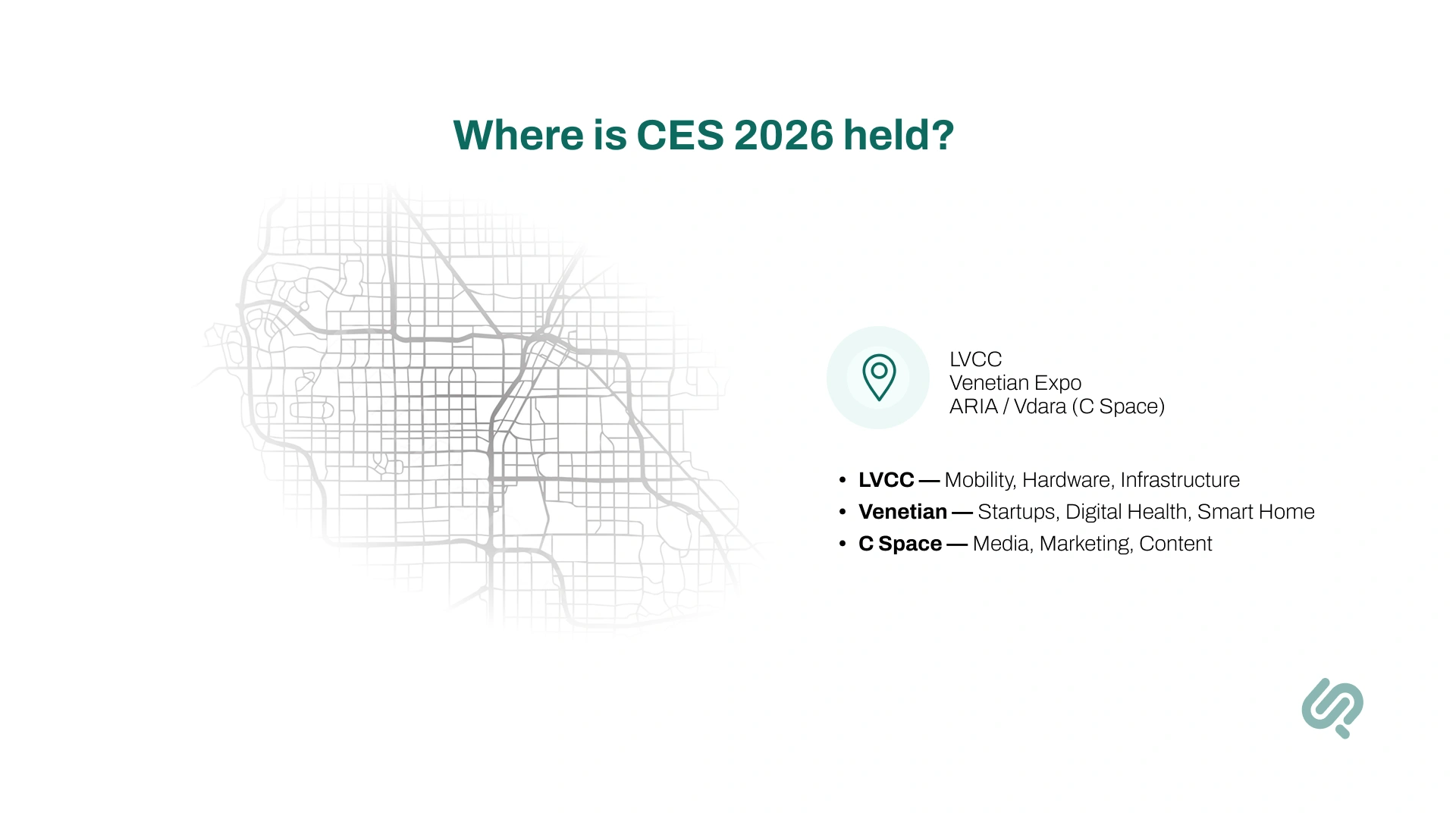
CES 2026 is hosted across multiple venues in Las Vegas, forming one connected technology campus. Each venue focuses on different industries and types of technology.
The LVCC is the main and largest venue of the CES show. It hosts the biggest hardware, mobility, and infrastructure exhibits.
The Venetian Campus is where startups, digital health, and enterprise technology are concentrated. It’s also where many keynotes and industry panels take place.
C Space is designed for content, media, marketing, and brand leaders. It connects technology with storytelling, advertising, and customer experience.
No. CES is strictly for attendees with business credentials in technology or related industries.
In CTA’s own terms, “CES® is a trade-only event for individuals 18+ affiliated with the consumer technology industry… CES is not open to the general public” (2)
You will be asked to prove your industry affiliation (see Registration below) in order to attend. This policy distinguishes CES from a public expo or conference.
Choosing the right pass and registering early removes friction before the event even begins. It ensures you spend your time at CES learning, meeting people, and exploring — not waiting in lines or fixing avoidable issues.
CES offers two main ticket types depending on how deep you want to go into the conference.
Most attendees choose between simple show-floor access or full conference access.
CES ticket prices depend on when you register and which pass you choose. Registering early can save you several hundred dollars.
1. Exhibits Plus Pass:
2. Deluxe Conference Pass:
In short: expect to spend about $150–$350 for basic access and $1,400–$1,700 for full conference access.
Each pass level is designed for a different type of attendee. Choose based on how much structured content you want versus open floor exploration.
CES tickets should only be purchased through the official CES registration platform.
Third-party sellers often list fake or invalid badges.
CES is a trade-only event, so registration includes a simple approval process. Plan a few minutes to complete this before your badge is approved.
You cannot enter CES without an approved badge, so it’s best to register early and complete verification ahead of time.
The CES exhibitor list is the official directory of every company exhibiting at the show. It’s the main tool for finding booths, products, and relevant companies before you arrive.
It’s available through the CES website and the CES mobile app, and it lets you search or filter exhibitors by company name, industry, and technology focus, such as AI, health tech, mobility, or sustainability.
Some of the top featured exhibitors at CES 2026 this year are:
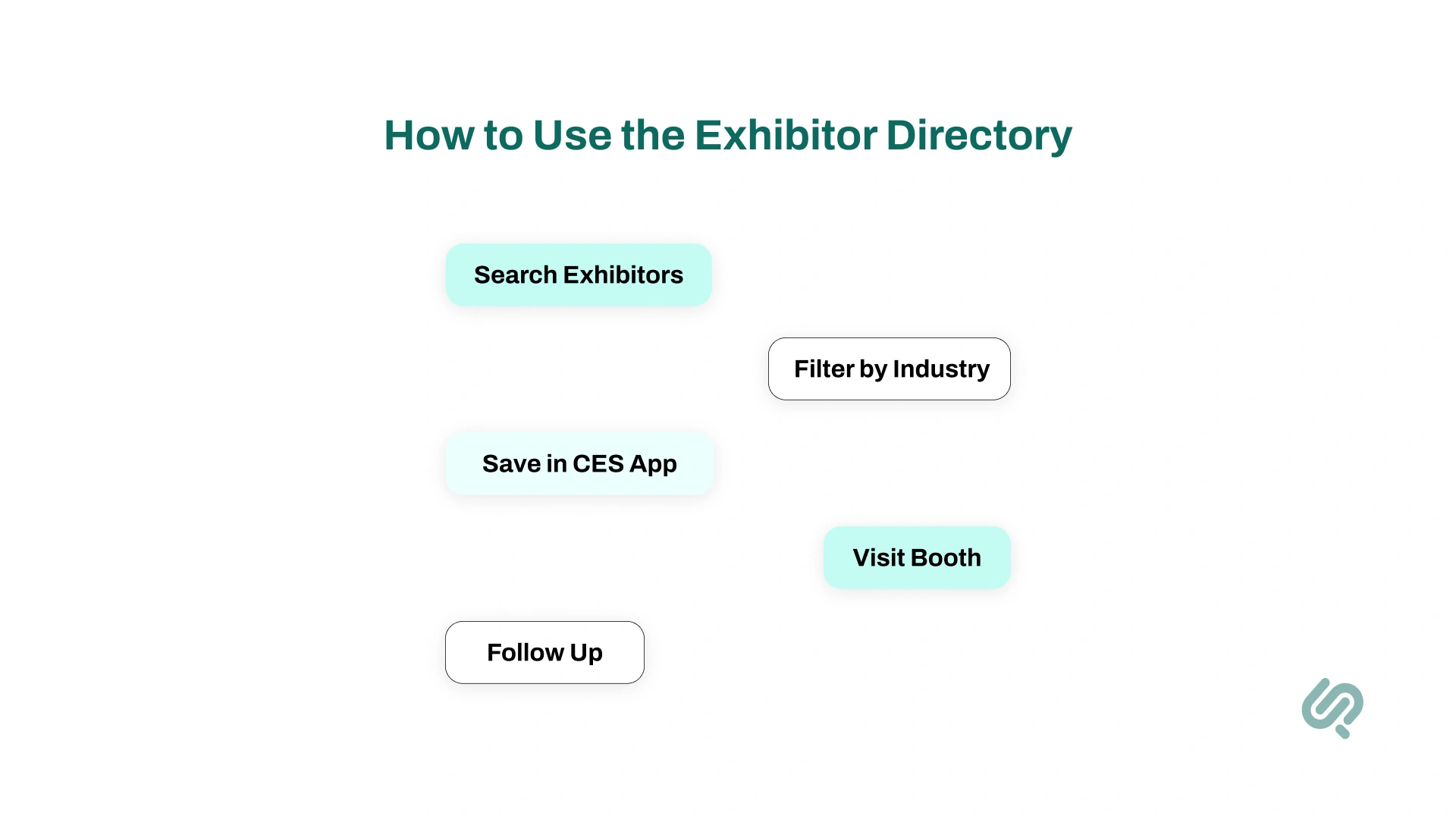
The exhibitor directory turns the CES show floor from something overwhelming into something manageable. Instead of walking aimlessly, you can build a targeted plan around what matters to you.
You can search for specific companies if you already know who you want to meet, or browse by category to discover new vendors and startups in your space.
The CES App also allows you to save exhibitors and build a personal schedule so you know exactly where to go and when.
Not every booth is relevant to every visitor. The best way to use the exhibitor list is to group companies based on your role and your objectives.
If you’re a founder or investor, you’ll likely spend more time in Eureka Park and early-stage zones. If you’re part of an enterprise team, you’ll probably focus on the main halls where larger platforms and infrastructure providers are located.
You can filter by:
This helps you prioritize meetings and avoid wasting time on booths that don’t fit your needs.
Each exhibitor profile gives you a snapshot of what the company does and where to find them. This makes it easier to qualify booths before you walk across the show floor.
Listings usually include the company name and logo, booth location (hall and booth number), product or technology category, and sometimes a short description or website link.
That’s usually enough to decide whether it’s worth adding that booth to your schedule.
The CES show floor is organized by technology theme and audience type across different campuses and halls.
For example, West Hall focuses on mobility and transportation, North Hall leans toward enterprise and infrastructure technology, and the Venetian campus, including Eureka Park, is home to startups, digital health, and smart home technology.
Knowing this structure in advance helps you move through the show more efficiently and spend time where it actually matters to you.
Here are three best CES exhibitors to watch at CES 2026, based on the latest show coverage, all highly relevant for startups, business owners, and tech leaders:

NVIDIA is one of the headline exhibitors at CES 2026, showcasing its latest Vera Rubin AI chip architecture and advanced AI platforms for robotics, simulation, and autonomous vehicles.
AMD is a major CES exhibitor this year, highlighting new AI processors such as the MI455 and MI440X for enterprise and data-center AI workloads, along with its Ryzen AI chips for edge and local inference applications. (3)
Boston Dynamics, in partnership with Hyundai Motor Group, is attracting attention with its live demonstration of the humanoid robot Atlas and synchronized robot performances. These exhibits show robotics moving closer to real-world applications. (4)
Keynotes are the main stage talks where industry leaders announce new products, platforms, and strategic direction. They set the tone for the show and often shape how the media and market talk about the year ahead.
In 2026, CES announcements are expected from major technology and business leaders across AI, manufacturing, enterprise, and digital transformation.
What to watch for:
CES offers hundreds of sessions, so you need to choose carefully. The goal is not to attend everything, but to attend what’s most relevant to your role.
Use the CES website and CES App to filter by theme and save sessions in advance.
CES 2026 covers nearly every major technology category. These are the main themes shaping the show this year:
CES 2026 will be full of announcements, but only a few trends will shape real products and business decisions. These are the shifts that matter beyond the show floor.
AI is no longer just answering questions; it’s starting to take action. At CES 2026, you’ll see AI controlling robots, workflows, and smart devices in real time.
AI is moving onto devices instead of staying in the cloud. This makes products faster, more private, and easier to scale across laptops, phones, vehicles, and cameras.
Software is starting to understand and react to physical space. XR, digital twins, and connected sensors are turning factories, hospitals, and retail into real-time digital systems.
Many demos never leave the show floor because there’s no integration plan or ownership.
Without teams, timelines, and budgets, even good ideas stall.
Strong teams treat CES as a starting point, not a finish line.
They move from proof of concept to pilot, then integrate into real workflows and scale from there.
CES can be a major growth moment for startups if you approach it with a plan. It’s one of the few places where founders, investors, partners, and customers are all in the same room.
Eureka Park is the heart of startup activity at CES. Located at the Venetian, it’s where early-stage companies showcase products and look for funding, partnerships, and pilots.
To get value from CES as a startup:
Avoid focusing only on features. What matters is business value, traction, and clarity.
For enterprise teams, CES is a sourcing and strategy event. It’s where companies evaluate new vendors, platforms, and emerging technology.
CES is beneficial for making buy vs build decisions and spotting where the market is moving faster than internal teams.
By the end of the show, you should have a short list of technologies and partners worth testing.
CES is where investors look for early signals, not final answers. The goal is to spot momentum, quality, and long-term potential.
Utilize CES to identify which markets are heating up, who is gaining attention, and where capital and talent are converging.
If you’re coming to CES from outside the United States, start your visa planning as soon as you register. Most international attendees will need a U.S. visa, and processing times can be slow.
CES venues are spread across Las Vegas, but getting between them is straightforward.
Most hotels and campuses are connected by public transport, shuttles, or short rides.
Use the Las Vegas Monorail to reach the Convention Center from the Strip. Uber, Lyft, and taxis are easy to find throughout the city.
CES may run official shuttles between major venues like the LVCC and the Venetian. Wear comfortable shoes; you’ll be walking a lot each day.
CES is large and fast-paced, so small habits can make a big difference. A bit of planning will save you time, energy, and missed opportunities.
CES is known for flashy demos, but many never reach the market. Why? Common barriers include:
For example, industry reports find that over 80% of AI projects never reach production – most require 6–18 months to deploy, if at all. (5)
To succeed, companies must bridge CES demos into products through staged execution:
Companies that follow this path (and invest in standards and governance) can take CES’s shiny demos and turn them into actual systems. Otherwise, even the coolest new tech or AI concept at CES will remain just a conversation piece.
CES 2026 builds on the momentum of last year’s show, but this time, it’s less about promises and more about proof.
While CES 2025 introduced the buzz around agentic AI and humanoid robotics, CES 2026 is showing those same systems working in production environments.
This shift marks a move from “what’s next” to “what’s working.”
This is the part most teams underestimate, the last mile between idea and impact. Bridging that gap requires more than models and code. It requires understanding business workflows, system constraints, data quality, and how people actually work.
That’s where experienced AI and engineering teams matter.
Phaedra Solutions focuses on helping teams translate trends into systems that work in real environments, systems that integrate cleanly, are adopted by users, and continue delivering value long after the demo is over.
Not just building technology, but making it usable, reliable, and sustainable.
If CES inspires you, execution is what turns that inspiration into results. And that’s what separates companies that watch the future from companies that build it.
CES 2026 isn’t just about gawking at new technology gadgets (although some of them are definitely gawk-worthy!). It’s about figuring out what actually matters for your business.
The real value of CES doesn’t happen on the show floor, it happens after the show, when you follow up on the right conversations, test the right ideas, and turn the right trends into real systems.
Trends and demos only matter if they become something people use, trust, and pay for. So come for the tech, enjoy the spectacle, but stay for the strategy.
Everything you see at CES is a preview of what’s possible. What matters is what you choose to build next.



Ameena is a content writer with a background in International Relations, blending academic insight with SEO-driven writing experience. She has written extensively in the academic space and contributed blog content for various platforms.
Her interests lie in human rights, conflict resolution, and emerging technologies in global policy. Outside of work, she enjoys reading fiction, exploring AI as a hobby, and learning how digital systems shape society.