







Building A1 DDP - Dubai Silicon Oasis
Industrial Area - 342001 -
Dubai - United Arab Emirates
+971 50 756 2346

SERVICES
COMPANY LINKS
SIGN-UP
For Newsletter


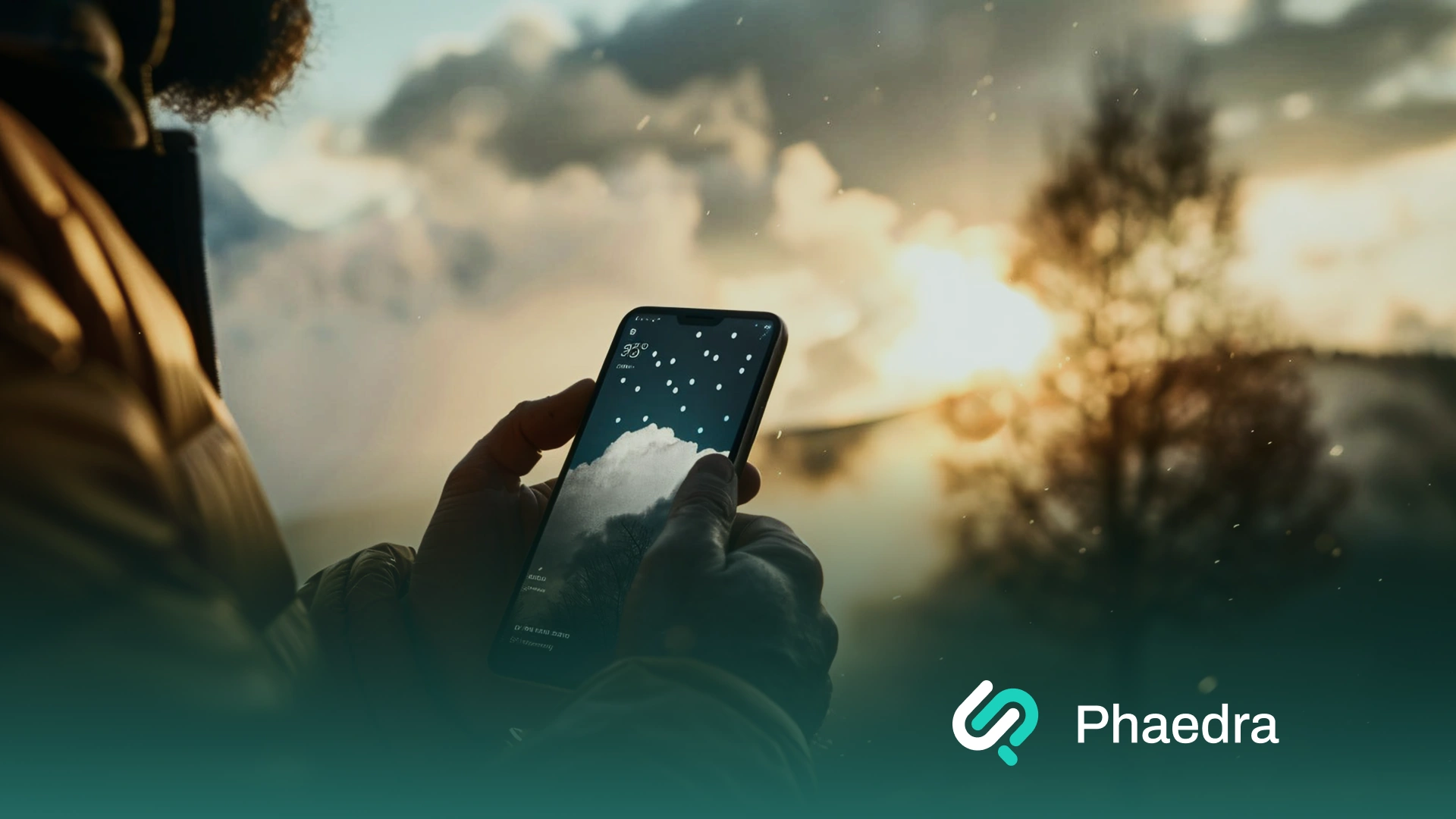
If you want the best weather app for Android, don’t pick by hype, pick by use case.
For most people, the winning setup is one daily forecast weather app + one radar weather app: use an app like AccuWeather, The Weather Channel, or Weawow for routine planning, and pair it with MyRadar or Windy when storms matter.
Weather apps are no longer just “temperature checkers.” The best ones now combine minute-by-minute rain timing, severe alerts, air quality, and live radar so you can make faster decisions before you commute, travel, or head outdoors.
In this guide, we break down the top Android weather apps by what users actually care about: forecast reliability, radar depth, alert quality, privacy trade-offs, and value.
The weather is unpredictable, and having a reliable weather app for Android helps you plan your day with confidence. Studies show that 50% of U.S. smartphone users regularly check weather apps, demonstrating their increasing importance (1).
If you want the best weather app for Android, pick one based on what you need.
The Weather Channel is one of the most downloaded weather apps worldwide, with over 100 million active monthly users.
It delivers everything from hourly and 10-day forecasts to rainfall probabilities, wind speed, temperature, and more.
Its standout feature is the interactive Doppler radar maps, which make tracking storms, rain, or snow much easier. Along with reliable severe weather alerts (tornadoes, hurricanes, thunderstorms), it also provides extra insights, such as flu activity and pollen counts.
The free version includes ads and sponsored content, but users can switch to an ad-free experience. As with many free apps, it collects some user data for advertising purposes.
Despite these drawbacks, its global reputation and comprehensive feature set make it a trusted choice for Android users.
AccuWeather is widely recognized for its precision and depth of forecasts, giving users hyperlocal updates right down to their neighborhood.
It covers all the essentials: daily and hourly temperature, humidity, UV index, cloud coverage, wind speed, and air quality. The standout MinuteCast feature predicts precipitation by the minute for the next 2–4 hours, helping you know exactly when rain will start or stop.
Winter users also benefit from WinterCast, which provides detailed snow forecasts and ice alerts.
With over 500 million downloads and a reported 1.5 billion monthly active users worldwide, AccuWeather is one of the most trusted weather apps. Some features, like safety tips during dangerous weather, are gated behind the premium plan.
Like many free apps, it may collect personal and nearby device data for advertising, though opt-out options are available. For those needing highly local, minute-accurate insights, AccuWeather remains a daily driver.
Weather Underground, often called “Wunderground”, is all about hyper-local accuracy.
It pulls data from a vast network of more than 250,000 personal weather stations run by enthusiasts, which means you can get forecasts and live readings from a station just a mile away.
This is especially helpful in areas with microclimates, where conditions can vary drastically in short distances. The app includes current conditions, hourly forecasts, extended 10-day forecasts, and interactive weather maps with layers for radar, satellite, and temperature.
Users can also submit crowd reports to confirm real-time conditions and hazards.
It provides severe weather alerts and a premium “Smart Forecast” feature that recommends the best times for outdoor activities based on weather conditions.
The interface is straightforward, though some longtime users note it has lost a bit of its speed and feature depth in recent years due to ownership changes.
The free version is ad-supported, while an ad-free plan extends forecasts up to 15 days. A plus for privacy-conscious users: Wunderground is transparent about data use, clearly stating how information is used for targeted ads and giving the option to opt out or delete data.
WeatherBug has been a trusted weather companion for years, combining standard forecasts with a few unique extras.
Its standout Spark lightning alerts notify you how far away the nearest lightning strike is, a critical feature for storm safety.
The Outdoor Sports Index gives simple ratings for activities like hiking, running, or golfing, so you can quickly see if conditions are favorable.
The design is modern and user-friendly, with quick access to temperature, “feels-like” readings, humidity, pollen count, and air quality. It also includes interactive radar maps and delivers severe weather alerts when issued.
The downside: the free version is ad-heavy, with some ads embedded into the interface, making accidental taps common. A subscription removes ads. Privacy-wise, WeatherBug does collect detailed personal information (such as name, gender, and interests) to serve targeted ads.
With over 100 million downloads and around 20 million monthly users, it remains a reliable choice.
While it’s not as hyperlocal as Weather Underground, its combination of radar, alerts, and activity indices makes it a favorite among outdoor enthusiasts who want quick, actionable weather insights.
MyRadar is one of the most popular radar-first weather apps for Android, and for good reason. It opens straight into a clean, animated radar map that shows rain and storm movement in near real time, making it easy to see what’s coming your way without digging through menus.
Unlike feature-heavy apps, MyRadar keeps things intentionally simple. You get precipitation radar, basic forecasts, and optional layers like hurricanes, wildfires, and air quality.
This makes it ideal for users who just want a quick visual answer to “Is rain coming?” without wading through dense data.
The free version includes ads, while optional upgrades unlock extra layers and remove ads. Pricing varies by region and plan, so it’s best to check the Play Store for current options. Privacy-wise, MyRadar uses location data to power radar and alerts, which is expected for this category.
Today Weather is often regarded as the best free weather app for Android, thanks to its clean design and solid accuracy.
The interface is sleek and minimal, with tasteful background images that reflect local conditions, making it visually engaging without being cluttered.
It presents essential details like temperature, “feels like” index, humidity, UV levels, and visibility, along with an hourly forecast graph and a 7-day forecast.
The app also includes air quality and pollen data, plus a radar map for precipitation tracking. A unique feature is the ability to choose from multiple data providers such as Weatherbit, AccuWeather, Yr.no (MET Norway), and the U.S. National Weather Service; some sources are unlockable via premium.
Even the free version is relatively ad-light, with ads integrated into the scroll rather than disruptive pop-ups. A premium subscription removes ads and unlocks all providers.
While some users note that severe weather alerts may appear as silent pop-ups without sound, many long-time fans praise the app’s accuracy and design balance.
It also supports Wear OS widgets, making it convenient for smartwatch users. If you want a polished app that blends data reliability with aesthetic appeal, Today Weather is a great choice.
Weawow (pronounced “wee-wow”) is a hidden gem and often praised as the best free weather app for Android without ads.
Unlike most competitors, it’s entirely free, with no ads at all, sustained by donations and optional in-app purchases for themes and icons.
The interface is both intuitive and visually stunning, featuring community-contributed photos that reflect real-time weather. Users even have the chance to upload their own images to appear in the app.
It covers all the essentials, current conditions, hourly forecasts, multi-day outlooks, rain probabilities, air quality, and UV index. A smooth hourly temperature chart and an integrated weather radar map add functionality without draining battery or data.
A major strength is flexibility. Weawow lets you choose from multiple providers like OpenWeatherMap, NOAA, MET Norway, and even AccuWeather (for donors).
You can compare forecasts side-by-side from different sources, which makes it easy to spot inconsistencies and pick the most accurate one for your region.
The app also offers widgets in various styles, making it easy to personalize your home screen. The only notable drawback is the lack of audible severe weather alerts; it shows warnings in-app and in notifications, but without sound.
1Weather has been a long-time favorite on Android, known for its stability, simplicity, and reliability.
It provides everything users expect in one app: current conditions, 12-week hourly forecasts, 10-day forecasts, severe weather alerts, precipitation chances, sunrise/sunset times, and moon phases. Its clean, card-based interface makes information easy to read without unnecessary clutter.
One of 1Weather’s strongest features is its widget support. From forecast bars to clock-and-weather combos, it offers a wide range of attractive, customizable widgets, making it especially popular with users who like at-a-glance weather updates on their home screen.
The app also includes animated radar maps for storm tracking and a minute-by-minute precipitation forecast with 48-hour detailed outlooks for short-term planning.
The app is free with ads, but they are generally non-intrusive (mainly small banners). The Pro version removes ads and unlocks extras like an extended 10-day forecast and air quality index cards.
With millions of downloads and consistently high ratings, 1Weather remains a dependable, middle-of-the-road choice: not the flashiest, but comprehensive, stable, and effective.
Windy, also known as Windy.com, is a powerhouse for anyone who loves detailed weather visualization. With over 40 interactive map layers, it displays everything from wind streams, temperature, humidity, and pressure to wave heights, air quality, CAPE (storm potential), snow depth, and more.
Its signature dynamic wind map animates wind patterns across the globe, making it a favorite for sailors, pilots, surfers, and outdoor adventurers.
The app integrates multiple forecast models (like ECMWF and GFS), allowing users to compare predictions and track changes across different meteorological systems.
A popular highlight is the hurricane tracker, which provides storm paths and forecasts during hurricane season. The interface is smooth and interactive, letting users zoom, pan, and slide through time to see future projections.
Windy is free to use, but a premium plan offers faster forecast updates (hourly instead of every 3 hours) and unlocks higher-resolution models.
Beyond maps, Windy also provides daily outlooks, webcams, and live weather station reports, offering a rich, situational picture.
While casual users might find it data-heavy, weather enthusiasts consider it indispensable, often pairing it with a simpler daily forecast app. If you want to see the weather in motion, Windy delivers an unmatched experience.
Adding data from NOAA’s G-IV aircraft observational missions during Atlantic hurricane seasons has made hurricane track forecasts up to 24% more accurate compared to forecasts without that data (3).
Clime is built for people who care most about live weather radar and storm tracking, not just daily temperatures.
The app presents a full-screen animated radar by default, with easy controls to layer precipitation, cloud cover, snowfall, lightning strikes, and wildfire hotspots on an interactive map.
Beyond radar, Clime provides current conditions plus short-term and 7-day forecasts. Users can enable severe weather alerts, and premium plans unlock features like future radar projections, hurricane tracking, and saved locations for custom notifications.
Pricing varies by region and plan, so it’s best to check the Play Store for current subscription options.
It’s important to note that Clime is not an official NOAA app. While it uses data from NOAA and the U.S. National Weather Service (among other sources), NOAA does not publish its own consumer weather app.
This is common across many popular radar apps, but worth clarifying for users who assume “NOAA” branding means official ownership.
On the privacy side, Clime collects location and device data to power radar and alerts, and its policy states that some data may be retained even after account deletion. If privacy is a top concern, users may want to review permissions closely or pair Clime with a more privacy-forward daily forecast app.
RadarScope is not your everyday weather app; it’s a specialized radar tool built for professionals and serious hobbyists. Unlike standard apps, it delivers Level 3 NEXRAD radar data directly, allowing you to view high-resolution reflectivity, velocity, and dual-polarization products just like a meteorologist’s console.
This enables advanced tracking of tornadoes, thunderstorms, hail, and severe storm development with a level of detail most apps can’t match.
RadarScope also provides lightning detection, storm tracks, and tornado/severe weather warnings, and lets users loop through dozens of radar frames to watch storm evolution. It supports data from Environment Canada and international radars, where available.
The interface is intentionally utilitarian: you pick a radar site, choose products, and adjust tilt angles, perfect for power users but with a learning curve if you’re not familiar with radar science.
Unlike most apps here, RadarScope is not free. It requires a one-time purchase (around $9.99) just to download. Additional pro tiers unlock more features:
RadarScope doesn’t provide lifestyle forecasts, widgets, or daily summaries; it’s focused purely on radar and severe weather monitoring.
For average users, it may feel like overkill. But for storm chasers, pilots, or residents in severe-weather regions, it’s an invaluable tool that can even provide extra lead time during dangerous events.
Yr is a clean, forecast-first weather app developed around meteorological data from Norway’s national weather service ecosystem. It is widely trusted by users who want reliable day-to-day predictions without clutter.
The app is especially strong for users who value:
Unlike radar-heavy apps, Yr focuses on practical planning forecasts. That makes it a strong daily driver for commuters, travelers, and families who want dependable weather guidance at a glance.
Shadow Weather has quickly become a fan favorite among Android users, especially those who miss Dark Sky.
It packs an all-in-one feature set: hour-by-hour forecasts, daily outlooks, severe weather alerts, radar maps, air quality, UV index, and even calendar integration, so you can see weather conditions for upcoming events.
One of its standout features is the lightning tracker with a compass, which shows both the distance and direction of nearby strikes. Its radar is notably powerful, more like a meteorologist’s tool than a consumer radar.
It allows distance measurements, drawing tools, warning polygons, and overlays for lightning and alerts. Users also have the option to choose from multiple forecast data sources (NOAA, MET Norway, etc.), helping to improve regional accuracy.
The app’s design is clean, dark-themed, and information-rich while staying organized. It also supports Wear OS sync, making it a handy option for smartwatch users.
Shadow Weather is free with ads, but a one-time purchase unlocks the Pro version that removes ads and enables all features. Many Android users say it combines features that other apps only partially offer, making it feel like a true all-in-one solution.
Some limitations include slightly choppy future radar projections, notifications that don’t always label multiple saved locations, and limited availability in some regions.
Still, it’s been called “a great replacement for Dark Sky”, thanks to its hyperlocal accuracy, rich radar, and useful alerts like “rain starting in 10 minutes.”
Weather & Radar is especially popular in Europe but offers worldwide forecasts alongside strong radar functionality.
Its main strength lies in its radar: users find it extremely accurate for predicting exactly when rain or hail will reach a location, making it invaluable for storm-prone regions.
Many rely on it for hail alerts, like moving their car to safety before damage begins. It also helps track snowfall intensity and duration in winter, giving it an edge for those who need precise short-term timing.
Beyond radar, it provides standard current conditions and forecasts up to 14 days, plus a weather news section with articles and videos. While informative, some users find the extra news cluttered, especially when it’s not local.
The free version is ad-heavy, with banners and pop-ups, and the design feels a bit crowded compared to sleeker apps like Today Weather. However, the forecast accuracy is reliable, thanks to a mix of in-house meteorologists and government data.
For those who want a cleaner experience, Weather & Radar Pro removes ads and adds extras like longer-range forecasts and detailed rain outlooks.
The subscription costs a few dollars per month (pricing varies by region). Like many free apps, it collects location and personal data to tailor ads, but it follows standard ad-supported practices.
Despite its cluttered design, many users keep Weather & Radar installed specifically for its precision radar, often using it alongside another app for everyday forecasts.
Overdrop is a stylish and modern weather app that stands out with its beautiful design and smooth performance.
Its minimalist interface manages to stay feature-rich, and one of its biggest draws is the collection of over 50 widgets from simple clock-and-weather combos to detailed multi-day forecast layouts.
Many users say Overdrop has “the most beautiful weather widgets” on Android, and it also supports dynamic themes, including AMOLED black for battery saving on OLED screens.
For forecasts, Overdrop covers all the basics: current temperature, feels-like index, highs and lows, humidity, pressure, and a 24-hour chart plus 7-day outlook.
It also provides real-time rain alerts and includes a radar map for precipitation tracking (though not as advanced as radar-focused apps like Clime or RadarScope).
Data-wise, Overdrop previously relied on Dark Sky but now supports alternatives like WeatherBit and OpenWeatherMap, giving users flexibility in choosing forecast providers.
The free version is ad-supported but still highly capable; the premium subscription or one-time purchase unlocks all widgets, additional themes, and removes ads. Android users benefit most, since the platform allows far more widget flexibility than iOS.
Overdrop also supports persistent notifications in the status bar, letting you see current conditions at a glance. Privacy practices are standard, with location required for forecasts and data processed through third-party providers.
While it may not pack as much raw data as WeatherBug or Shadow Weather, it excels in aesthetics, customization, and usability, making it an excellent choice for anyone who values both function and style in their weather app.
These apps didn’t make the Top 15, but they’re still great options if you have a specific need or preference. Think of them as strong alternatives depending on how you use weather apps.
A well-rounded weather app with a modern interface and solid global coverage. It combines daily forecasts with radar maps and short weather news updates, making it useful for users who want both planning and quick weather context in one place.
Best for: Everyday forecasts with light radar and weather news.
Ventusky is all about visual weather maps. It lets you explore wind, rain, temperature, clouds, and pressure on interactive layers, similar to Windy but with a simpler learning curve for casual users.
Best for: People who like seeing weather patterns on maps.
If your only question is “Will it rain near me?”, Rain Alarm does that one job very well. It focuses on rain notifications and simple radar views, without trying to be a full forecast app.
Best for: Simple rain alerts and commute planning.
Weather Live is a design-forward weather app with visually rich layouts, animations, and widgets. It covers the basics well, but its main appeal is how the app looks and feels on your home screen.
Best for: Users who care about aesthetics and widgets.
Google Weather is built into Pixel phones via the Google app and At a Glance widgets. It’s great for quick daily checks, but it’s not a full replacement for dedicated radar or alert-heavy weather apps.
Best for: Pixel users who want fast, no-setup weather info.
When picking the above weather applications, we considered the following criteria:
We prioritized apps that consistently deliver useful hourly + daily forecasts, not just a nice interface.
We also favored apps known for strong local forecasting features like hyperlocal updates or minute-by-minute rain timing.
Radar is where many weather apps fall apart.
We included apps with smooth live radar, clear storm movement, and useful layers (rain, snow, lightning, etc.) — especially important for commuting, travel, and storm seasons.
Severe weather alerts only matter if you notice them and understand them.
We prioritized apps with strong warning systems, fast notifications, and practical storm-focused features (like lightning distance or warning overlays).
Most people don’t open a weather app 10 times a day, they glance.
We included apps that make weather easy to check through widgets, at-a-glance views, and clean layouts that reduce scrolling.
Weather apps often rely on ads and location data.
We called out apps that offer a cleaner, less intrusive experience (like Weawow) and avoided over-recommending apps that feel too ad-heavy for most users.
We included both free and paid options, but focused on practical value — what you actually get in the free version, and what upgrades typically unlock (ad-free, extra layers, more alerts, or advanced tools).
Pricing can vary by region and plan, so we recommend checking Google Play for the latest details.
Not everyone wants the same thing.
This list includes options for casual users, travelers, outdoor people, storm trackers, and professionals, so you can pick a daily driver, a radar app, or both.
The best weather app for Android depends on how you actually use it. Some people want a simple daily forecast. Others need live radar, severe weather alerts, widgets, or more advanced weather maps.
Use these decision-based use cases to choose faster:
Pick an app with clear hourly forecasts, reliable daily summaries, and rain timing you can trust before work, school, or errands. Apps like AccuWeather, The Weather Channel, and Weawow work well for this.
Choose an app that makes fast decisions easy. Minute-by-minute rain updates, live radar, and quick home screen widgets are especially useful when you need to know whether to leave now or wait 20 minutes. AccuWeather, MyRadar, and Overdrop are strong options here.
If you live in an area with heavy rain, lightning, tornadoes, or fast weather shifts, prioritize severe weather alerts and radar depth over design alone. WeatherBug, The Weather Channel, MyRadar, and Clime are better fits for storm-prone regions.
Runners, hikers, cyclists, and outdoor workers usually need more than temperature. Look for wind, precipitation, feels-like temperature, UV index, and air quality. Windy, WeatherBug, and Today Weather are useful for this kind of planning.
If you check the weather across multiple cities or routes, choose an app with easy saved locations, broader regional coverage, and map-based views. The Weather Channel, AccuWeather, and Windy are good for travel-focused use.
If you want layered maps, weather models, radar products, and more technical data, go with a more advanced tool. These apps are not the simplest, but they offer much deeper tracking. Windy and RadarScope are the strongest picks for this.
Here are some of the benefits of how a weather app can be useful to you:
Weather apps give instant access to forecasts on your smartphone. You can check conditions anytime, anywhere, without waiting for TV or radio updates.
Modern apps use GPS data and personal weather stations to deliver street-level accuracy, letting you know if it will rain on your block rather than just your city.
Apps like The Weather Channel and AccuWeather send severe weather alerts (tornadoes, hurricanes, thunderstorms, floods), helping users stay safe and make quick decisions.
With features like widgets, radar maps, and multiple data sources, users can tailor apps to their needs, whether it’s simple daily checks or advanced storm tracking.
Many apps now include indices for sports, air quality, pollen count, and UV levels, helping people plan outdoor activities, exercise, or travel more safely and comfortably.
Most weather apps are useful, but they are not all strong in the same areas.
The biggest challenge is that users often expect one app to do everything well, when in reality, forecast quality, radar depth, alert speed, privacy, and usability can vary a lot from one app to another.
Mujtaba Sheikh, Development Lead at Phaedra Solutions, had this to say:
“Most people assume weather apps are ‘wrong’ when forecasts change, but what’s happening is that different models update at different speeds. Accuracy isn’t one number. It depends on location, data sources, and how fast conditions are changing.”
That being said, here are the main challenges to keep in mind when choosing a weather app for Android:
No single weather app is the most accurate everywhere. Forecast quality depends on the data source, weather model, and your region. An app that works well for daily forecasts may still be weak for storms or fast-changing local conditions.
Many free weather apps rely on location data, device data, and ad-supported business models. That does not make them bad, but it does mean privacy practices are worth checking before you install and enable full-time location access.
Some free weather apps are useful but filled with banner ads, sponsored placements, or interruptions that make quick checking harder than it should be. In those cases, a cleaner app or paid upgrade may be worth it.
Radar-heavy apps, background location tracking, frequent refreshes, and live widgets can use more battery and mobile data, especially if you keep several weather tools running at once.
Advanced tools like Windy or RadarScope are powerful, but they are not ideal for everyone. If you mainly want to know whether it will rain today, a simpler app may be a better fit than a more technical one.
Weather apps are one of the most common app ideas for beginners and businesses alike because they combine real-time data, clean design, and user trust.
For those wondering about how to make apps like weather apps, let’s look at a few ways:
For startups and enterprises, working with the best Android app development company ensures your weather app can scale, stay secure, and compete with popular names already on the market.



Ameena is a content writer with a background in International Relations, blending academic insight with SEO-driven writing experience. She has written extensively in the academic space and contributed blog content for various platforms.
Her interests lie in human rights, conflict resolution, and emerging technologies in global policy. Outside of work, she enjoys reading fiction, exploring AI as a hobby, and learning how digital systems shape society.