

.webp)
.webp)


.webp)


Building A1 DDP - Dubai Silicon Oasis
Industrial Area - 342001 -
Dubai - United Arab Emirates
+971 50 756 2346
SERVICES

COMPANY LINKS
SIGN-UP
For Newsletter


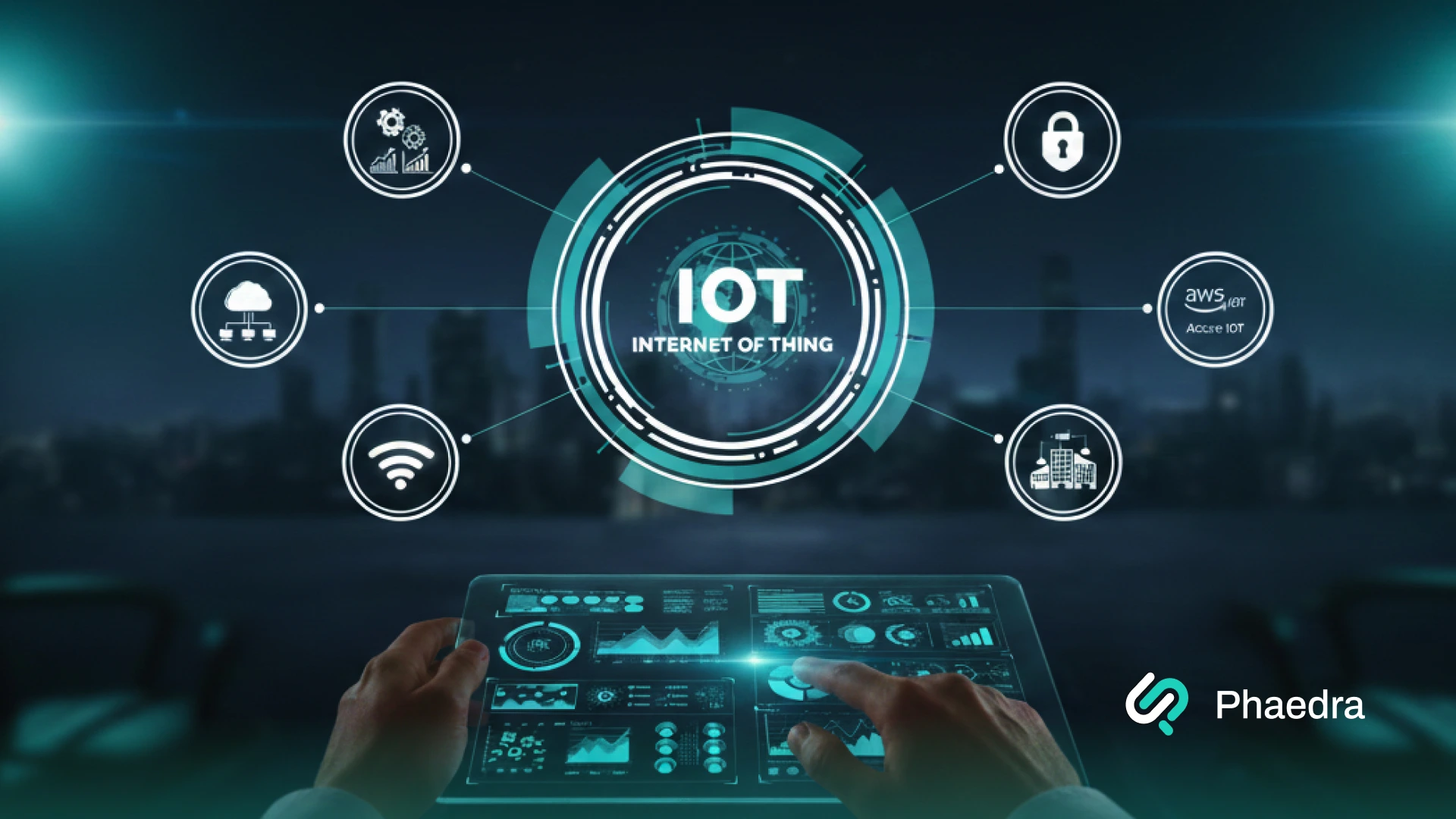
An IoT platform is a software solution that connects smart devices, networks, and data systems to help businesses build and manage their Internet of Things (IoT) applications.
It provides essential tools like device management, connectivity control, data processing, storage, and security, all in one place.
Instead of building everything from the ground up, companies utilize IoT platforms to collect data, remotely control devices, and connect seamlessly with cloud services.
This approach speeds up development, reduces costs, and makes scaling easier. Leading providers like AWS IoT Core, Microsoft Azure IoT, and PTC ThingWorx deliver secure, flexible, and scalable solutions for industries such as manufacturing, logistics, and smart cities.
Common Internet of Things examples include smart thermostats, connected cars, and industrial sensors, while the Internet of Medical Things (IoMT) powers devices like remote patient monitors and smart insulin pumps in healthcare.
The global IoT market is projected to reach $1.3 trillion by 2030, growing at a CAGR of 13.6% from 2023 to 2030. (1)
An IoT platform acts as the backbone of any connected solution, bringing together devices, data, applications, and networks into one unified system.
Whether you're evaluating options in an IoT platform comparison or selecting the best IoT platform for your business, understanding its core functions is essential.
Here’s what a robust IoT platform company typically provides:
It securely connects a wide range of smart devices (sensors, machines, and gateways) across protocols like Wi-Fi, LoRaWAN, Zigbee, or cellular. This enables real-time communication between hardware and applications.
From onboarding and provisioning to remote monitoring and firmware updates, the platform manages devices at scale. It ensures operational health and minimizes manual intervention, a key capability in any IoT device management platform.
It collects and processes massive streams of IoT data. A scalable platform handles everything from real-time event tracking to structured storage in databases or data lakes, supporting advanced use cases.
A top IoT platform company equips users with built-in dashboards, alerts, and analytics engines. By analyzing sensor data, businesses can detect anomalies, generate predictions, and make smarter decisions.
End-to-end encryption, secure device credentials, and access control help safeguard sensitive data. As security remains a top differentiator in any IoT platform comparison, look for platforms that meet global compliance standards.
Enterprise-grade platforms integrate with ERPs, CRMs, and cloud services using RESTful APIs, MQTT, or OPC-UA. This allows seamless data exchange and aligns IoT data with your existing business workflows.
Most leading platforms offer SDKs, templates, and drag-and-drop environments to build custom IoT applications faster. This empowers teams to tailor solutions to industry-specific needs, whether it’s smart homes, healthcare, or industrial automation.
A powerful IoT platform brings together all the essential tools needed to build, scale, and manage smart, connected solutions.
Whether you're creating a custom IoT platform for healthcare, industrial automation, or smart devices, here are the core capabilities to look for:
The platform should support multiple communication protocols like Wi-Fi, Bluetooth (BLE), LPWAN, LoRa, Zigbee, Ethernet, and cellular (4G/5G).
A good IoT connectivity management platform includes built-in tools for managing SIM/eSIMs, global roaming plans, and device provisioning.
Platforms such as Soracom and Vodafone IoT specialize in ensuring your devices stay securely and consistently connected across regions and networks.
Your platform must help register, monitor, update, and manage thousands of devices remotely. With a robust IoT device management platform, you can push over-the-air (OTA) updates, track device health, and perform diagnostics from a central dashboard.
Many also enable IoT platform remote controls, letting you reboot edge devices or send commands instantly.
IoT devices generate massive amounts of data. A reliable IoT cloud platform should support scalable ingestion pipelines, time-series databases, and real-time messaging protocols like MQTT, AMQP, and HTTP.
The ability to buffer or preprocess data at the edge also helps reduce bandwidth costs and improve speed.
Turn your raw IoT data into valuable insights with integrated analytics and customizable dashboards.
Platforms offering advanced analytics, AI/ML integration, and real-time stream processing can help predict failures, optimize operations, and drive smarter business decisions. This is where IoT application development platforms truly shine.
Security is non-negotiable. A trusted IoT security platform should include features like encrypted communication, secure credential storage, automatic certificate management, and real-time threat detection.
Identity and access control for both devices and users is a must to protect your infrastructure and maintain data integrity.
54% of enterprises say security is their biggest concern when implementing IoT solutions. (2)
Choose a platform with flexible APIs and SDKs for easy integration with existing systems like ERPs, CRMs, and cloud services.
This is known as application enablement, and it's vital for customizing workflows and building tailored IoT solutions. Open standards like REST and WebSocket support seamless connectivity.
Whether you're starting small or going global, your IoT platform provider should offer a reliable, scalable architecture that grows with your business.
Multi-region deployment, edge failover, and 99.9%+ uptime guarantees are key if you're building mission-critical systems. (3)
Some use cases require processing data close to where it’s generated. That’s where edge computing comes in.
Platforms like AWS Greengrass and Azure IoT Edge enable low-latency, offline analytics—ideal for environments with limited or unreliable internet access.
Smart automation is a game-changer. With built-in rule engines, you can create automated workflows, for example, sending alerts or activating machinery when sensor data crosses a threshold.
This IoT remote control capability is crucial for industries like logistics, energy, and manufacturing.
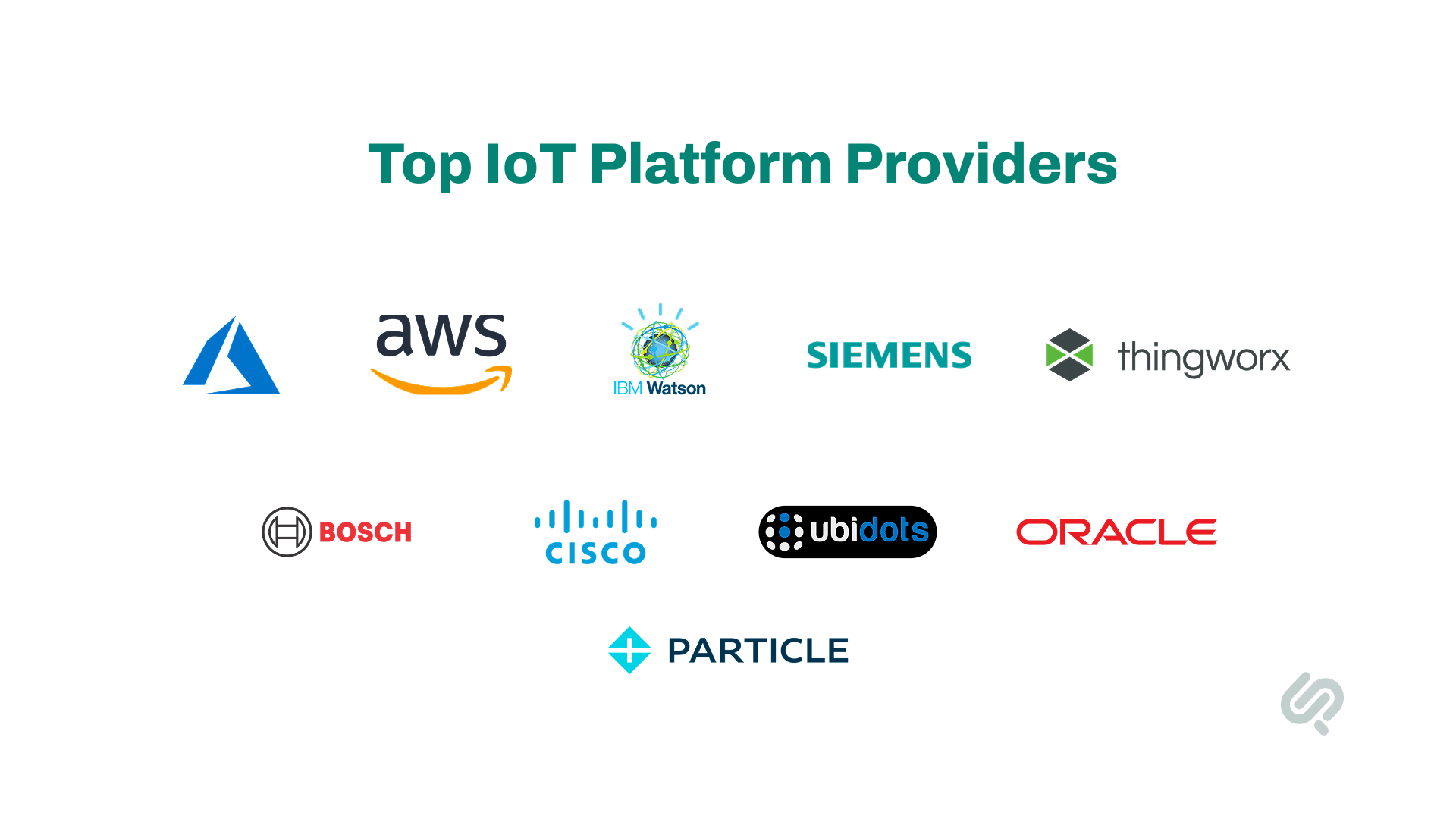
The IoT market offers a wide range of platforms designed for different business needs, from industrial automation to smart home devices.
These providers stand out for their scalability, security, and specialized features. Below are 10 of the most trusted and widely used IoT platform companies today.
AWS IoT is a powerful cloud-based platform trusted by startups and enterprises alike. It provides a full suite of IoT tools that support secure device connectivity, analytics, and scalable infrastructure.
With pay-as-you-go pricing, global availability, and strong developer tools, it’s a go-to solution for many industries.
Key Features:
Best For: Scalable IoT deployments across industries
Example: Used in connected vehicles and global logistics tracking
Azure IoT offers an enterprise-grade ecosystem with strong integration into Microsoft’s cloud services. It helps businesses connect, monitor, and manage IoT assets through secure cloud and edge tools. Azure stands out for its industrial templates, security, and global reach.
Key Features:
Best For: Enterprises using Microsoft cloud and tools
Example: Deployed in predictive maintenance for manufacturing plants
IBM Watson IoT combines deep AI capabilities with enterprise-grade IoT services. It excels in processing complex data and offers strong integration with Watson AI for smarter automation and predictive analytics.
Key Features:
Best For: Industrial businesses needing advanced analytics
Example: Used by automotive manufacturers for fleet insights
ThingWorx is a purpose-built Industrial IoT platform that enables rapid development and deployment of smart manufacturing solutions. It includes tools for real-time monitoring, AR/VR integration, and remote asset management.
Key Features:
Best For: Manufacturing and industrial engineering
Example: Powers factory floor dashboards and maintenance alerts
MindSphere is Siemens’ cloud-based IIoT platform designed to connect physical industrial assets to the digital world. It offers a powerful environment for machine data collection, analysis, and visualization.
Key Features:
Best For: Smart factories and heavy industrial automation
Example: Used for predictive maintenance in energy utilities
Cisco IoT specializes in IoT connectivity and edge infrastructure, making it ideal for large-scale networks. It enables secure data transmission, SIM management, and control at the network edge.
Key Features:
Best For: Telecoms, energy, and transportation
Example: Used in connected public transportation systems
Oracle’s IoT Cloud integrates IoT device data directly into its enterprise applications like ERP and SCM. It streamlines operations, supply chain visibility, and real-time analytics for business-critical workflows.
Key Features:
Best For: Logistics and enterprise supply chain operations
Example: Used in cold chain tracking and delivery route optimization
Bosch IoT Suite is a modular platform that supports smart homes, cities, and industrial use cases. Developed by Bosch, it focuses on secure device management, rule automation, and reliable connectivity.
Key Features:
Best For: Smart city and infrastructure solutions
Example: Used in connected parking, waste management, and grid monitoring
Ubidots offers a simple yet powerful IoT platform designed to help startups and growing businesses launch connected products quickly.
With drag-and-drop dashboards, real-time alerts, and support for various protocols, it helps teams build production-ready IoT apps without heavy backend work.
Key Features:
Best For: Startups and SMEs needing fast, low-code IoT deployment
Example: Used in smart logistics and cold-chain monitoring systems for vaccine delivery
Particle combines hardware and software in one developer-friendly platform. It’s popular for prototyping and small-to-mid-scale product development, thanks to its ease of use, OTA updates, and strong security.
Key Features:
Best For: IoT prototyping, consumer products, and maker communities
Example: Used for air quality monitoring and smart HVAC systems
Adopting the right IoT platform solution can give your business a major edge in developing connected products and services.
Whether you're building for healthcare, manufacturing, logistics, or smart homes, here are the top benefits of using an IoT software platform:
A prebuilt IoT development platform includes ready-to-use features like device SDKs, dashboards, and cloud integration, allowing your team to launch products much faster.
You don’t need to build backend infrastructure from scratch. This shortens your development cycles and helps you respond to market demands more quickly.
With a platform, you can reuse proven components for connectivity, security, and data processing. This reduces engineering effort, minimizes bugs, and lowers the risk of failure.
You also avoid the ongoing costs of maintaining custom-built infrastructure, making it a cost-effective IoT solution in the long run.
94% of businesses that have adopted IoT have already seen a return on their investment. (3)
Top IoT cloud platforms are built to scale, handling everything from small pilots to millions of connected devices without performance issues.
As your IoT network grows, the platform automatically scales to manage increased data and device loads, removing the headache of capacity planning.
Modern platforms come equipped with or integrate easily into tools for advanced analytics, machine learning, and real-time dashboards.
By analyzing sensor data, businesses can detect anomalies, forecast trends, and make smarter decisions. This transforms raw IoT data into valuable business insights.
A leading IoT security platform includes encryption, access control, secure firmware updates, and audit logs, out of the box.
This is especially critical for sectors like Internet of Things, healthcare, or industrial IoT, where compliance with regulations and data protection laws is mandatory.
By using a complete IoT platform, your team can concentrate on creating differentiated features, like user interfaces, custom applications, and business logic, without worrying about low-level tasks like device communication or cloud setup. This leads to better products and happier customers.
Established IoT platform providers offer documentation, developer tools, forums, and expert technical support.
Many also provide onboarding assistance, training, or platform strategy consulting, which reduces your learning curve and speeds up troubleshooting.
Leading platforms offer a wide range of pre-integrated tools, certified hardware, and partner services.
This makes it easier to connect with third-party apps, cloud services, or legacy enterprise systems, accelerating your custom IoT platform development without reinventing the wheel.
IoT platforms come in different forms based on where and how they operate. Choosing the right deployment model depends on your data privacy needs, scalability goals, and integration preferences.
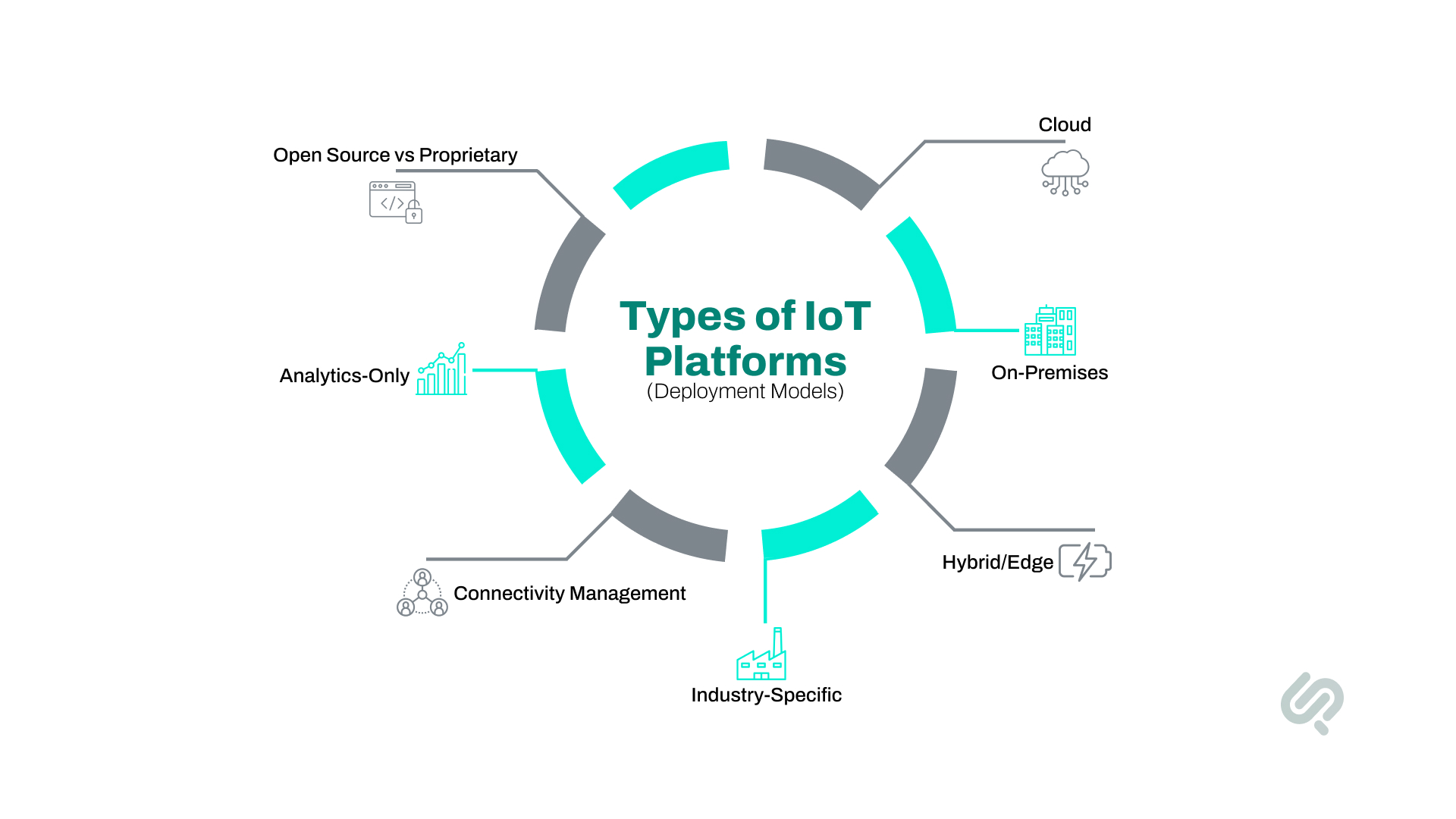
Cloud-based IoT platforms are Software-as-a-Service (SaaS) solutions that run on public cloud infrastructure. They offer flexible pricing, fast setup, and scalable services for businesses of all sizes. Ideal for rapid development and global reach, they eliminate the need for local server management.
Key Features:
Example:
AWS IoT Core or Azure IoT Central lets businesses quickly connect and manage IoT devices via cloud dashboards with minimal setup.
On-premises IoT platforms are deployed locally within a company’s own data center or private cloud. They provide full control over data and systems—ideal for businesses with strict security, compliance, or low-latency requirements.
Key Features:
Example:
ThingsBoard (self-hosted) or PTC ThingWorx on-premise is often used by manufacturing or defense sectors needing full control of data pipelines.
Hybrid IoT platforms blend cloud capabilities with local (edge) computing. This allows processing of data near the device, reducing latency and dependence on continuous connectivity. Ideal for environments with bandwidth limitations or mission-critical responses.
Key Features:
Example:
Azure IoT Edge or AWS Greengrass enables localized processing on machines while syncing data to the cloud for broader analytics.
Tailored IoT platform solutions built for specific industries like healthcare, manufacturing, agriculture, or logistics. These platforms come pre-equipped with domain-specific tools, compliance features, and specialized integrations.
Key Features:
Example:
Siemens MindSphere is built for industrial IoT (IIoT), while Philips HealthSuite supports connected medical devices with regulatory compliance.
Focused on managing network access, SIMs, and device connectivity, these platforms are ideal when cellular (4G/5G), LPWAN, or global roaming is required. They often work alongside data platforms to offer complete IoT connectivity management.
Key Features:
Example:
Vodafone IoT and Soracom offer global SIM management platforms to help track and control IoT devices across borders.
These platforms focus solely on analyzing and visualizing IoT data. They don’t manage hardware or connectivity but excel in predictive insights, business intelligence, and machine learning.
Key Features:
Example:
Google BigQuery or Power BI with IoT connectors can serve as analytics-only platforms when paired with IoT data sources.
IoT platforms come in open-source and proprietary forms. Open source IoT platform options provide flexibility and cost savings, while proprietary platforms offer premium features, vendor support, and polished UIs.
Open Source Features:
Proprietary Features:
Example:
ThingsBoard (open source) is great for custom builds, while IBM Watson IoT offers a full-service proprietary suite for enterprises.
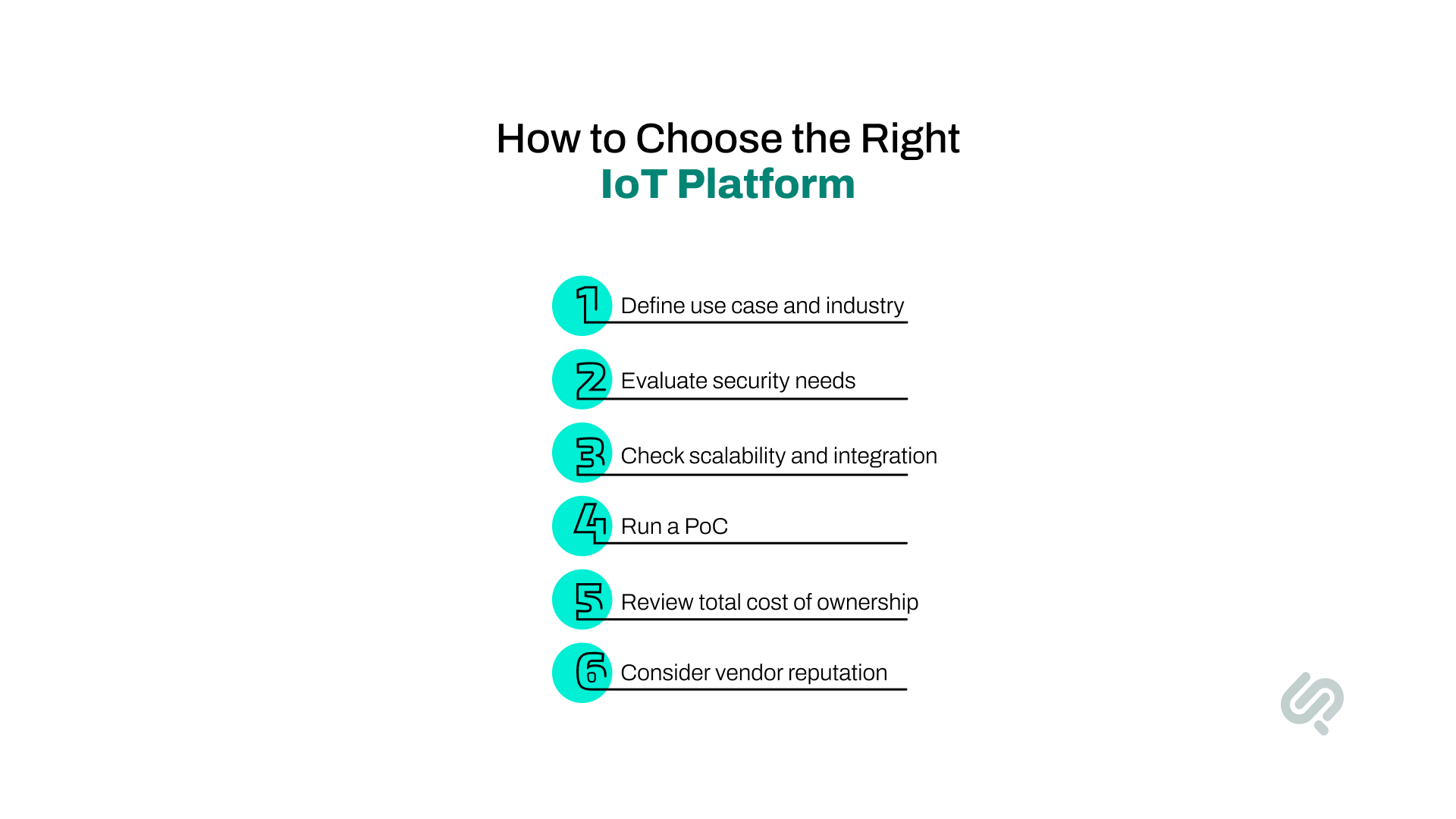
Selecting the right IoT platform is a strategic decision that directly impacts the success of your connected solutions.
With many IoT platform companies offering different capabilities, it’s important to match your choice with your business goals, industry needs, and technical requirements.
Whether you're just exploring what is the Internet of Things or already comparing Internet of Things companies, use these guidelines to make an informed decision:
Cloud solutions offered by top IoT platform companies like AWS or Azure provide global reach, automatic updates, and built-in integrations, making them ideal for businesses that prioritize flexibility and speed.
These platforms allow data to remain within your local servers, helping you meet compliance standards while reducing reliance on external infrastructure.
Hybrid platforms offer the best of both worlds—local processing at the edge with cloud-based analytics, making them suitable for industrial automation, energy, or smart agriculture.
Whether you're building with an open-source stack or working with a major IoT platform company, retaining control of your architecture is key to future-proofing your solution.
Choosing the right IoT platform isn't just about features. The pricing structure plays a critical role in long-term scalability and return on investment.
Understanding the different business models can help you pick the most cost-effective solution based on your project size, usage pattern, and growth goals.
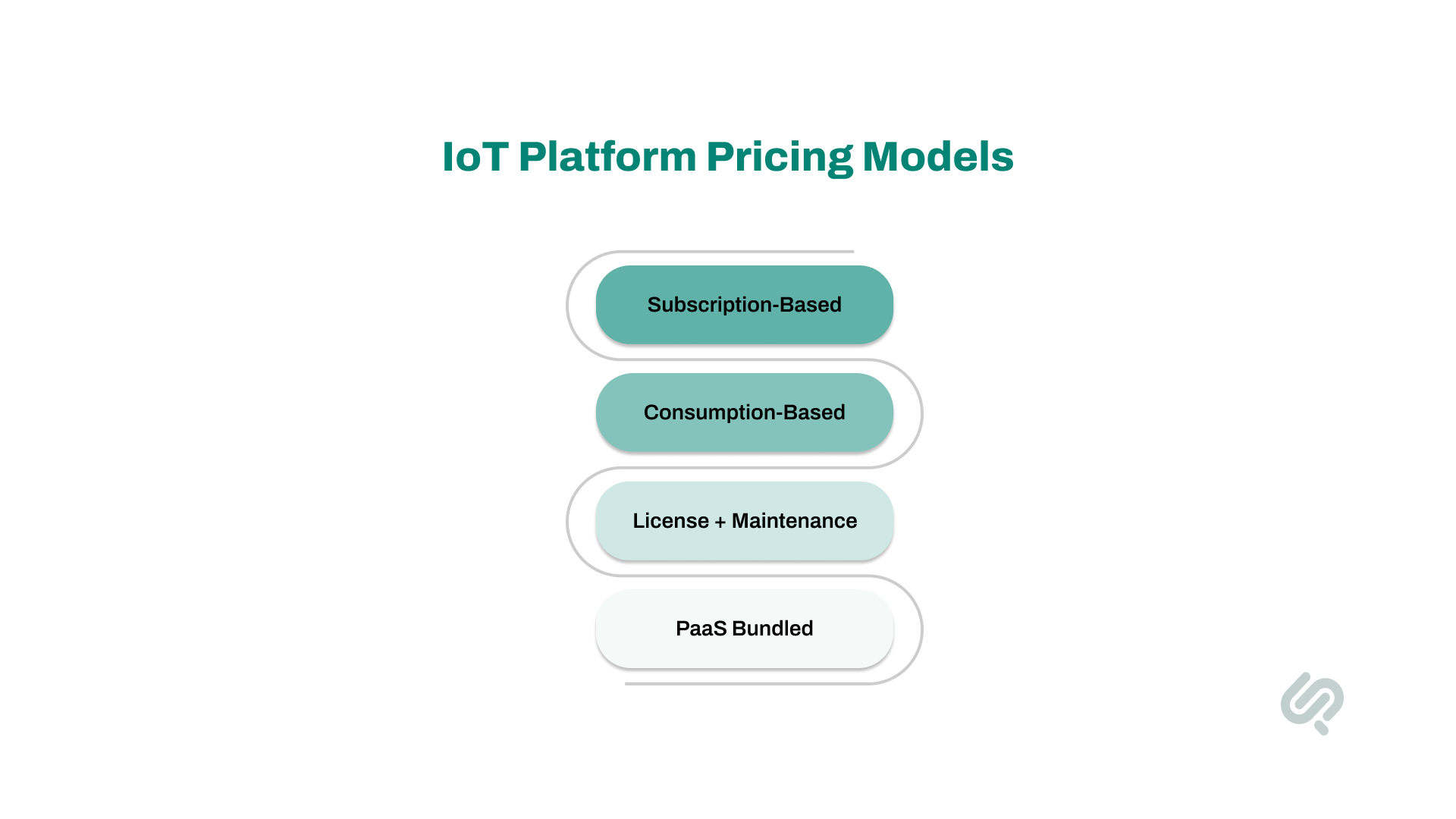
A fixed monthly or annual fee based on the number of devices, connections, or service tiers. Many platforms offer predictable pricing and sometimes a free tier to get started.
You pay only for what you use—data transfer, message volume, or API calls. This model offers flexibility but may lead to unpredictable costs as device activity fluctuates.
One-time software license with annual support or maintenance fees. Common in on-premise IoT platforms, this model gives full control but requires higher upfront investment.
Some providers include IoT features within a broader Platform-as-a-Service (PaaS) package (e.g., Azure credits), while others offer standalone IoT products priced separately.
Choosing the right IoT platform is a big decision that impacts how well your connected products work now and in the future. To make the right choice, here are the most important things to keep in mind:
Start by knowing what you want the platform to do. Does it support your industry?
For example, healthcare IoT platforms need to meet privacy rules like HIPAA, while manufacturing platforms may require protocols like Modbus or OPC-UA.
Security is a top priority.
A strong IoT platform should include features like device authentication, data encryption, and support for standards like GDPR and ISO 27001. A
Your platform should grow with your business.
Whether you start with 100 devices or aim for 100,000, make sure it offers scalable cloud services, multi-tenant support, and has been proven in large deployments.
Look for a platform that’s easy to work with, clear dashboards, helpful documentation, and strong developer tools.
Bonus points if it connects with hardware partners, certified integrators, or marketplaces to help you build faster.
Your platform should easily connect with your current tools like ERP, CRM, or SCADA systems.
Support for common standards (REST API, MQTT, JSON, etc.) makes integration smooth and helps avoid isolated data silos.
Stay flexible by choosing platforms that use open standards and let you export your data. Many businesses prefer open-source or neutral platforms to keep long-term control.
Don’t just trust demos.
Run a proof-of-concept (PoC) using your own devices and data. This helps you see how the platform performs under real conditions and if it fits your needs.
Pricing goes beyond subscriptions.
Include setup, training, advanced features, and long-term support in your budget planning. What seems cheap upfront may cost more over time.
Top vendors like AWS, Azure, and IBM provide enterprise-level service and reliability.
However, open-source or niche solutions may offer more flexibility and lower costs — just be sure they have active support or community help.
Since an IoT platform affects your entire business, leadership should be involved in the decision.
A clear vision and executive support can fast-track success and team adoption.
Always ask: who owns your data?
If you're dealing with personal or confidential information, make sure the vendor’s terms protect your business and customer privacy.
When building a connected product, businesses often face a key decision: should you use an off-the-shelf IoT platform or build a custom solution through IoT development services?
The answer depends on your goals, industry needs, and how much control you want over your infrastructure.
Pre-built IoT platforms like AWS IoT or Azure IoT Central offer fast deployment and standard features, great for general use cases and rapid testing.
But as your needs grow, these platforms can become limiting, especially when dealing with industry-specific requirements, custom integrations, or advanced security needs.
That’s where IoT development services shine. A custom-built platform gives you:
If your business needs more than a plug-and-play solution, a partner like Phaedra Solutions can help. They work closely with teams to design and build custom IoT platforms that match your exact goals, whether it's for smart energy, logistics, or connected healthcare systems.
Their team combines hardware know-how with scalable cloud infrastructure, making them a practical choice for companies that want to move fast without sacrificing control.
In short: if you’re building something unique and future-focused, investing in custom IoT development services can be the smarter long-term move.
Sure! Here's a concise version in 5–6 bullet points:
Choosing the right IoT platform is a critical step for any business looking to build smart, connected solutions.
With so many options available, from cloud-based giants to open-source and industry-specific platforms, your decision should align with your goals, budget, and technical needs.
Look for key features like scalability, security, device management, and integration support. Always consider long-term flexibility, total cost of ownership, and vendor reliability.
Whether you're a startup launching your first IoT product or an enterprise scaling globally, the right platform can accelerate development and unlock real business value. Invest wisely to build future-ready IoT solutions that grow with you.



Ameena is a content writer with a background in International Relations, blending academic insight with SEO-driven writing experience. She has written extensively in the academic space and contributed blog content for various platforms.
Her interests lie in human rights, conflict resolution, and emerging technologies in global policy. Outside of work, she enjoys reading fiction, exploring AI as a hobby, and learning how digital systems shape society.