





Building A1 DDP - Dubai Silicon Oasis
Industrial Area - 342001 -
Dubai - United Arab Emirates
+971 50 756 2346


SERVICES

COMPANY LINKS
SIGN-UP
For Newsletter


The internet is once again evolving, and this time, the shift is bigger than anything we’ve seen before.
We’re moving past the decentralized ideas of Web3 and stepping into Web4, a smarter, more connected digital era.
Think of it as the web growing a brain (powered by artificial intelligence (AI), the Internet of Things (IoT), and immersive experiences that adapt to you in real time).
Unlike older web versions, Web4 is about creating a living, learning digital ecosystem. One that’s personalized, predictive, and seamlessly integrated.
Web4 (also called the Intelligent or Symbiotic Web) is the fourth generation of the internet.
It combines AI, IoT, blockchain, and immersive technologies like AR/VR to work together to create a seamless connection between the physical and digital worlds.
Unlike earlier versions, Web4 is not just about information or ownership. It’s about intelligence, personalization, and real-time decision-making.
Here’s how Web4 drives digital transformation:
Forces organizations to rethink operations, customer engagement, and revenue streams, raising the bar for digital transformation companies and strategies.
Real-time data from IoT devices and user interactions, combined with AI analytics, empowers businesses to predict trends, personalize services, and optimize processes.
Repetitive tasks are automated, freeing teams to focus on innovation and strategy, a key outcome of any digital transformation framework.
AR try-ons in retail or AI-driven patient monitoring in healthcare make services immersive, tailored, and engaging.
By combining digital and physical worlds, Web4 unlocks fresh products, services, and revenue streams.
Success depends on building a strong digital transformation roadmap that embraces Web4 technologies while building agility and innovation.
The internet has evolved through 4 clear stages.
From the static pages of Web1 to the social interactivity of Web2, the decentralized ownership of Web3, and now the intelligent, symbiotic Web4.
Each phase introduced new technologies and transformed how we connect, share, and do business.
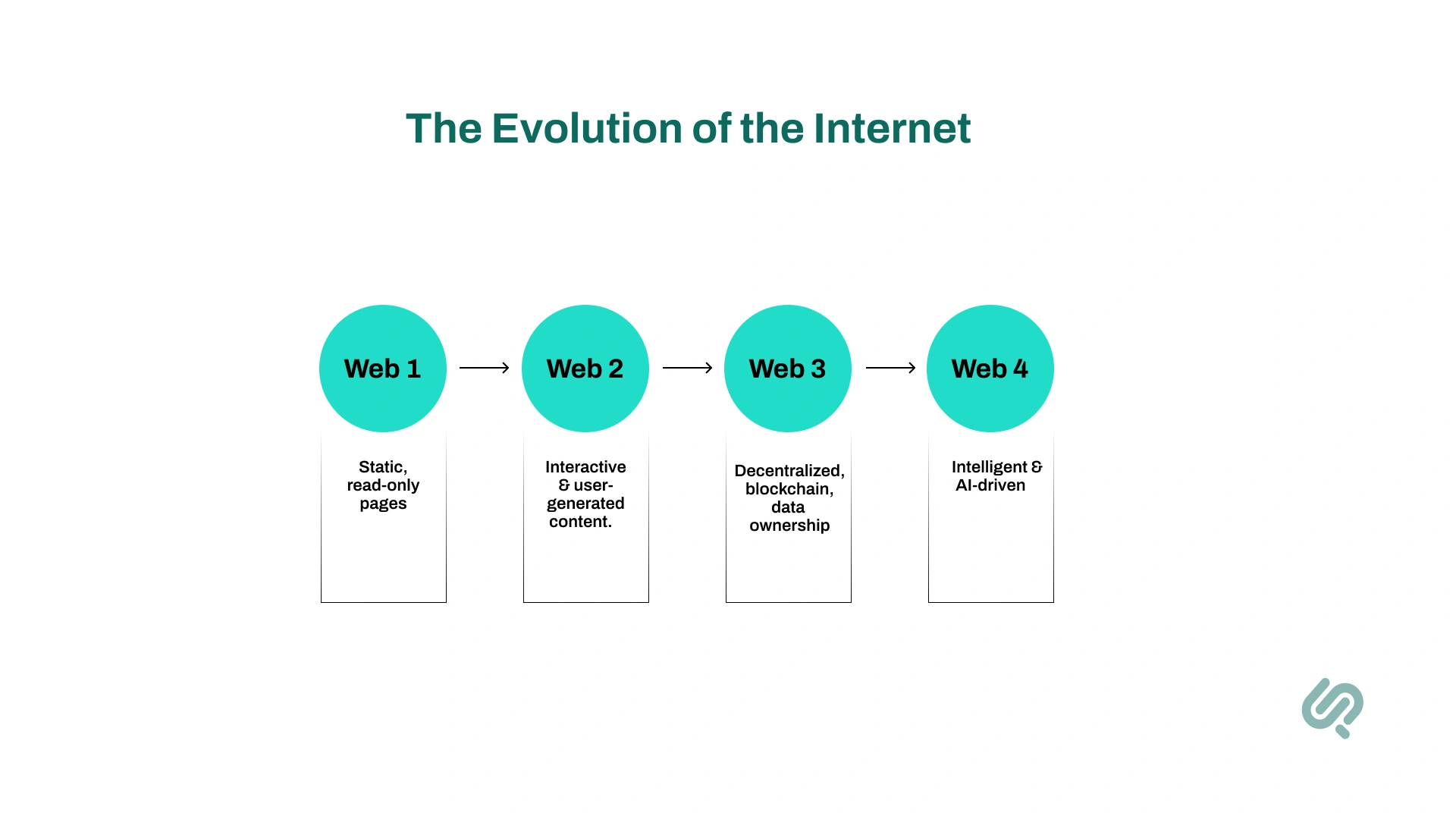
Web1, often called the Static Web or Read-Only Web, marked the internet’s beginning in the 1990s.
It was simple but limited, offering static pages with little interaction. Users could only consume information, making the experience one-way and passive.
Despite its restrictions, Web1 laid the foundation for everything that followed by proving the power of a global information network.
Web2, often called the Social Web or Read-Write Web, began in the early 2000s and still dominates much of today’s internet.
It transformed users from passive readers into active creators through social media, blogs, and interactive platforms.
Technologies like JavaScript and AJAX made the web dynamic and engaging, but centralization by big tech companies also raised concerns over data privacy and control.
Web3, also called the Semantic Web or Decentralized Web, is the current stage of internet evolution, still in its early phase.
It shifts control from centralized corporations to users, giving individuals ownership of their data and digital identities through blockchain, cryptocurrencies, and NFTs.
By making data machine-readable and interoperable, Web3 also enables smarter, context-aware applications. However, it faces barriers like scalability, usability, and regulatory uncertainty.
Web4, often called the Intelligent Web or Symbiotic Web, is the next stage of internet evolution. Building on Web3’s decentralization, it adds intelligence through AI, IoT, and immersive technologies to create a connected, predictive, and human-centric ecosystem.
Unlike earlier versions, Web4 is about collaboration between humans and machines, where the web acts as an active partner anticipating needs, automating tasks, and seamlessly blending the physical and digital worlds.
Web4 introduces a smarter, more connected internet powered by AI-driven personalization, automation, IoT connectivity, decentralization, and immersive AR/VR experiences.
Unlike previous versions, it seamlessly blends the digital and physical worlds, giving users greater control.
At the same time, it also gives users intuitive, responsive, and human-centric interactions.
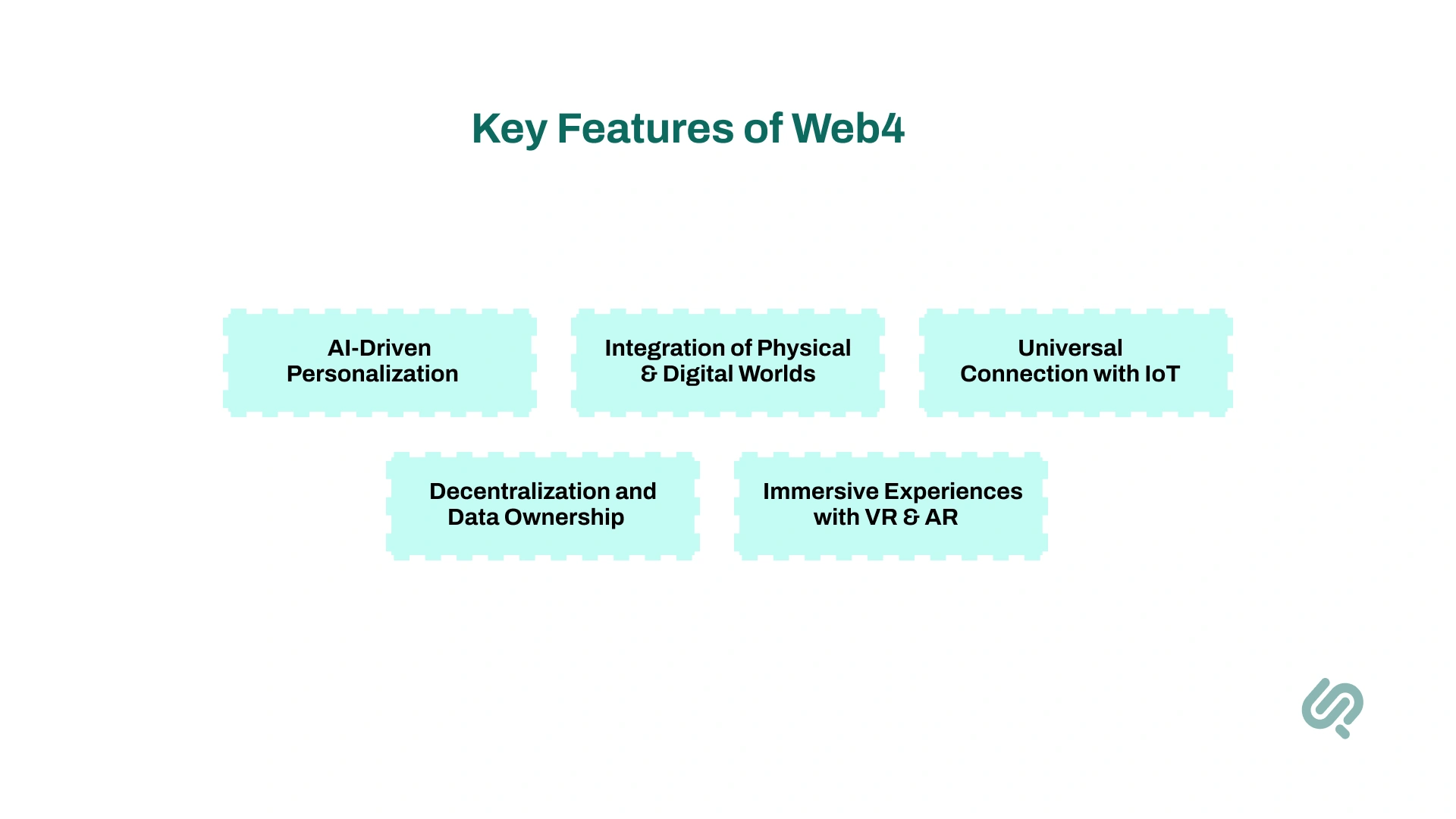
One of the biggest shifts Web4 brings is the rise of AI-driven personalization and automation.
Unlike earlier web versions, Web4 doesn’t just react. It learns from user behavior, adapts in real time, and delivers experiences that feel designed for each individual.
For businesses, this means creating smarter, customer-centric models where tasks like customer service, marketing, and supply chain management can be automated, freeing teams to focus on strategy and innovation.
This blend of personalization and automation is a powerful driver of modern digital transformation solutions.
A core feature of Web4 is its ability to blend the physical and digital worlds into one seamless environment.
Powered by the Internet of Things (IoT), augmented reality (AR), and virtual reality (VR), this integration creates highly immersive and interactive experiences.
From smart homes that adapt automatically to user needs, to AR-powered workplaces and VR-driven training, Web4 enables businesses to design digital transformation solutions that connect real-world data with digital intelligence.
For companies working on a digital transformation roadmap and plan, this integration opens new opportunities for collaboration, customer engagement, and innovation.
The Internet of Things (IoT) is a foundation of Web4, providing the connectivity that links the physical and digital worlds.
From smart homes and wearables to industrial machines and autonomous vehicles, IoT devices collect and share real-time data that powers AI-driven personalization, automation, and efficiency.
For businesses, this connectivity is vital for building digital transformation frameworks and delivering smarter, customer-centric services as part of their enterprise digital transformation services.
Web4 not only adds intelligence but also strengthens the decentralized foundation of Web3. This gives users more control over their data and digital identities.
Unlike the centralized model of Web2, Web4 uses blockchain and decentralized protocols to ensure transparency, security, and fairness.
This shift allows individuals to decide how their data is shared, who can access it, and what value they receive in return, reshaping digital trust and enabling new opportunities for digital transformation solutions.
Virtual reality (VR) and augmented reality (AR) are central to Web4, transforming how people work, shop, learn, and connect.
VR creates fully immersive digital environments, while AR overlays digital elements onto the real world, enriching everyday experiences.
Together, they open powerful opportunities for businesses to build more engaging customer interactions and smarter digital solutions.
Web4’s impact will be felt across industries. Real-world sectors are already experimenting with their concepts:
AI-powered diagnostics and machine learning analyze health data in real time.
Web4 enables continuous remote patient monitoring, where connected devices (wearables, sensors) track vital signs and alert healthcare providers instantly.
This leads to personalized medicine and early interventions. For example, smart hospitals could predict patient risks or automate records using AI.
Integrated IoT networks make cities “smart”: traffic signals adapt dynamically, and autonomous vehicles communicate to reduce congestion.
Machine learning optimizes public transit and smart transportation systems, while VR simulations aid urban planning. Advanced data analytics help optimize infrastructure and energy consumption.
Web4 will redefine social media. Platforms will use AI to tailor feeds and even create virtual worlds for users to interact in three dimensions.
Augmented and virtual reality will make online collaboration and gaming more immersive.
Entertainment will blend real and digital. For example, virtual concerts where the physical audience sees holographic performers, or games that overlay digital elements onto real environments.
Factories employ robotics and IoT sensors for real-time automation. AI-driven supply chains adapt on the fly to demand changes.
Employees use immersive technologies (VR for training or design) to improve productivity. Digital twins mirror physical assets, allowing simulation and predictive maintenance.
Businesses will integrate Web4 into marketing (hyper-personalized ads) and operations (dynamic decision-making systems)
By 2028, 33% of enterprise software applications are expected to embed agentic AI, compared to almost none today (1)
Smart homes and devices will learn your routines, adjusting lighting, temperature, or even ordering groceries autonomously. Wearable sensors and augmented interfaces integrate seamlessly into daily activities.
These use cases show Web4 is not a distant concept; elements like IoT devices, AI assistants (Siri/Alexa), and augmented reality are already emerging.
Web4 is already reshaping industries by combining AI, IoT, blockchain, and immersive technologies.
These applications show how businesses are moving toward more intelligent, personalized, and interconnected digital ecosystems.
Companies like Philips Healthcare and GE Healthcare use IoT wearables and AI analytics to track patient health in real time. This data enables proactive care, early detection, and personalized treatment plans.
IKEA (with its AR app IKEA Place) and Nike (with its VR experience Nikeland) show how AR/VR can transform shopping. Customers can preview products virtually, improving engagement and reducing return rates.
Cities like Singapore and Barcelona are adopting IoT-powered systems to monitor traffic, energy, and safety. These initiatives reduce congestion, cut emissions, and enhance quality of life.
JP Morgan’s Onyx blockchain platform and fintech innovators like Aave use blockchain and AI to build secure, transparent, and automated financial services.
Global leaders such as DHL and Maersk deploy IoT sensors and blockchain contracts to track shipments, predict disruptions, and automate cross-border operations.
Meta’s Horizon Workrooms and Coursera’s AI tutors show how XR and AI can create interactive classrooms and collaborative virtual spaces, making education more engaging and effective.
Some of the world’s most innovative companies are laying the foundation for Web4.
Their investments in AI, IoT, blockchain, and immersive tech demonstrate how Web4 is moving from concept to reality.
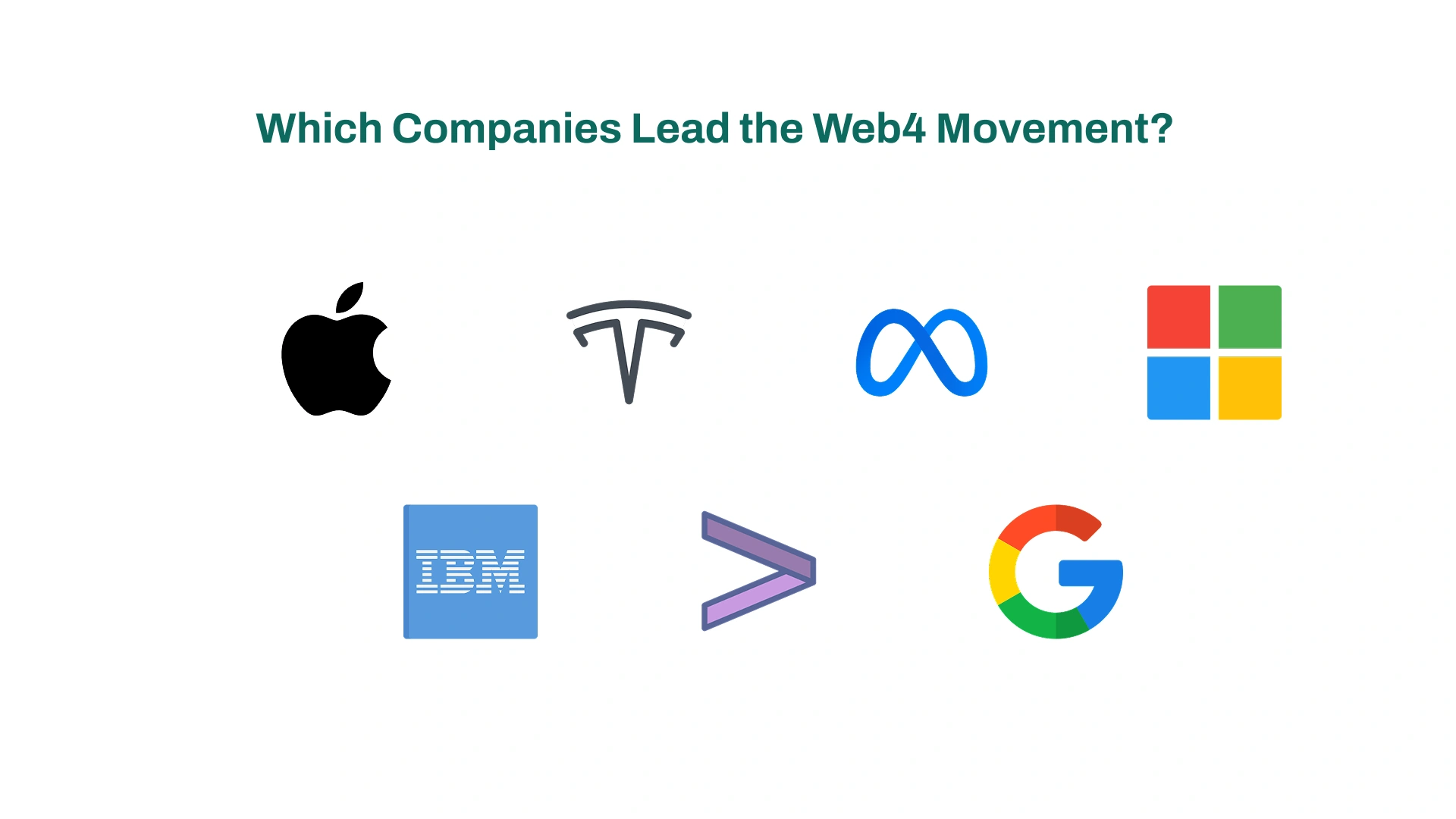
The internet’s next leap is here. Web4 brings intelligence, connectivity, and human-centered experiences by blending AI, IoT, blockchain, and immersive tech.
It shifts digital transformation from one-off projects to the default way businesses and societies operate.

Web4 brings huge opportunities, but also raises important challenges. To succeed, businesses must balance innovation with privacy, fairness, and resilience.
Web4 marks the beginning of a new digital era where intelligence, connectivity, and human-centricity become the default.
Unlike earlier stages of the internet, Web4 is not just about information sharing or data ownership; it is about creating a symbiotic ecosystem where AI, IoT, blockchain, and immersive technologies work together to anticipate needs, automate decisions, and unlock innovation.
For businesses, this shift means rethinking operations, building trust through decentralization, and delivering seamless, personalized experiences.
For society, it offers the chance to create a smarter, more inclusive, and sustainable digital future.
The journey to Web4 has just begun, and organizations that embrace it now will be best positioned to lead in the decade ahead.



Ameena is a content writer with a background in International Relations, blending academic insight with SEO-driven writing experience. She has written extensively in the academic space and contributed blog content for various platforms.
Her interests lie in human rights, conflict resolution, and emerging technologies in global policy. Outside of work, she enjoys reading fiction, exploring AI as a hobby, and learning how digital systems shape society.