

.webp)
.webp)
.webp)

Building A1 DDP - Dubai Silicon Oasis
Industrial Area - 342001 -
Dubai - United Arab Emirates
+971 50 756 2346


SERVICES

COMPANY LINKS
SIGN-UP
For Newsletter


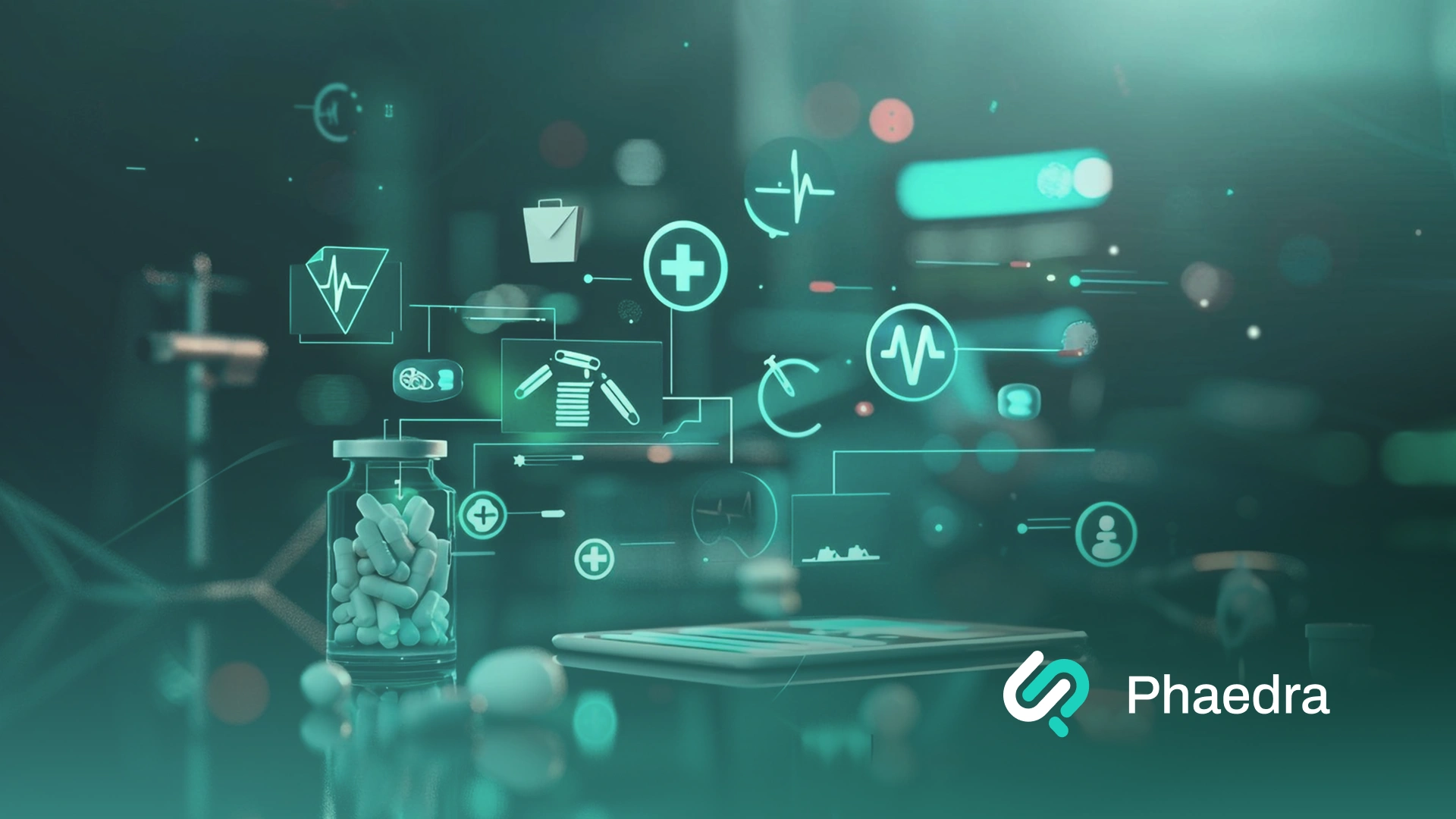
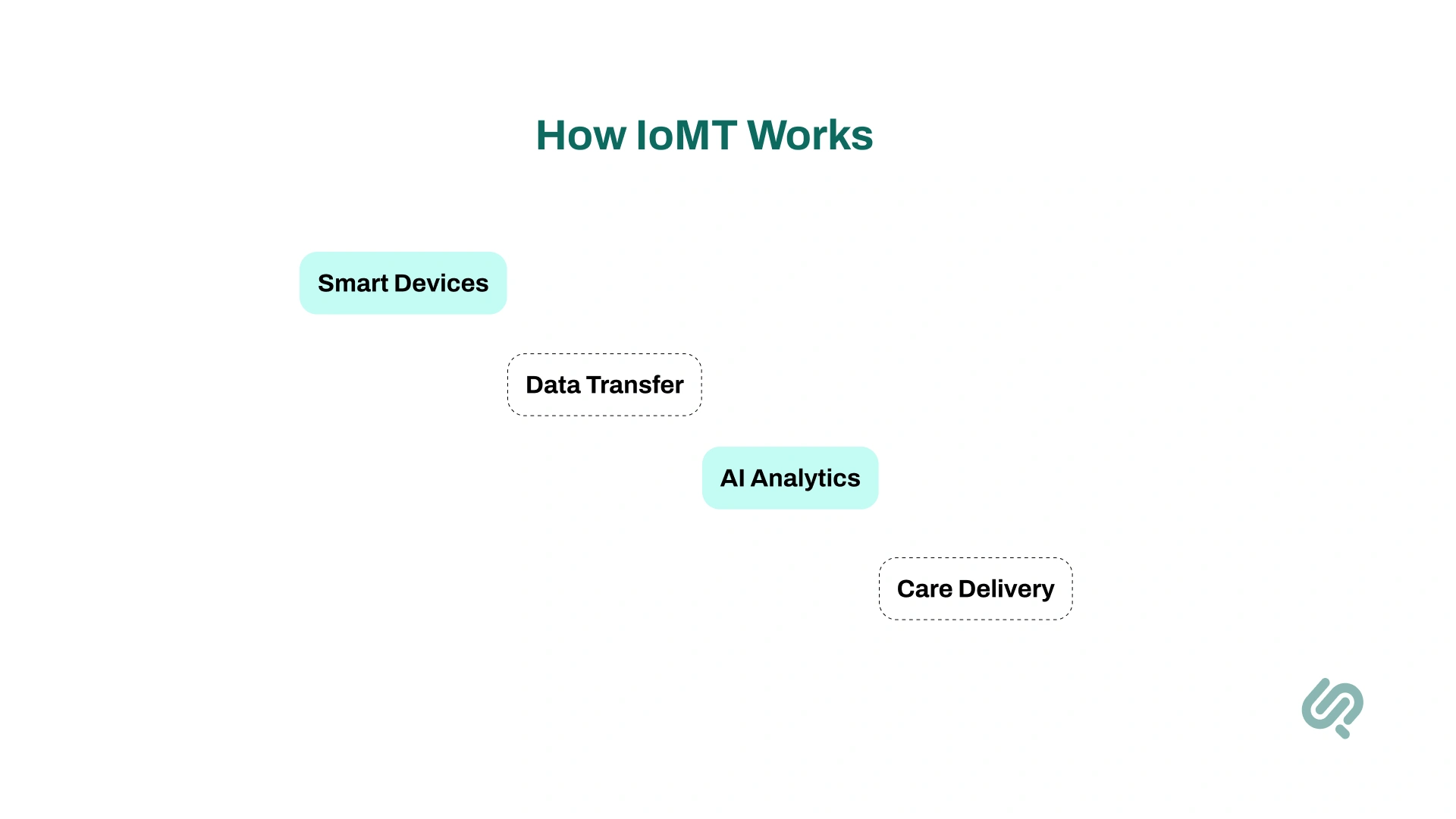
The Internet of Medical Things (IoMT) is transforming modern healthcare by connecting medical devices, software, and hospital systems into one intelligent network.
Simply put, IoMT refers to smart medical devices that collect, share, and analyze health data through the internet, from wearable fitness trackers to advanced hospital machines.
This connected ecosystem gives doctors real-time access to patient data, improves diagnostics, and enables continuous monitoring, often without patients ever stepping into a hospital. It’s what makes today’s healthcare faster, more personalized, and preventive rather than reactive.
In this blog, we’ll explore how IoMT is revolutionizing healthcare, the key benefits driving its adoption, real-world applications already in use, and the innovations shaping its future.
The Internet of Medical Things definition can be described as a specialized branch of the Internet of Things (IoT) designed specifically for healthcare.
While both involve connecting devices through the internet to collect and share data, IoMT focuses on saving lives and improving medical outcomes, which makes it far more critical and tightly regulated.
Here’s how IoMT differs from general IoT:
The Internet of Medical Things (IoMT) includes a wide range of connected medical devices that gather, share, and analyze health data. These tools can be grouped into several key categories based on where and how they’re used:
Smartwatches, ECG patches, and fitness trackers continuously monitor vitals like heart rate, oxygen levels, and activity. These devices help detect early warning signs and support preventive care outside hospitals.
Smart scales, connected blood pressure monitors, and glucose meters allow patients to manage chronic conditions from home. Data from these devices is transmitted directly to clinicians for ongoing review.
IoMT-enabled infusion pumps, ventilators, and patient monitors automatically log and share real-time data with electronic health records (EHRs), improving accuracy and reducing manual work for healthcare teams.
Pacemakers, insulin pumps, and neurostimulators are connected to cloud systems that provide remote diagnostics and adjustment capabilities, ensuring better long-term patient management.
Connected MRI, CT, and X-ray machines send scans to cloud platforms for faster diagnosis and AI-assisted analysis. These devices also use predictive maintenance alerts to reduce downtime.
Devices such as fall detectors and personal emergency response systems (PERS) automatically alert caregivers or hospitals when an incident occurs, ensuring timely medical intervention.
Some IoMT systems extend beyond patients, for example, smart hospital rooms that track hygiene levels, air quality, and equipment sterilization to maintain safer healthcare environments.
In essence, these IoMT device types form the backbone of modern connected healthcare, transforming how data flows between patients, providers, and systems for faster, safer, and smarter care.
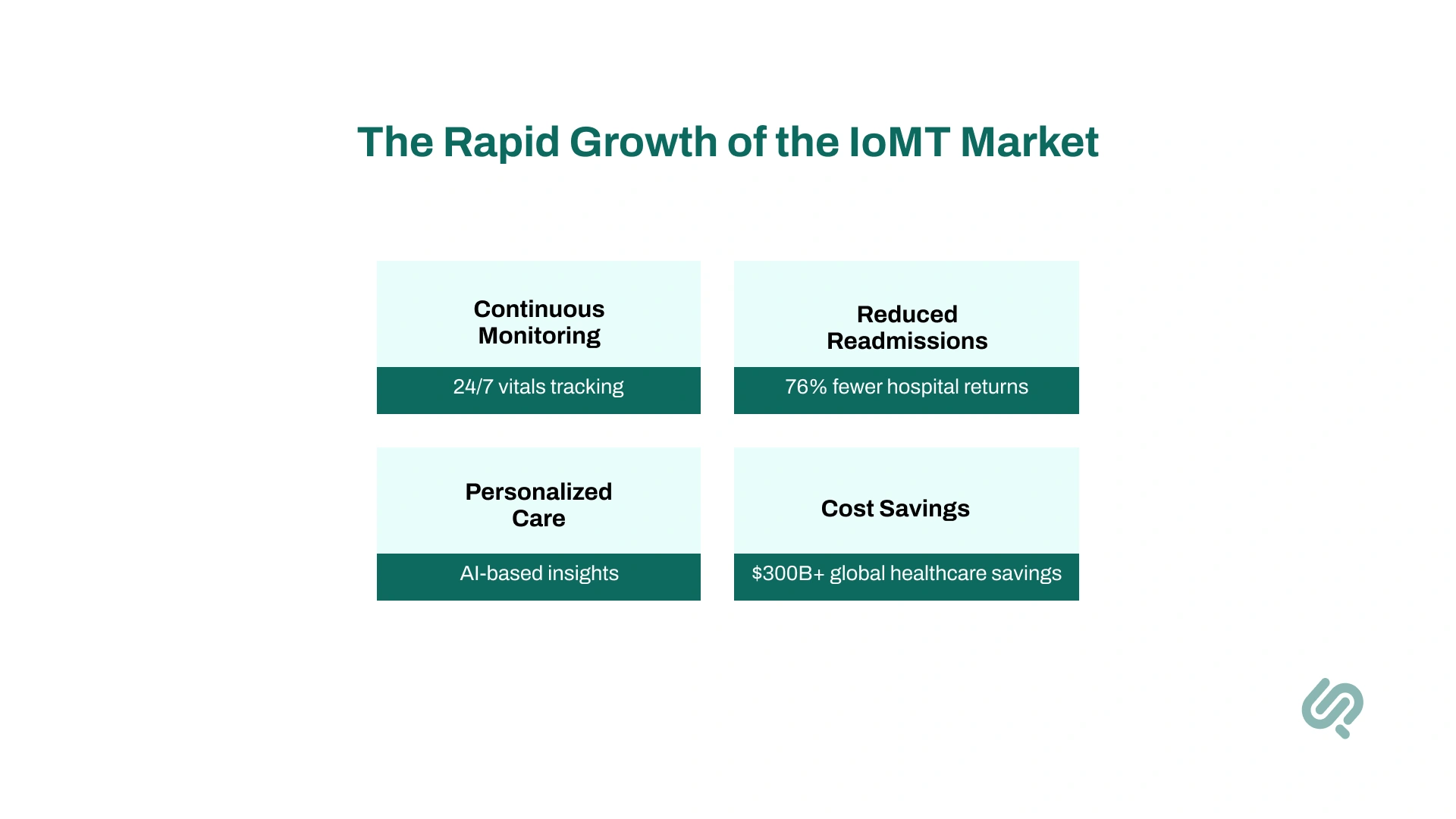
The Internet of Medical Things Market (IoMT) is one of the fastest-growing parts of healthcare technology.
In 2023, the global market was worth around $60 billion, and experts predict it could reach over $800 billion by 2032, growing more than 25% every year. (1)
The Internet of Medical Things (IoMT) market is expanding rapidly as healthcare becomes smarter, faster, and more connected. Here’s why:
Build smarter healthcare systems with advanced IoMT development solutions.
The Internet of Medical Things (IoMT) is transforming how healthcare works, connecting medical devices, sensors, and applications through the internet to share data in real time.
This technology is improving how doctors diagnose, monitor, and treat patients while helping individuals manage their own health more effectively.
By creating a network of “smart” medical devices, IoMT makes healthcare proactive rather than reactive, catching problems early, personalizing treatment, and reducing the burden on hospitals.

IoMT allows continuous tracking of patient vitals using connected devices like smartwatches, glucose monitors, pulse oximeters, and blood pressure cuffs.
Constant monitoring keeps chronic diseases like diabetes and heart conditions under control.
The Internet of Medical Things (IoMT) and Internet of Things (IoT) are helping patients take charge of their own health.
Through connected IoT devices and health apps, people can now monitor vital signs, track habits, and receive real-time insights.
Together, IoMT and IoT solutions create a patient-centric care model, blending data, connectivity, and awareness to make healthcare more proactive and personalized.

IoMT and telemedicine together have made healthcare more accessible and flexible.
Inside hospitals, IoMT is turning traditional medical equipment into smart systems that improve safety aInside hospitals.
The Internet of Medical Things (IoMT) and the Internet of Things (IoT) are transforming medical equipment into smart, connected systems that enhance safety, accuracy, and workflow efficiency across every department.
Together, these smart medical and IoT-enabled systems create more responsive hospitals where connected care, predictive analytics, and automation lead to faster recovery and safer outcomes.
IoMT combined with artificial intelligence is changing how healthcare providers detect, diagnose, and prevent diseases.
This allows doctors to act before a patient’s condition deteriorates, shifting care from reactive to preventive.
The result? Fewer misdiagnoses, faster treatment decisions, and more personalized care.
In short, IoMT delivers the data, and AI transforms it into predictive intelligence that helps save lives and reduce care delays.
IoMT is expanding its impact beyond physical health, it’s now reshaping how mental well-being is tracked and managed.
Ultimately, IoMT is helping bridge the gap between physical and mental healthcare, providing early awareness, consistent monitoring, and proactive support for emotional health.
IoMT doesn’t just improve patient health. It also strengthens healthcare economics.
The Internet of Medical Things (IoMT) is already making healthcare smarter and more connected.
From simple wearables to advanced hospital systems, these real-world applications show how IoMT is improving patient care and operational efficiency across the board.
Wearable ECG patches like the Zio Patch continuously record heart rhythms and send data to the cloud for doctors to review.
These devices detect hidden arrhythmias such as atrial fibrillation (AFib) that might be missed during routine exams, helping prevent strokes and saving lives.
Continuous Glucose Monitors (CGMs) track blood sugar in real time, syncing with smartphones and clinician dashboards.
When combined with smart insulin pumps, they form a “closed-loop system” (an artificial pancreas) that automatically adjusts insulin levels. This reduces extreme highs or lows and improves long-term glucose control for diabetics.
The FDA-approved Abilify MyCite pill contains a micro-sensor that confirms medication intake after swallowing.
Future smart pills may monitor internal factors like pH or temperature, sending insights directly to doctors. These innovations improve adherence and open the door to non-invasive internal diagnostics.
IoMT-enabled inhalers track each puff, remind patients to take medication, and use GPS to identify where attacks occur.
Clinicians analyze this data through secure IoT networks and platforms to adjust treatments and pinpoint environmental triggers.
Leading Internet of Things companies are refining these connected inhalers to make asthma management smarter and more proactive.
“eICU” systems use connected monitors and cameras to let specialists observe multiple ICUs from a central or remote location. If vital signs change suddenly, alerts are sent instantly.
These systems proved essential during COVID-19, enabling safe, continuous monitoring of critical patients while reducing staff exposure.
Researchers are developing connected lenses that can measure glucose in tears or monitor eye pressure for glaucoma.
As these devices evolve, Internet of Medical Things security becomes critical to protect sensitive health data shared across networks.
Developers are also improving Internet of Things (IoT) protocols to ensure safe, fast, and reliable communication between these connected medical systems, making future IoMT applications both smarter and more secure.
Systems like da Vinci Surgical Robots are IoMT-enabled, streaming live operational data and allowing remote collaboration. The Internet of Things in healthcare is also growing rapidly
Surgeons can perform procedures with precision, and aggregated robot data helps improve techniques through AI-driven analysis.
Modern hospitals use IoMT sensors to create safer environments, from fall-detection systems to automated bed monitoring. Sensors alert staff if a patient at risk tries to get up or hasn’t moved for too long.
Environmental controls like lighting and temperature also adjust automatically for comfort and faster recovery..
The Internet of Medical Things (IoMT) industry is growing fast, driven by collaboration between medical device leaders, tech giants, and AI startups.
Below are some of the key players shaping the connected healthcare revolution.
While the Internet of Medical Things offers major benefits, it also introduces technical, regulatory, and ethical hurdles. Here’s a simple look at the main challenges healthcare providers face when adopting IoMT systems:
IoMT devices collect massive amounts of sensitive patient data, making them prime targets for hackers. Many devices lack strong security, and 75% of healthcare breaches now involve IoMT systems.
Hospitals must use encryption, network segmentation, and regular software updates to protect data. Regulations like HIPAA and GDPR add complexity, and compliance requires constant monitoring.
Different devices often don’t “talk” to each other because they use unique protocols or data formats. This lack of standardization creates data silos and makes integration with electronic health records (EHRs) difficult.
Standards like FHIR help, but full interoperability still requires custom APIs or IoMT platform solutions.
IoMT sits at the intersection of healthcare and technology, so it’s heavily regulated. Manufacturers must follow FDA or EU MDR rules, plus global standards like ISO 13485 and IEC 62304.
Navigating these processes is complex and time-consuming, especially for startups. Many organizations rely on IoMT compliance consulting to stay audit-ready.
Hospitals collect terabytes of IoMT data daily. Without smart filters, clinicians face alarm fatigue from unnecessary alerts.
Poor data quality, like incorrect readings from misused sensors, can also lead to wrong decisions. Effective IoMT systems must validate and summarize data to make it truly actionable.
Running thousands of connected devices demands reliable Wi-Fi, 5G, and power backups. Network lag or interference can interrupt life-saving transmissions.
Hospitals must invest in robust IT infrastructure and ensure devices can operate even in low-connectivity areas.
IoMT requires heavy upfront investments in hardware, software, and staff training. Returns often come over time through reduced readmissions and improved efficiency.
Smaller hospitals may struggle to justify the costs without clear reimbursement models or proven ROI metrics.
Questions like “Who owns patient data?” and “Can AI make medical decisions?” raise ethical concerns. There’s also a risk of widening healthcare inequality if only wealthy systems can afford IoMT.
To ensure fairness, hospitals must prioritize transparency, data consent, and patient inclusion in their digital health strategies.
Adopting IoMT in healthcare requires thoughtful analysis, planning, and teamwork. Here are key best practices to ensure smooth, secure, and effective implementation:
Start by identifying what problem IoMT should solve, such as reducing readmissions or improving chronic care. Set measurable targets and track ROI from the start to stay focused on real outcomes.
Test IoMT in pilot programs before expanding. Gather feedback from doctors, nurses, and patients, fix issues, and then roll it out gradually for wider use.
Include healthcare staff early in the process. Offer hands-on training and create “super-users” who can help others. When clinicians understand the benefits, adoption improves.
Choose IoMT devices that work well with your existing systems, like EHRs. Avoid data silos by using interoperable platforms that share information securely and efficiently.
IoMT handles sensitive health data, so build cybersecurity into your system from day one. Use encryption, authentication, and regular software updates to protect patient privacy.
Plan budgets for both device costs and long-term support like data management, staff, and maintenance. Ensure dedicated teams are available for troubleshooting and updates.
Join healthcare IoT communities, pilot programs, or industry groups to learn from others’ experiences and keep up with new standards and technologies.
Select user-friendly devices and apps. Simplify setup for patients, especially seniors, and provide clear instructions or assistance to encourage engagement.
Track key performance indicators like patient outcomes, usage rates, and system alerts. Use insights to refine processes and optimize performance over time.

The Internet of Medical Things (IoMT) is growing fast, and the next few years will bring even smarter, more connected, and more predictive healthcare systems. Here’s what the future holds:
The Internet of Medical Things is reshaping healthcare from hospital to home.
By combining real-time data, AI insights, and smart connectivity, IoMT is helping doctors make faster decisions, empowering patients to manage their health, and lowering overall costs.
As technology evolves, IoMT will move us closer to a future of proactive, personalized, and universally accessible healthcare.



Ameena is a content writer with a background in International Relations, blending academic insight with SEO-driven writing experience. She has written extensively in the academic space and contributed blog content for various platforms.
Her interests lie in human rights, conflict resolution, and emerging technologies in global policy. Outside of work, she enjoys reading fiction, exploring AI as a hobby, and learning how digital systems shape society.