







Building A1 DDP - Dubai Silicon Oasis
Industrial Area - 342001 -
Dubai - United Arab Emirates
+971 50 756 2346


SERVICES

COMPANY LINKS
SIGN-UP
For Newsletter


The sports our parents watched decades ago and the sports we enjoy today are worlds apart.
It’s not just the way the games are played now; even the finer details have evolved (from training sessions, live broadcasts, officiating, and even fan experiences).
Today, sports organizations are turning to artificial intelligence in sports to gain deeper insights, sharpen performance, and connect with fans in more meaningful ways.
AI now powers everything from sport performance analysis and personalized training programs to injury prevention and smarter fan engagement. Machine learning models and AI technologies can process game data in seconds, uncovering patterns that once took hours to detect.
With the global sports analytics market projected to grow from $2.29 billion in 2025 to $4.75 billion by 2030 (1), it’s clear this shift is here to stay.
In the sections ahead, we’ll explore how AI is transforming sports teams, enhancing sports events, and raising performance standards at every level of the game.
Artificial intelligence is now a key part of the sports industry. It’s shaping nearly every aspect, from how athletes train to how fans experience games.
Sports organizations are taking full advantage of AI by using it to make faster decisions, improve performance, and keep fans engaged. Machine learning and big data turn match stats into clear insights, helping with everything from sports training programs to injury prevention.
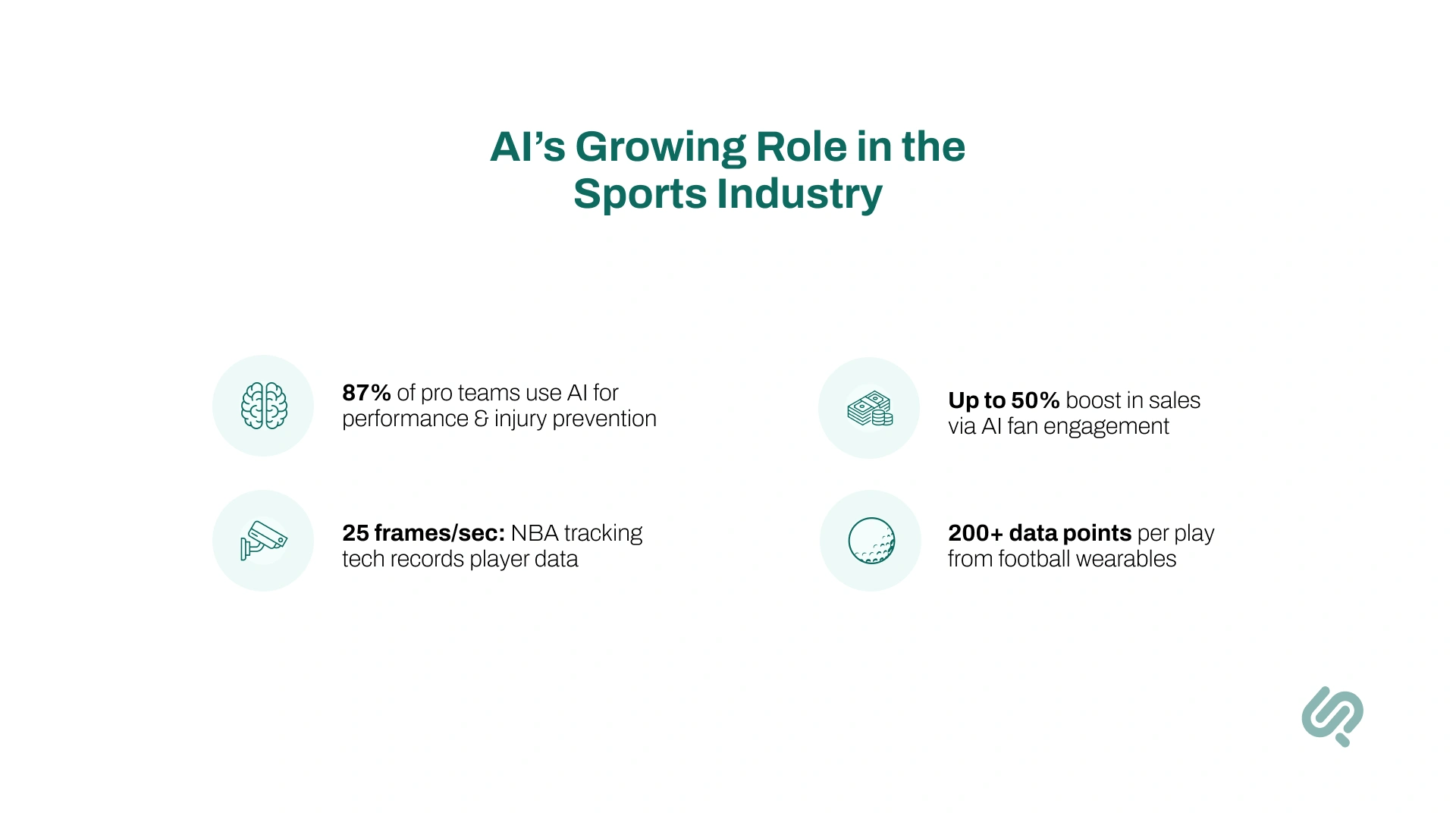
AI adoption at a glance in the sports industry:
What was once limited to big-budget teams is now reaching smaller clubs. AI solutions for sports ( like predictive analytics, modern data visualization, and custom AI models) are becoming more affordable and accessible.
Soon, these tools will be as common as video analysis or fitness testing.
Below are 5 core applications and benefits of AI in sports:

AI in sports is giving coaches and players faster, clearer insights to improve performance and reduce risks. By combining wearables, machine learning models, and computer vision, sports organizations can make training smarter and safer.
By automating much of the data analysis, AI frees coaching staff to focus on strategy, motivation, and player development.

AI is helping coaches and sports teams make better tactical calls before and during sports events.
By combining historical data with live match analysis, AI systems can simulate outcomes and provide fast, evidence-backed recommendations.
AI in sports is helping teams spot potential stars faster and with greater accuracy. By combining AI and machine learning models with computer vision, sports organizations can evaluate thousands of athletes in far less time than traditional scouting methods.
AI tools don’t replace human scouts; they enhance them. While AI delivers data-driven insights from vast amounts of performance data, coaches and scouts still assess intangibles like leadership, work ethic, and team fit.
The best results come from blending both approaches.
AI-powered officiating tools are making sports more accurate and fair. Using AI systems like Hawk-Eye and VAR, officials can make decisions with near-perfect precision while reducing human error.
These tools give referees and fans more confidence in the integrity of sports events.
While there are debates over over-reliance on technology, most leagues maintain a “human in the loop” approach (using AI as a decision-support system rather than a replacement).

AI is reshaping fan engagement into a faster, more personalized experience. Sports organizations use AI systems to give supporters real-time insights, smooth interactions, and immersive viewing (whether at home or in the stadium).
By blending these AI powered tools into stadiums, apps, and broadcasts, sports teams strengthen loyalty, boost satisfaction, and unlock new revenue.
AI is transforming the business side of the sports industry just as much as it’s improving athletic performance.
From front-office decision-making to betting platforms, AI-powered systems are driving smarter, faster, and more profitable operations.
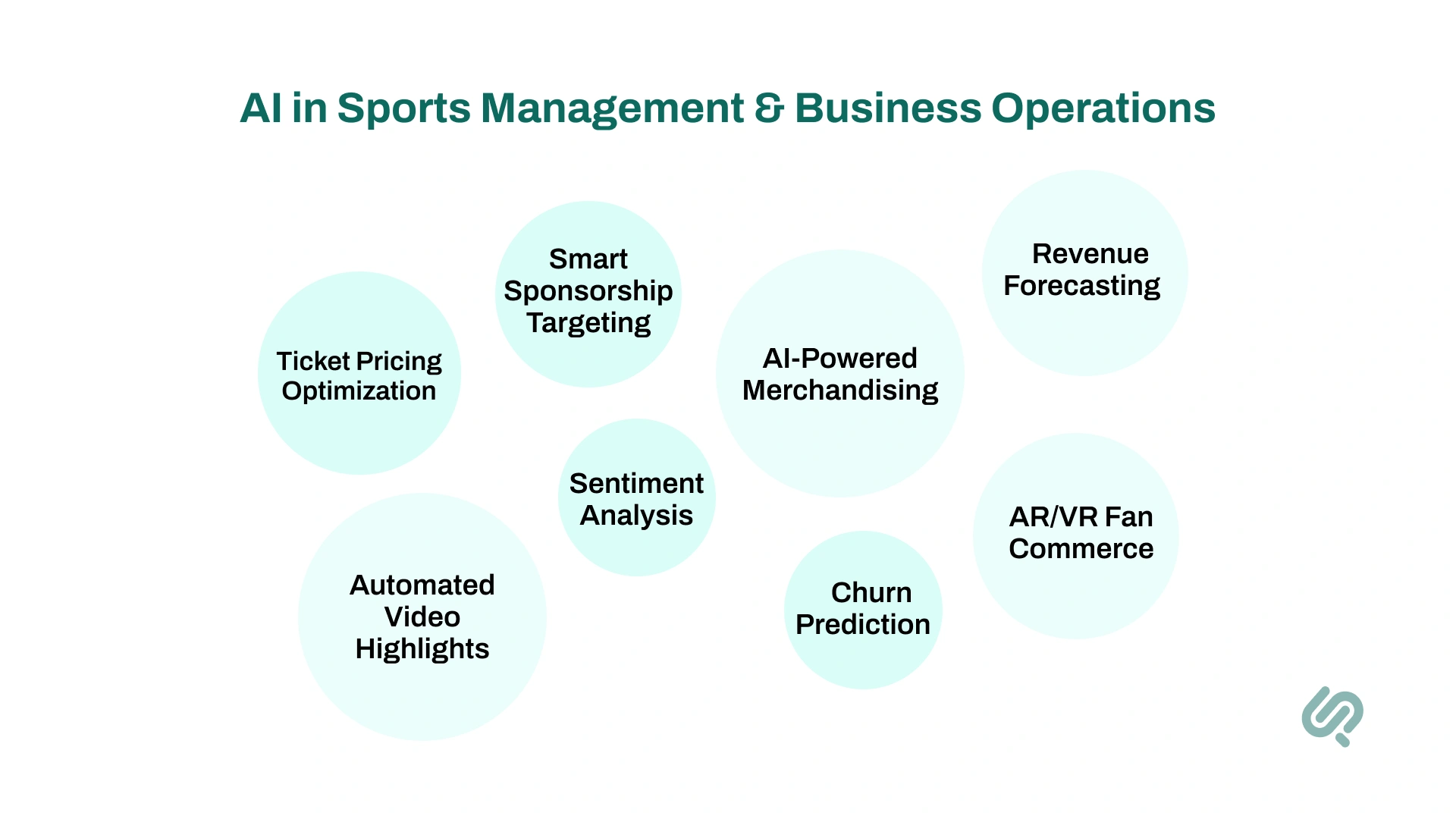
Artificial intelligence is changing how sports organizations run their day-to-day activities. It helps teams work faster, save money, and make smarter decisions.
All by turning raw data into valuable insights.
Many clubs start small by working with an AI development consultancy to launch a focused AI PoC & MVP (such as testing AI-driven ticket pricing for one season) before rolling it out fully.
Over time, this approach transforms both operations and the bottom line.
In sports betting and fantasy sports, AI makes predictions faster, more precise, and more relevant to players and fans.
While luck will always play a role, AI’s ability to process vast amounts of game and player data means both betting platforms and fans can make better-informed decisions.
Here are three standout AI systems that are shaping performance, decision-making, and fairness across sports.
Used in football worldwide, VAR applies computer vision and AI systems to review match footage in real time, ensuring fair officiating and accurate calls.
A sports analytics platform using artificial intelligence and big data to deliver valuable insights on player performance and sports management.
A video analysis platform that allows coaches to break down and tag game footage for tactical and technical improvements.
While AI brings big benefits to the sports industry, it also creates real challenges that teams, leagues, and tech providers need to address.
AI systems in sports rely on huge data sets in machine learning, including sensitive player health metrics and personal fan details.
Without strong safeguards, this data could be exposed through breaches or misuse. Sports organizations must get clear consent, set ownership rules for athlete data, and follow strict security practices (similar to those like in generative AI in cybersecurity) to protect both players and fans.
An AI’s advice is only as good as its data and algorithms. If the information is incomplete or biased, AI systems might undervalue talent, misjudge injury risks, or make poor decisions.
For example, a sports analytics tool could wrongly label a healthy player as “injury-prone,” impacting contracts or playing time. Human review is essential to verify AI’s recommendations before they are acted upon.
Many AI models (especially complex machine learning algorithms) work like “black boxes,” giving results without clear explanations. In sports, coaches and players need to trust the reasoning behind AI-driven game strategies or performance reports.
Using explainable AI builds trust, ensures accountability, and helps sports management teams make informed decisions with confidence.
AI can forecast injuries, performance declines, or player potential. While this offers valuable insights, it also raises ethical concerns.
Could a club drop a player early based on a prediction? Could youth athletes face pressure or early burnout from being labeled “future stars”? AI should guide decisions, not replace human judgment, especially in sports management and player development.
If training data is skewed toward men’s sports or specific leagues, AI systems may deliver biased results.
This can affect contract decisions, player evaluations, or even fan engagement strategies. Sports organizations must use diverse, representative data and combine AI insights with qualitative evaluation to ensure fair treatment across all athletes.
AI workflow automation (like AI-powered video analysis or automated cameras) can replace certain roles in sports media, analytics, or operations.
But it also creates demand for new skills such as AI system management and sports data science. Education and training programs are key to helping the workforce adapt during this digital shift.
Too much automation can make sports feel less human. If algorithms manage every play, predict every outcome, and even replace referees, fans may feel the emotional unpredictability is gone.
Sports leagues need to balance artificial intelligence technologies with tradition, keeping some “human in the loop” elements to preserve the authenticity that draws fans in.
Artificial intelligence will keep transforming how athletes train, how teams compete, and how fans experience the game. Here’s where the sports industry could be heading next.
AI will keep getting better at understanding individual and team performance, with models analyzing years of player data to spot trends months in advance. Teams could perfectly time training cycles or rest periods to improve sports performance and reduce injury risk.
Combining AI technologies with AR/VR will create more immersive, low-risk training. A quarterback could face an AI-controlled virtual defense in AR, practicing decision making without the wear and tear of real games.
Fans might use AR glasses to view real time analysis, track player movements, or toggle between tactical and fan-friendly viewing modes during live matches.
AI will move beyond elite leagues into youth and amateur sports. Affordable apps could analyze a child’s swing or running form, giving data driven insights for safer and smarter training.
Injury prevention could improve. Automated systems might flag risky training loads in young athletes before they develop chronic problems.
Techniques from machine learning in sports analytics may influence eSports, and vice versa. AI coaches could test millions of in-game strategies instantly, giving gamers and traditional teams a new edge.
This could also shape sports consumption, with AI-driven simulations blurring the line between real sports and interactive gaming experiences.
Fans could soon control their own broadcast feed. Choosing camera angles, replay views, and even getting natural language processing answers mid-game.
An AI commentator might tailor insights to your interests, boosting fan engagement and keeping younger audiences connected to live sports.
As data science pulls patterns from multiple sports, new performance enhancement methods could emerge.
For example, injury prevention techniques from basketball could be applied to soccer, or tactical formations could transfer across disciplines, driving innovation across the sports industry.
AI in sports is transforming every part of the game, from how we analyze game footage to enhancing both physical performance and mental readiness.
Teams are using advanced analytics and machine learning to design personalized training, predict injury risks, and make faster, evidence-based decisions. This isn’t just about elite athletes.
AI is helping at every level, from grassroots talent identification to global tournaments. Fans benefit too, with immersive and interactive experiences that enhance fan engagement like never before.
The future of sports will belong to those who embrace these technologies thoughtfully, balancing innovation with ethics, transparency, and the spirit of the game.


1.Sports Analytics Market Worth $4.75 Billion by 2030 – MarketsandMarkets
2.AI in Sports Stats – SEO Sandwitch
3.NBA Launches New Tracking System to Capture Player Statistics – CBS News
5.NFL Next Gen Stats – Operations NFL
7.Sports Analytics Market Size to Surpass USD 22.13 Billion by 2030 – GlobeNewswire

Musa is a senior technical content writer with 7+ years of experience turning technical topics into clear, high-performing content.
His articles have helped companies boost website traffic by 3x and increase conversion rates through well-structured, SEO-friendly guides. He specializes in making complex ideas easy to understand and act on.