










Building A1 DDP - Dubai Silicon Oasis
Industrial Area - 342001 -
Dubai - United Arab Emirates
+971 50 756 2346


SERVICES

COMPANY LINKS
SIGN-UP
For Newsletter



Dealing with slow approvals, disconnected systems, or too much manual work?
Many businesses are stuck with outdated business processes that drain time and energy. You’re here because you know there has to be a better way and there is.
Digital transformation in business process management is helping companies move beyond manual fixes.
It’s about rethinking how work flows, using digital tools, automated processes, and even robotic process automation to improve speed, accuracy, and outcomes.
One stat says it all: 70% of digital transformation initiatives fail because broken or outdated existing processes never got fixed. (1)
This article will help you be part of the successful 30%.
Digital transformation in business process management is the use of technologies like AI, automation, cloud computing, and analytics to improve how businesses manage and run their processes.
It helps companies move away from manual, disconnected tasks toward faster, more efficient, and data-driven operations.
The goal is to improve speed, reduce costs, and create better experiences for both customers and employees.
This transformation touches the entire process from daily tasks to decision-making, from employee workflows to customer interactions.
Businesses are replacing manual processes with automated processes, using smart digital tools to make operations smoother and more scalable.
For instance, companies now use robotic process automation to process invoices or onboard employees, saving time and cutting errors. Others rely on AI workflow automation to monitor real-time performance and spot bottlenecks before they cause delays.
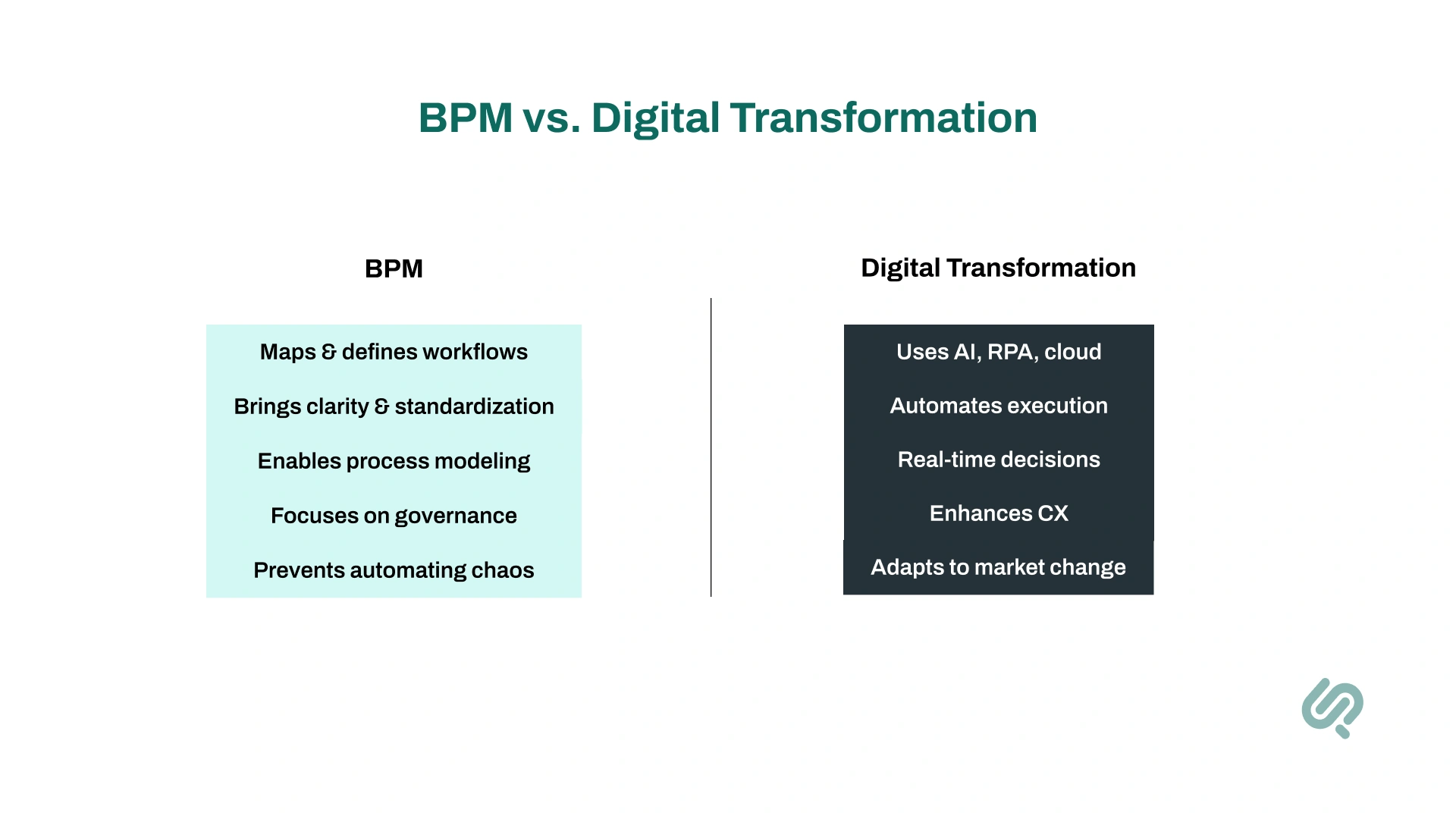
Think of Business Process Management (BPM) as the method and digital transformation as the toolkit. They complement each other to drive real, lasting results.
Business Process Management (BPM):
Digital Transformation:
When used together, BPM ensures the right foundation, while digital transformation delivers the power to improve, scale, and innovate.
Organizations that combine the two are up to 70% more likely to succeed in transformation efforts (2).
Skipping digital transformation in BPM isn’t just delaying progress. It’s exposing your business to serious downsides. Here’s why:
Competitors using digital tools and automated processes move faster, serve better, and adapt quicker.
Without fixing your existing processes, even the best tools will fail to deliver results
Manual processes lead to delays, errors, and inefficiency, especiaIf your strategy is customer-centric, optimize onboarding, support, and engagement.lly across different departments.
Today’s users expect speed and personalization. Without process optimization, you can’t meet rising customer demands.
Without data-driven decisions and clear key performance indicators, improvement is just guesswork.

Before jumping into automation or digital transformation initiatives, the first step is to deeply understand your current processes.
Skipping this step often leads to failed implementations, duplicated efforts, or automating the wrong things. For example, when auditing existing workflows, teams might track devices and hardware. Simple checks, such as an apple airpods serial number check, can prevent mismanagement and make IT support smoother.
Mapping your existing workflows gives visibility into what’s working, what’s not, and where the blockers are.
According to Gartner, 75% of organizations are still in the process of standardizing their processes (3), which means many are transforming without clarity.
To do this effectively, combine digital analysis with human insight:
Common inefficiencies include:
So, it’s best to involve your teams early. Let them help flag current pain points and suggest realistic improvements.
This not only uncovers hidden blockers, it also builds the trust you’ll need during implementation and change management.
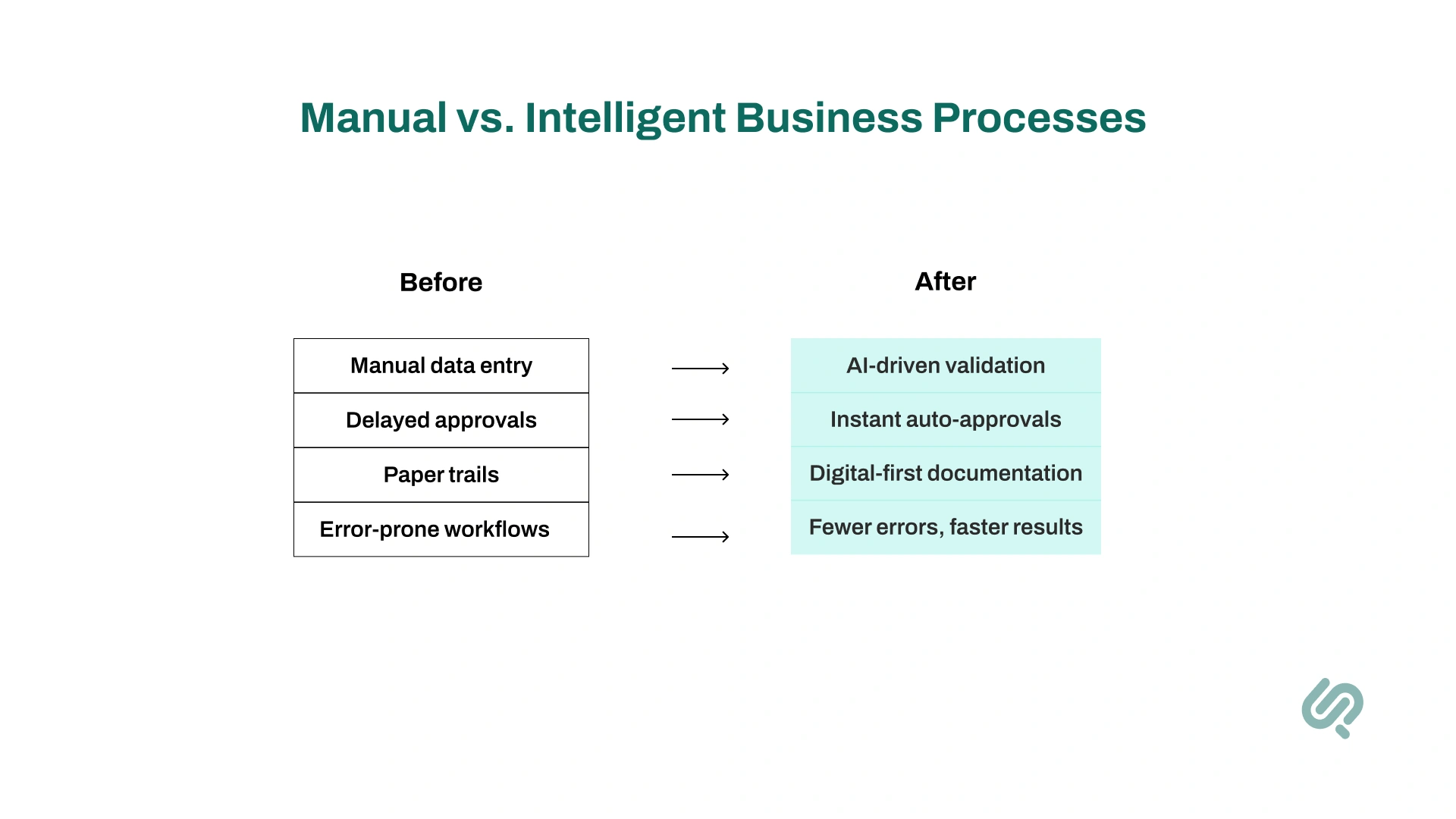
A future-ready business process removes friction and adds value at every step. It replaces guesswork with data, and manual effort with smart automation.
These types of new processes use:
With the rise of emerging technologies like AI in industrial automation, AI chatbots for e-commerce, and even generative AI in cybersecurity, there are more ways than ever to design streamlined, scalable processes that drive business performance.
You can’t redesign processes in isolation. They need to reflect business priorities.
This is also the time to define process governance:

Modern business process management is no longer just about flowcharts and documentation.
It’s about building systems that think, learn, and improve on their own. These new technologies are enabling businesses to optimize processes, boost productivity, and drive true digital transformation.
AI and ML are helping companies move beyond automation into prediction and intelligent action. From fraud detection in finance to next-best-action tools in customer service, AI helps businesses process data faster and make smarter decisions.
Use cases include:
Learn more about Artificial Intelligence and Machine Learning Services to find out how to use them for business process management.
RPA is ideal for automating day-to-day work like data entry, document validation, and billing. It mimics human actions across apps without needing major system changes.
It’s perfect for high-volume tasks like:
Companies use RPA to reduce errors, increase efficiency, and allow teams to focus on higher-value work.
Cloud-based platforms and low-code/no-code (LCNC) tools have democratized process innovation.
Now, business users (“citizen developers”) can build and adjust workflows without writing a single line of code.
This shift enables:
Whether you're integrating AI tools or building chatbots, AI automation and no-filter AI chatbots are driving this evolution.
Beyond AI and RPA, several emerging technologies are pushing the limits of what’s possible in digital transformation business process management:
Industries like industrial automation and cybersecurity are already applying these tools to achieve operational excellence and unlock new business models.
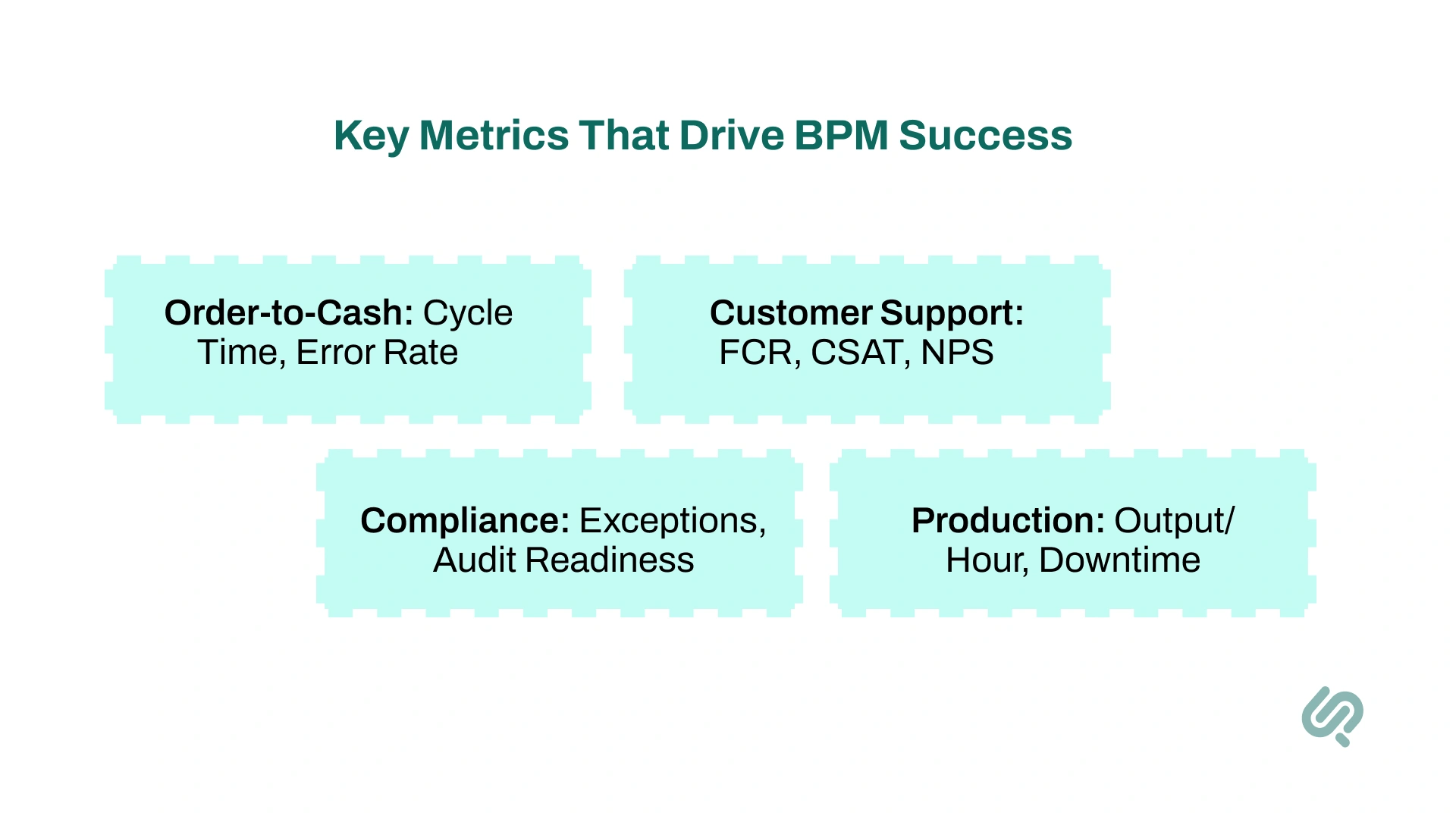
It’s not enough to automate tasks. You need to know if your processes are actually working.
That’s where data comes in. Mature business process management means turning daily operations into measurable outcomes that support smart decision-making.
Modern BPM tools collect real-time process data from every click, task, and delay.
But raw numbers aren’t enough. You need valuable insights that highlight what’s working, where things slow down, and how to optimize processes.
Key metrics that matter:
Use business process modeling and dashboards to connect your day-to-day work with business outcomes like operational efficiency, cost savings, and better customer experiences.
And with process mining, you gain visibility into how workflows actually happen, not just how you think they do. This helps teams identify inefficiencies, monitor real KPIs, and adjust quickly.
These real-world examples show how companies across sectors are leveraging digital technologies and integrating BPM to transform operations, improve efficiency, and stay competitive in the digital age.
In this digital transformation case study, PhaedraSolutions helped a client implement smart inventory software using PoC & MVP methodology. The solution featured barcode generation, predictive restocking alerts, and business process automation for inventory flow.
This project illustrates how new digital tools can support rapid process improvement and help teams mitigate risks in fast-moving supply chains.
Goldman Sachs launched Marcus, a digital bank, by embracing digital transformation in banking through RPA, AI, and business process management tools. By redesigning workflows from the ground up, they enabled fully online onboarding, real-time support, and back-office automation.
This case highlights how implementing BPM at scale can modernize business operations while maintaining regulatory control and delivering a competitive digital transformation journey.
Even with the right tools and intentions, digital transformation efforts often fall short.
Here’s how to tackle the most common blockers that stand in the way of improving business processes and achieving lasting change.
70–90% of transformation projects fail. Mainly because companies rush to automate without redesigning their underlying workflows.
If you don’t rethink how the process works, you’re just automating inefficiencies. A strong foundation in business process improvement and clear process mapping are essential components of success.
Focus on simplification first, then digitization.
Many teams resist new systems out of fear, confusion, or lack of support. The fix? Lead with clarity.
Explain the “why,” offer hands-on training, and reward quick adopters. Align change with daily wins, not just executive KPIs. When transformation feels like empowerment, adoption follows.
This approach helps businesses continuously improve and unlock a real competitive advantage.
Scattered data, outdated tools, and disconnected platforms can break even the smartest digital plan. Integration matters.
Start with fundamental changes like data standardization, unified platforms, and secure APIs.
Only then can your systems talk to each other, and unlock the insights you need to drive real business transformation.
Several IT leaders report skill shortages as a major blocker in transformation initiatives.
That’s why successful companies don’t just buy tools, they build capability. Invest in upskilling your current teams and selectively hire where needed.
Resources like best AI tools for coding or external partners like a digital transformation consultancy firm can also help accelerate delivery while your team levels up.

Business process management is rapidly evolving to meet the demands of speed, personalization, and intelligence.
Here are 6 trends that will define the next generation of BPM:
Picking the wrong business process management solution can slow your entire digital transformation journey. Here's what to look for.
The right BPM platform should support your entire lifecycle, from discovery and modeling to automation, monitoring, and continuous process improvement.
Look for tools that integrate easily with your ERP, CRM, and even older legacy systems, so you don’t end up with disconnected workflows.
If your business processes are highly specific, a custom solution may offer more flexibility, a tailored user experience, and tighter alignment with your goals. While it may require a higher initial investment, it pays off in long-term agility and ownership.
On the other hand, off-the-shelf tools can be faster to deploy and cost-effective for standardized workflows. Just be mindful of their limitations in customization and scalability.
Digital transformation in business process management isn’t a nice-to-have. It’s how modern businesses stay efficient, competitive, and ready for what’s next.
From AI and RPA to data-driven decisions and cloud platforms, the tools are here. What matters is how you use them.
Treat BPM as an ongoing effort, not a one-time fix. Keep improving, keep adapting.


1. Common Pitfalls in Transformations – A Conversation with Jon Garcia (McKinsey)
2. BPM Is Critical to Business Transformation Success (Gartner)
3. Gartner: Controllers Have Opportunity to Transform the Accounting Close Process
4. Superagency in the Workplace – Unlocking AI’s Potential (McKinsey)
5. What Is an RPA Developer? (Coursera)
6. Gartner: Cloud Will Be the Centerpiece of New Digital Experiences
7. Why 74% of Businesses Are Investing in AI (AI Journal)

Musa is a senior technical content writer with 7+ years of experience turning technical topics into clear, high-performing content.
His articles have helped companies boost website traffic by 3x and increase conversion rates through well-structured, SEO-friendly guides. He specializes in making complex ideas easy to understand and act on.