






Building A1 DDP - Dubai Silicon Oasis
Industrial Area - 342001 -
Dubai - United Arab Emirates
+971 50 756 2346


SERVICES

COMPANY LINKS
SIGN-UP
For Newsletter


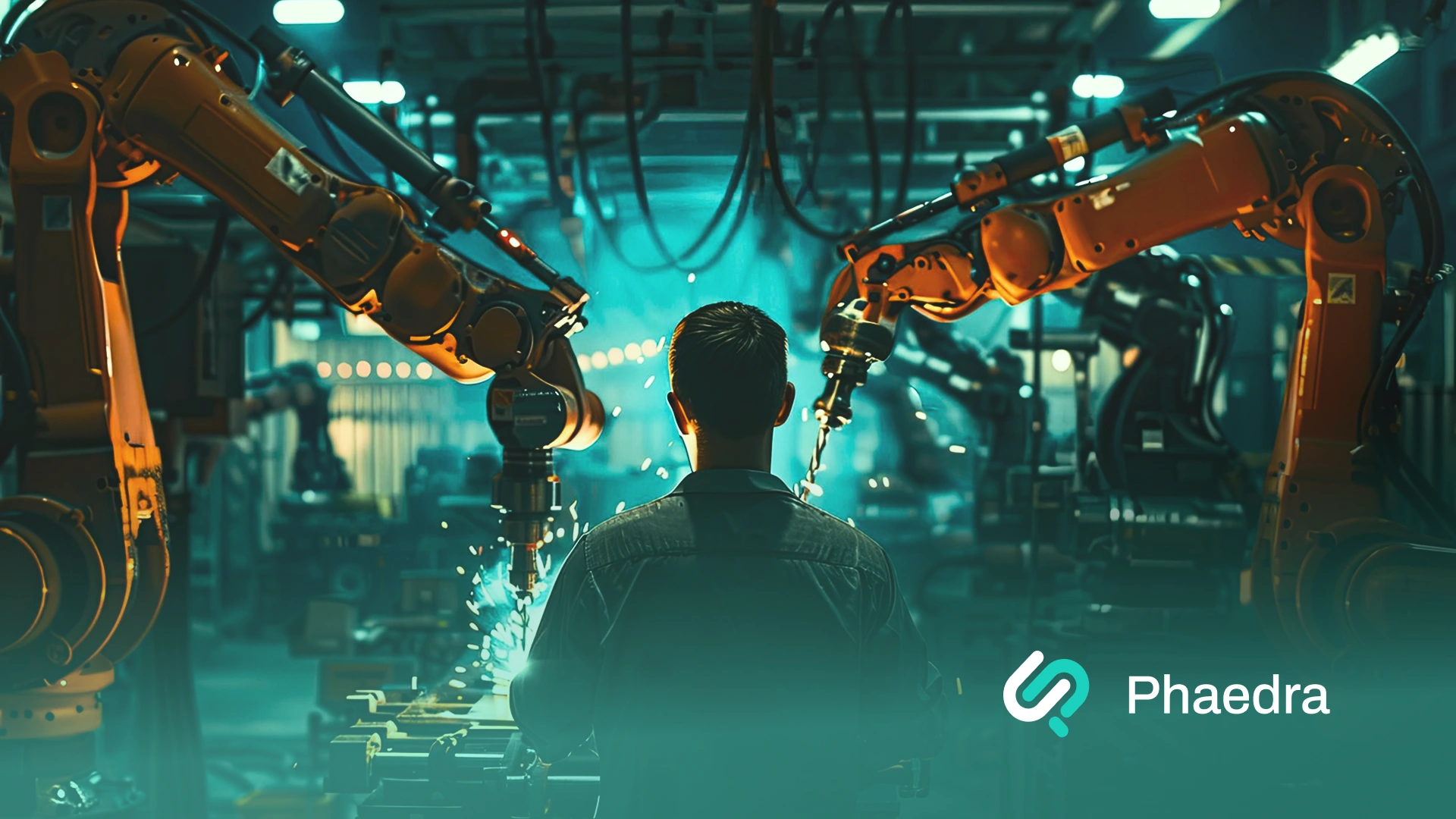
Artificial intelligence (AI) is redefining how industries run, with AI in industrial automation leading the charge in smarter, faster, and safer factories.
From digital transformation in banking and digital transformation in BPM to AI chatbots for e-commerce and generative AI in cybersecurity, the impact of AI is everywhere.
Manufacturers now rely on data sets in machine learning to power predictive maintenance, real-time quality control, and robotics.
And with the rise of AI in sports, coding, and even trading bots, factories have begun to use AI to drive efficiency, cut downtime, and improve decision-making.
It’s the era of Industry 5.0, and it’s time we understood how to make the most of it. That’s exactly what we’ll do today.
Industrial automation has traditionally meant using machines, control systems, and robots to boost speed and reduce errors.
But now, AI in industrial automation is taking this much further. Instead of just following rules, AI-driven machines learn from data, adapt to real-time changes, and make instant decisions.
Here’s how AI is transforming factories today:
The result? Smart factories that are flexible, efficient, and continuously improving.
AI’s reach goes beyond manufacturing:
A Deloitte study found that 92% of manufacturers believe AI-enabled manufacturing will be the main driver of competitiveness in the next three years. Another survey showed that over 70% of manufacturers are already using AI in areas like production control, employee training, or even customer service. (1)
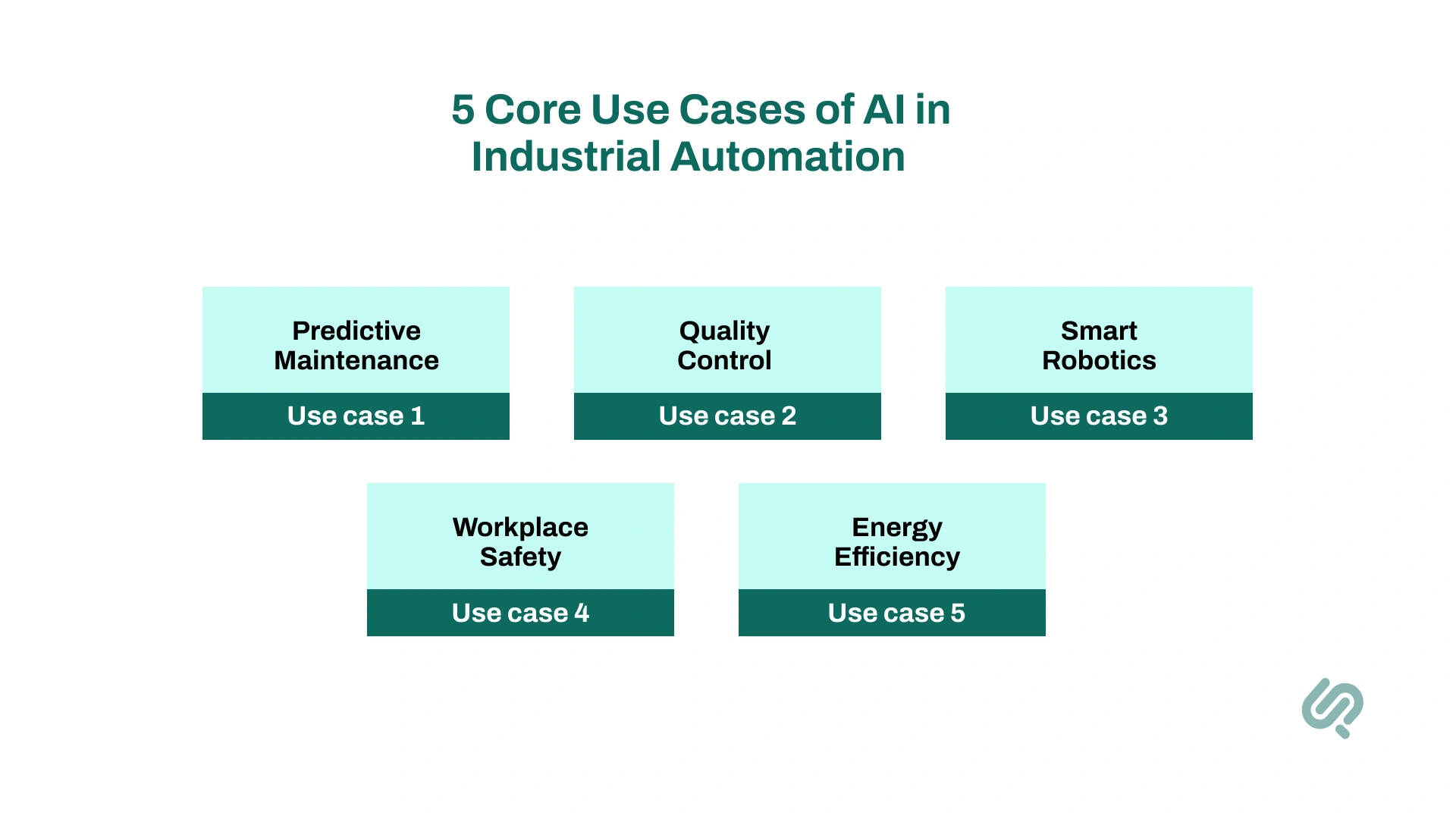
AI’s impact becomes clear when we look at its real-world applications.
From predictive maintenance to quality control, robotics, supply chain optimization, and digital twins, these use cases show exactly how AI is powering smarter factories.
The first, and perhaps most widely adopted, is predictive maintenance.
A sudden machine failure can pause production and quickly drive up costs. That’s why predictive maintenance is one of the most valuable applications of AI in industrial automation.
Instead of waiting for failures or sticking to rigid service schedules, AI systems predict problems before they happen.
It’s like giving your equipment a 24/7 health monitor that never misses a heartbeat.
Downtime is expensive; sometimes it costs thousands per minute. Studies show that AI-powered predictive maintenance can:
In one case, a consumer-goods company built an AI “copilot” trained on manuals and past logs. The results were striking: 90% less unplanned downtime, 33% lower labor costs, and 40% more technician availability (2)
Catching defects early is critical in manufacturing, and this is where AI shines. Traditional inspection relied on humans or slow manual checks.
Today, AI in industrial automation makes quality control faster, sharper, and more reliable.
In practice, AI enables 100% inspection at full speed, something humans could never achieve consistently.
Errors in industries like automotive, food, electronics, or aerospace are costly and sometimes dangerous. By inspecting every item, AI reduces waste, cuts recalls, and boosts customer satisfaction. It can also be useful to get an AI strategy consultancy to ensure you get the maximum impact.
Bosch struggled with too few defect images to train its AI inspection system. To fix this, they used generative AI to create synthetic defect samples. This gave their model enough data to detect flaws early in production.
The result: faster, more accurate optical inspection, improved product quality, and no slowdown on the line.

Robots have been in factories for decades, but now, AI is making them smarter, safer, and more adaptable.
Traditional industrial robots followed strict, pre-programmed paths. With AI, robots can now learn tasks, adapt to changes, and even work safely alongside humans.
This flexibility makes robots useful far beyond repetitive, scripted motions; they become production partners.
AI-powered robots boost productivity and workplace safety. They can take on:
Industry reports suggest that AI-enabled robots could increase productivity by double digits in the coming years as adoption grows.
Across industries, these robots reduce human error and deliver high repeatability, making production lines both consistent and efficient.

AI in industrial automation isn’t just about efficiency; it’s also about protecting people.
By constantly monitoring environments and analyzing data, AI systems act like extra eyes and ears on the factory floor, helping to prevent accidents and reduce risks.
Some jobs are simply too dangerous for people. AI-driven robots are stepping in to:
Safety isn’t just compliance, it’s about trust and productivity. When workers feel safe, they can focus on higher-value tasks. In many industries, AI-powered safety systems have already prevented accidents by catching hazards early.
For example, in supply chains, AI can predict bottlenecks or identify spill risks, giving managers the chance to take action before incidents occur.
Factories consume huge amounts of energy across motors, lighting, cooling, and heating, but AI is making them far more efficient.
Energy is one of the biggest expenses in industrial operations. AI-driven efficiency reduces both operational costs and carbon footprint, helping companies meet sustainability goals.
Google’s DeepMind AI cut data center cooling energy use by ~40%. In factories, similar AI systems save 10–20% or more on energy bills.
IBM’s Maximo also highlights how AI-driven maintenance not only avoids downtime but also reduces waste and power consumption (4)
AI delivers real, measurable improvements in industrial automation. It helps factories work faster, safer, and more cost-effectively while building resilience for the future.
The future of industrial automation isn’t just about adopting AI; it’s about choosing the right platforms to power it.
From real-time monitoring to AI-driven simulations, these tools are shaping tomorrow’s smart factories.
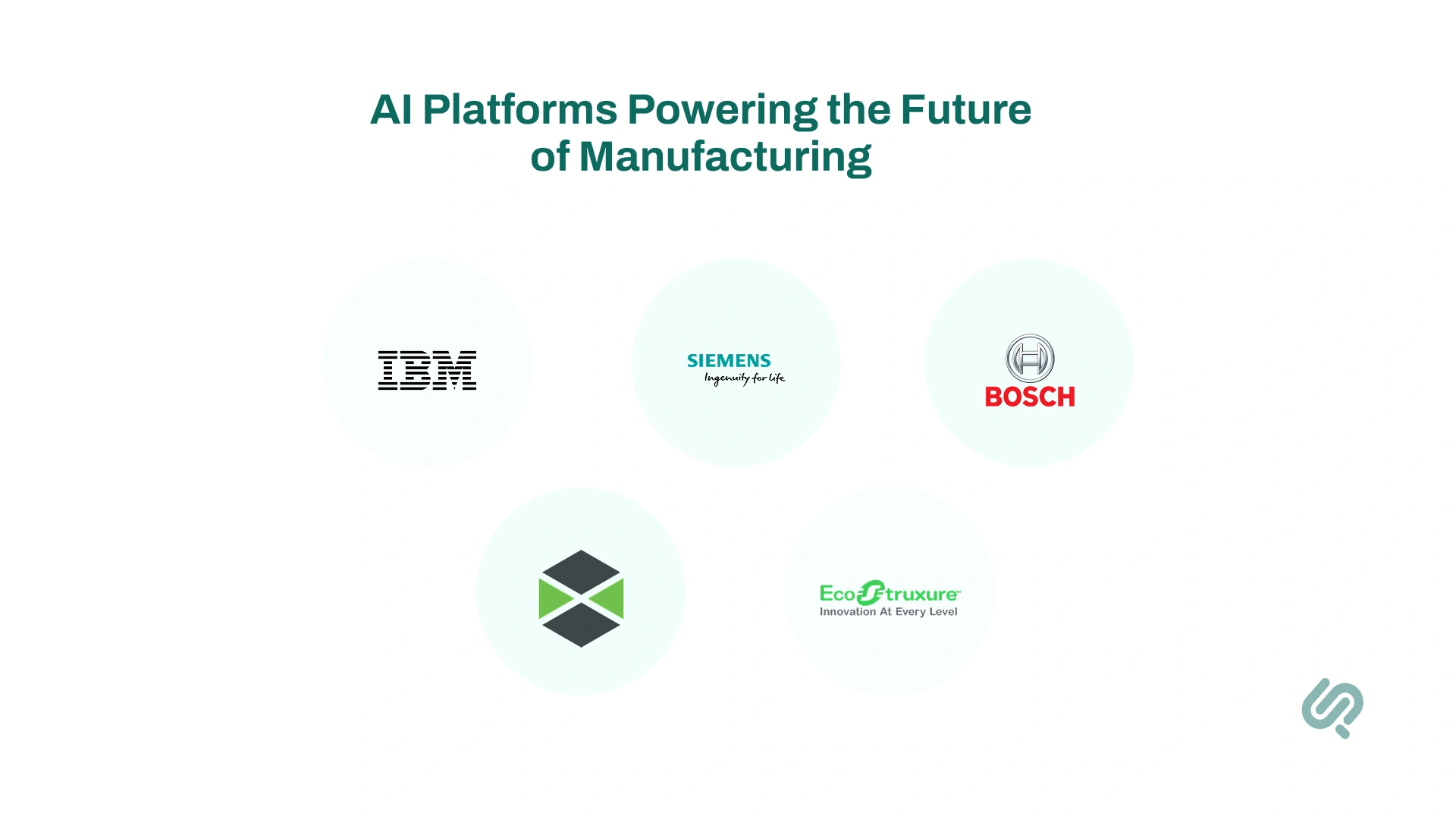
IBM’s Maximo is built for companies with heavy equipment. It uses real-time monitoring and AI analytics to spot problems before machines fail.
With tools like condition-based maintenance and AI forecasting, Maximo helps teams plan repairs at the right time, reduce downtime, and keep assets running smoothly.
MindSphere is Siemens’ industrial IoT platform that connects machines from any manufacturer and turns their data into insights. It helps companies build digital twins, virtual replicas of production lines to test and improve operations before making real changes.
With real-time data integration, edge analytics, and simulation tools, MindSphere makes factories smarter and more efficient while giving developers the freedom to add AI apps through custom AI model development.
Bosch IoT Suite connects factory equipment, vehicles, and sensors to the cloud, enabling real-time monitoring and predictive maintenance. It uses AI and digital twins to simulate production environments, helping companies test improvements before applying them.
The platform also manages remote updates and fault detection, reducing downtime and keeping operations secure. Its open, scalable design makes it suitable for both automotive and industrial automation use cases.
ThingWorx is an industrial IoT and AI platform that speeds up building smart factory applications. It integrates data from machines, sensors, and CAD models to provide real-time visibility into production.
With its digital twins (AR visualization and predictive analytics), it helps companies improve workflows and optimize asset usage. Manufacturers use ThingWorx to cut costs, improve product quality, and bring new designs to market faster.
EcoStruxure focuses on energy efficiency, equipment reliability, and sustainable operations. It combines IoT sensors, AI analytics, and cloud dashboards to track performance and spot faults before they cause downtime.
The platform helps factories reduce power consumption by 10–20% while ensuring machines run at peak capacity. With industry-specific solutions, EcoStruxure is widely used in automotive, energy, and heavy manufacturing to drive smarter, greener production.
As industries accelerate their digital transformation in BPM and even digital transformation in banking, the real question is what comes next for factories.
From smarter workflows to human–AI collaboration, the future is only getting more exciting.
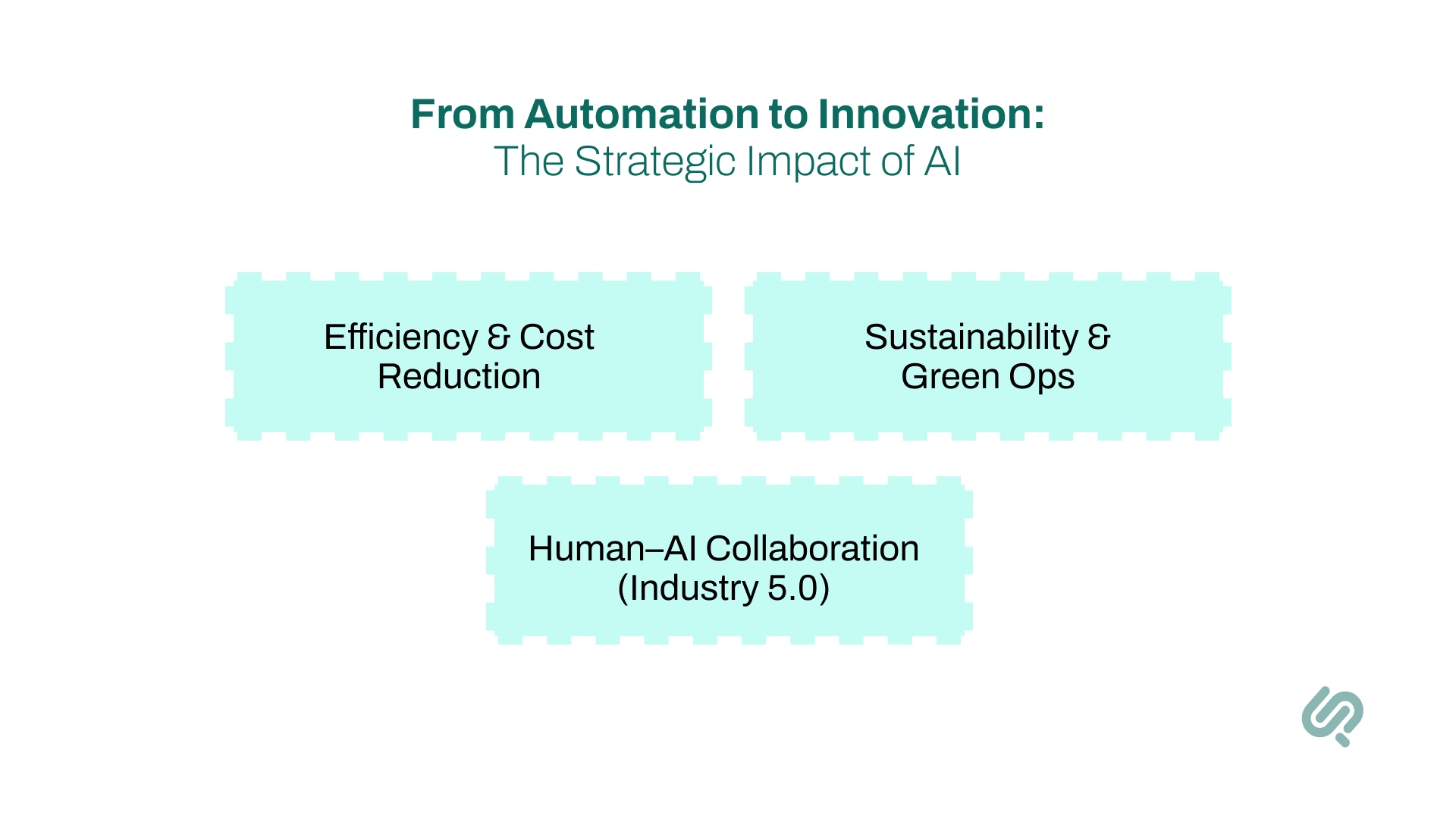
Predictive maintenance will become standard in every industry with complex machines.
Quality checks will run automatically, powered by computer vision and real-time data, while human inspectors get AI-driven guidance. These changes echo the same intelligence that drives AI systems that analyze data, act instantly, and reduce errors.
Generative AI in cybersecurity has shown how synthetic data can strengthen defenses.
The same technology is moving into industrial design soon; generative AI won’t just create parts, it will design entire production lines.
Imagine asking: “Build a bakery that makes 10,000 loaves a day,” and instantly getting a digital twin layout with machines, workflows, and energy flows.
Tomorrow’s supply chains will be fully AI-driven. Platforms will use AI and machine learning to predict disruptions, manage logistics, and optimize routes.
With digital twins linking supply, production, and design, companies can ensure operations stay resilient even during shortages, trade disputes, or climate events.
We’re moving into Industry 5.0, where human creativity works alongside AI instead of being replaced by it.
Collaborative robots will support engineers, and AI assistants will guide innovation. Just as AI in sports automation enhances human performance rather than replaces it, factories of the future will thrive on humans plus machines, not humans versus machines
The expected outcome is no doubt eye-catching:
Ultimately, the line between the physical and digital worlds will blur. Companies will rely on digital twins and simulations as much as physical prototyping.
Those who master AI and data will gain a decisive competitive edge, shaping the future of global manufacturing.
While AI adoption is rising quickly, companies often face practical challenges. Addressing these early makes implementation smoother and more effective.
Companies adopting AI in industrial automation often face challenges like poor data quality, integration with legacy systems, and high initial costs.
Here are some of the challenges addressed:
Here are some practical tips to make AI adoption easier in industrial automation:
Before scaling AI in factories, businesses should think about long-term sustainability, workforce readiness, and choosing platforms that can integrate with existing systems.
Here are some key considerations you should consider;
AI is driving the future of industrial automation. From predictive maintenance and energy optimization to digital twins and Industry 5.0, it’s reshaping how factories operate.
Smarter, greener, and more resilient systems are no longer optional; they’re becoming standard. Manufacturers that adopt AI today will be the ones setting the pace for tomorrow’s competitive industrial landscape.
Beyond cost savings, AI is unlocking new levels of flexibility, enabling factories to respond faster to demand shifts and disruptions. It is also strengthening sustainability, cutting waste and energy use while improving efficiency.
As human creativity blends with AI’s precision, the industry moves toward a future where people and machines work seamlessly together.



Ameena is a content writer with a background in International Relations, blending academic insight with SEO-driven writing experience. She has written extensively in the academic space and contributed blog content for various platforms.
Her interests lie in human rights, conflict resolution, and emerging technologies in global policy. Outside of work, she enjoys reading fiction, exploring AI as a hobby, and learning how digital systems shape society.