










Building A1 DDP - Dubai Silicon Oasis
Industrial Area - 342001 -
Dubai - United Arab Emirates
+971 50 756 2346


SERVICES

COMPANY LINKS
SIGN-UP
For Newsletter



In today’s fast-moving world, change is constant, and digital disruption has become the new normal.
That’s why having a clear digital transformation roadmap isn’t just nice to have. It’s essential for long-term growth and survival.
A good roadmap gives organizations direction, keeps teams aligned, and makes sure every investment in technology supports a real business outcome.
Without it, companies risk running scattered projects that don’t add up to meaningful progress.
A digital transformation roadmap is a structured plan that outlines how an organization will adopt and implement digital initiatives to achieve business goals.
It breaks the transformation journey into phases, milestones, and measurable outcomes so progress can be tracked clearly.
Beyond being a plan, a roadmap is also a communication tool. It lays out workstreams like ‘Customer Experience’ or ‘Operational Efficiency’, shows timelines and dependencies, and clarifies responsibilities across teams.
This ensures everyone understands where the company is heading and how their role contributes.
Most importantly, a roadmap secures stakeholder buy-in, simplifies complex initiatives into a clear visual, and ensures transformation feels coordinated instead of chaotic.
Organizations that follow a well-defined roadmap benefit from:
Whether you’re working with digital transformation companies, seeking digital transformation advisory, or developing your own custom digital transformation solutions, a roadmap ensures your initiatives tie back to business goals.
A successful digital transformation roadmap isn’t just a checklist.
It’s a carefully designed framework that gives clarity, direction, and control throughout the journey. Below are the core components every roadmap should include:
Start with a clear vision of what digital success looks like for your business. Pair it with SMART goals (specific, measurable, achievable, relevant, time-bound) so everyone is aligned on where you’re heading.
Before you move forward, understand where you stand. Assess your existing tech stack, processes, and overall digital maturity.
Define the projects that will move the needle, whether that’s modernizing legacy systems, adopting AI, or improving customer experience. Outline the supporting technology stack needed to bring these initiatives to life.
Break the journey into phases with clear milestones. These checkpoints keep the plan on track, allow teams to celebrate wins, and create space to make timely adjustments when needed.
Transformation takes people, budget, and tools. Map out exactly what’s required for each stage so resources are used wisely and efficiently.
Technology alone won’t drive change; people will. Build a change management plan that includes training, communication, and stakeholder engagement.
Success must be measurable. Establish KPIs that track progress across financial impact, efficiency, customer satisfaction, and employee adoption.
By combining these elements into a structured plan, organizations can move beyond isolated projects and create a cohesive path forward.
The digital transformation journey isn’t a single leap. It’s a series of building blocks that guide an organization toward becoming truly digital.
Each phase represents a milestone, helping businesses move forward in a structured, sustainable way.
By breaking transformation into phases, companies can:
The journey isn’t always linear; organizations may revisit earlier steps as they learn and adapt.
But understanding these milestones provides a roadmap to follow, ensuring efforts stay logical, measurable, and future-ready.
Now, let’s look at the 4 phases of a digital transformation roadmap.
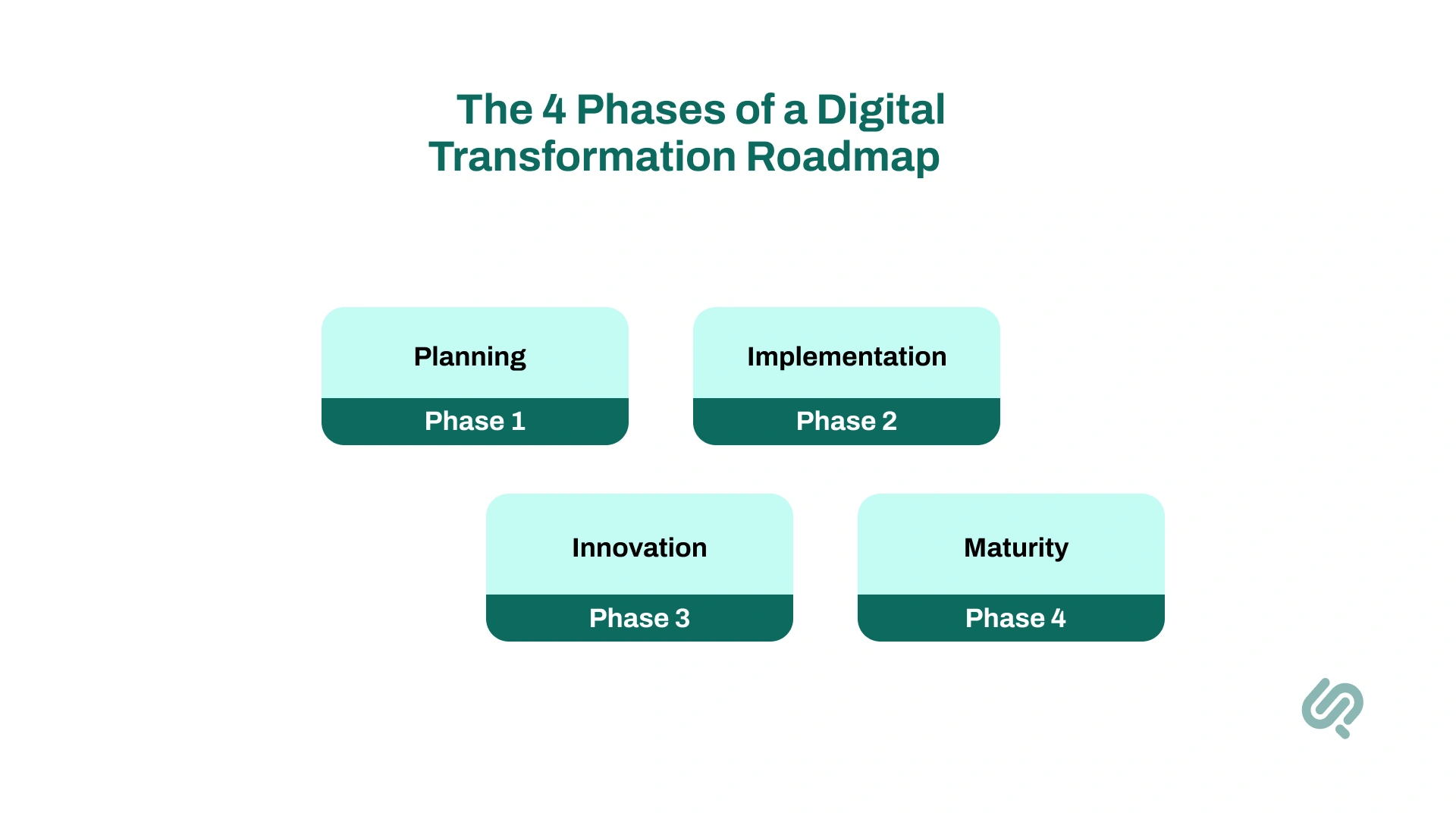
Every successful transformation begins with a strong foundation. The Enablement and Planning phase prepares the groundwork for everything that follows.
Skipping or rushing this stage often results in wasted investments, disconnected projects, and cultural resistance.
By investing the right time here, organizations create a stable launchpad for digital growth, whether partnering with digital transformation companies or building custom digital transformation solutions in-house.
This phase includes four critical elements:
By addressing these areas, organizations set realistic priorities, align teams, and ensure that the transformation journey begins with clarity and momentum.
With the groundwork laid in the enablement phase, it’s time to move from planning to action.
The Optimization and Implementation phase is where organizations begin turning strategy into reality, deploying new technologies, refining processes, and creating measurable impact.
This stage is all about execution, momentum, and demonstrating early wins that build confidence for larger, long-term initiatives.
Key activities in this phase include:
This phase isn’t just about installing new systems. It’s about measurable improvements in productivity, efficiency, and customer satisfaction.
With the right governance and cultural support, organizations can build momentum here and prepare to scale more advanced initiatives.
Once foundational technologies are in place and processes have been optimized, organizations can shift from “fixing what exists” to “creating what’s next.”
The Innovation and Growth phase is where digital maturity really begins to pay off. Instead of incremental improvements, companies start experimenting, innovating, and unlocking new value.
Key focus areas in this phase include:
Digitally mature companies are 23% more profitable than their peers and generate 9% more revenue through innovation. (2)
The final stage of the digital transformation journey isn’t about finishing, it’s about becoming.
In the Reinvention and Maturity phase, organizations evolve into truly digital-first enterprises where technology, people, and processes are seamlessly aligned.
The focus shifts from implementing change to sustaining it. Companies here are agile, data-driven, and resilient. They don’t just respond to disruption; they actively shape customer expectations, industry trends, and even new business models.
Key elements of this phase include:
Measuring success is what turns a digital transformation roadmap from ideas into proof. Without the right metrics and KPIs, organizations risk flying blind, unable to track impact, celebrate wins, or justify future investments.
A strong framework should cover financial, operational, customer, and employee metrics, giving a complete picture of progress.

Measurement connects investment to outcomes. Tracking KPIs helps leaders:

Most digital transformation failures don’t happen because of technology. They happen because of people, culture, and execution.
By recognizing common pitfalls, organizations can avoid setbacks and keep their roadmap on track.
Building a successful roadmap requires structure, collaboration, and clear priorities. These six steps provide a practical framework to get started.
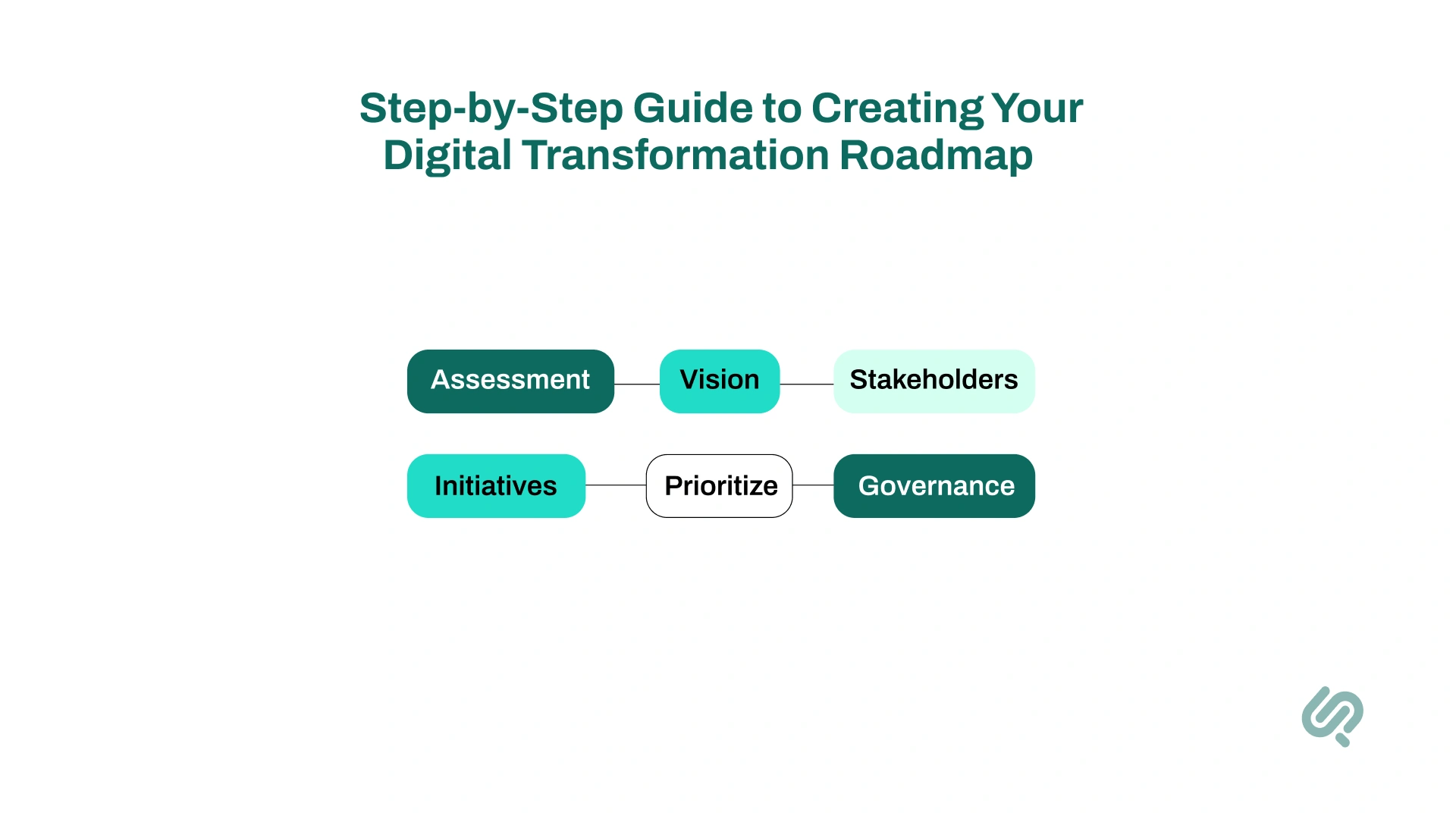
Assess your current state of IT systems, processes, data, workforce skills, and culture. Identify digital gaps, benchmark maturity against industry standards, and involve stakeholders to create an honest baseline.
Define a bold but realistic vision. Translate it into SMART goals tied to business outcomes like customer experience, cost reduction, or faster delivery. Decide which areas, customers, operations, or supply chain will be prioritized.
Transformation needs buy-in across the organization. Engage leaders, IT, business units, and end users. Co-create the roadmap and establish strong change management to align both the people and technology sides of the effort.
Select projects that bring the vision to life, such as cloud migration, automation, or customer platforms. Use impact vs. complexity to prioritize. Start with quick wins, then move to larger initiatives, ensuring each is tied to measurable outcomes.
Develop a phased timeline with milestones and deadlines. Sequence initiatives based on resources, dependencies, and risks. A phased approach builds momentum while preparing for long-term transformation.
Set up a governance structure (like a steering committee) to oversee progress, make decisions, and keep alignment with strategy. Build in continuous improvement review KPIs regularly, adjust the roadmap, and foster a culture of ongoing learning.
Digital transformation isn’t a one-time project. It’s an ongoing journey.
By following a clear roadmap, measuring success with meaningful KPIs, and avoiding common pitfalls, organizations can move from scattered initiatives to sustained impact.
The path requires both strong leadership and cultural buy-in, ensuring technology investments are tied to business value.
Ultimately, maturity is reached when digital becomes part of the DNA.
Organizations that embrace this approach will not just survive disruption but shape the future of their industries.



Ameena is a content writer with a background in International Relations, blending academic insight with SEO-driven writing experience. She has written extensively in the academic space and contributed blog content for various platforms.
Her interests lie in human rights, conflict resolution, and emerging technologies in global policy. Outside of work, she enjoys reading fiction, exploring AI as a hobby, and learning how digital systems shape society.